
2 Minutes
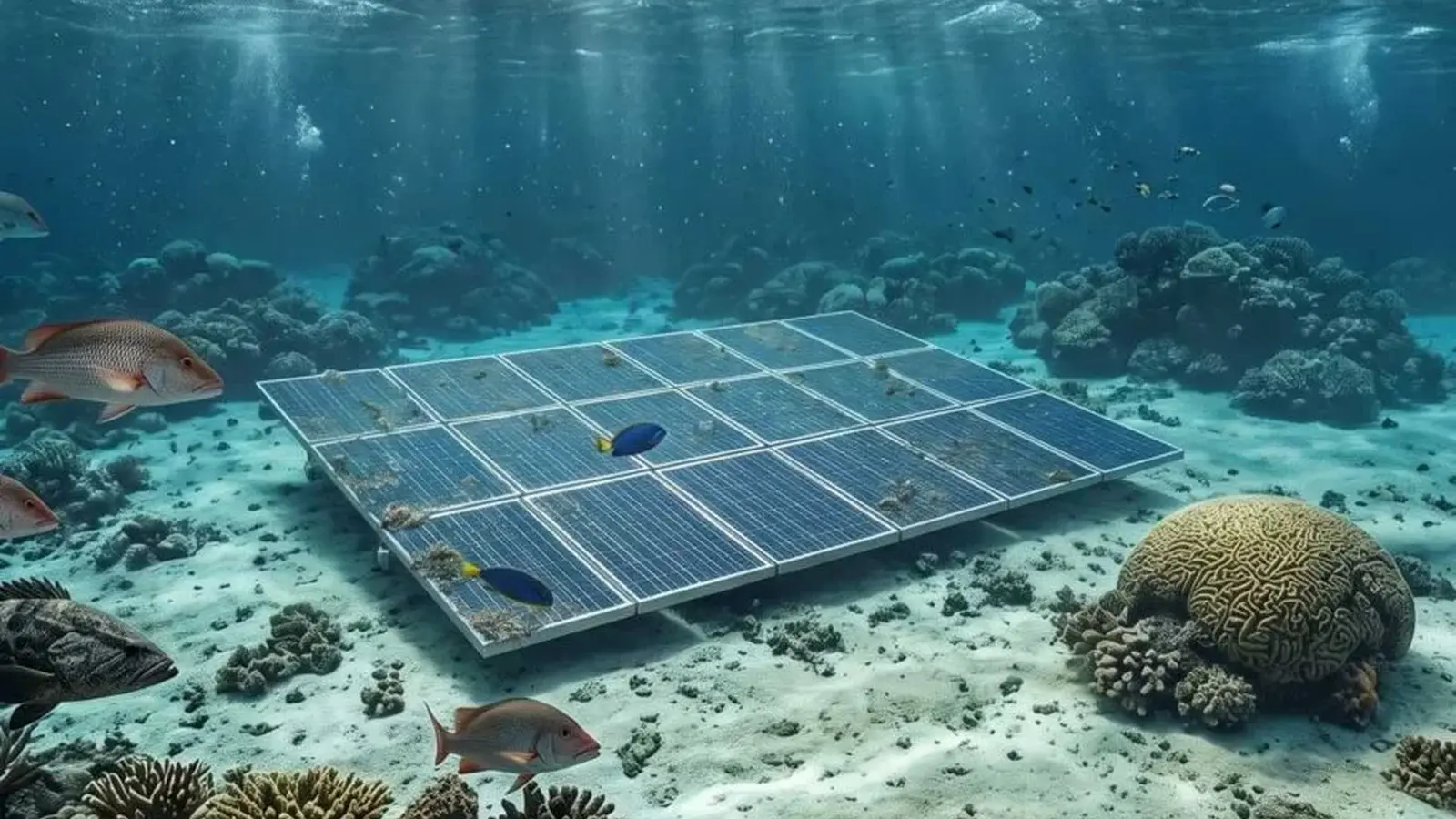
Imagine sunlight still powering equipment a full ten meters below the waves. It sounds improbable, but a team of researchers in China has pushed solar technology deeper than most thought practical.
Powering submerged instruments has long been a logistical headache. Batteries run down. Tethers limit movement. Servicing gear in the field is costly and time-consuming. So scientists asked a simple, stubborn question: can photovoltaics work where light is faint and the sea is fickle?
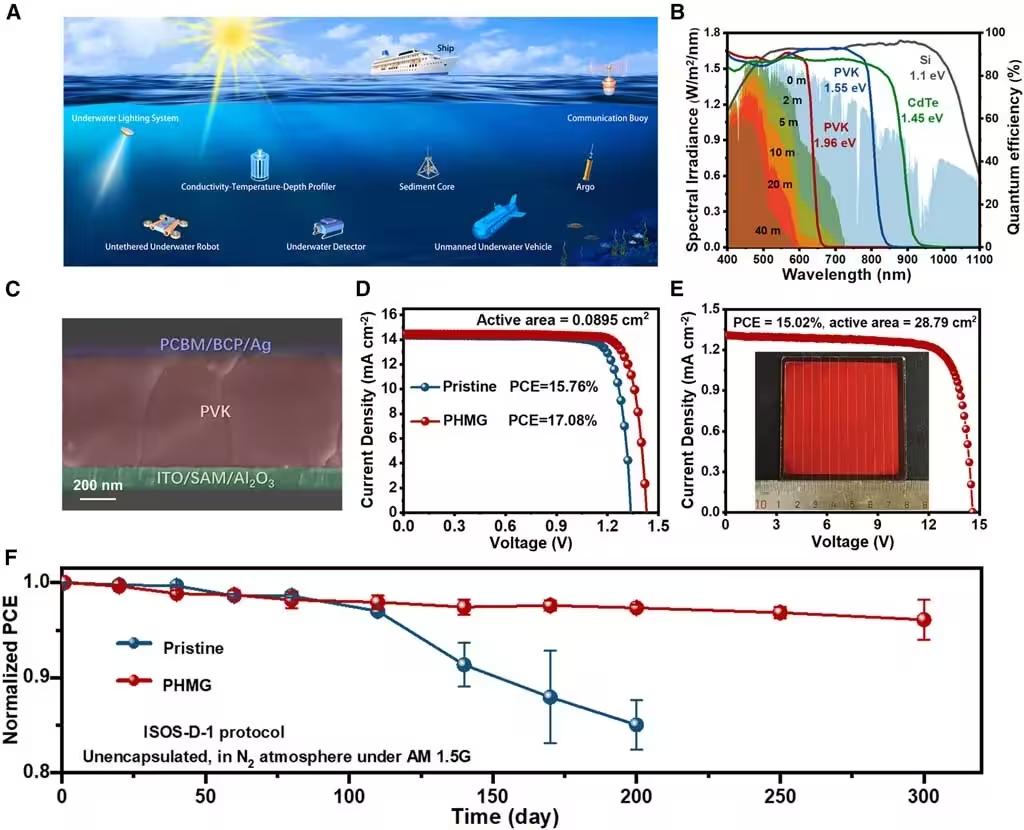
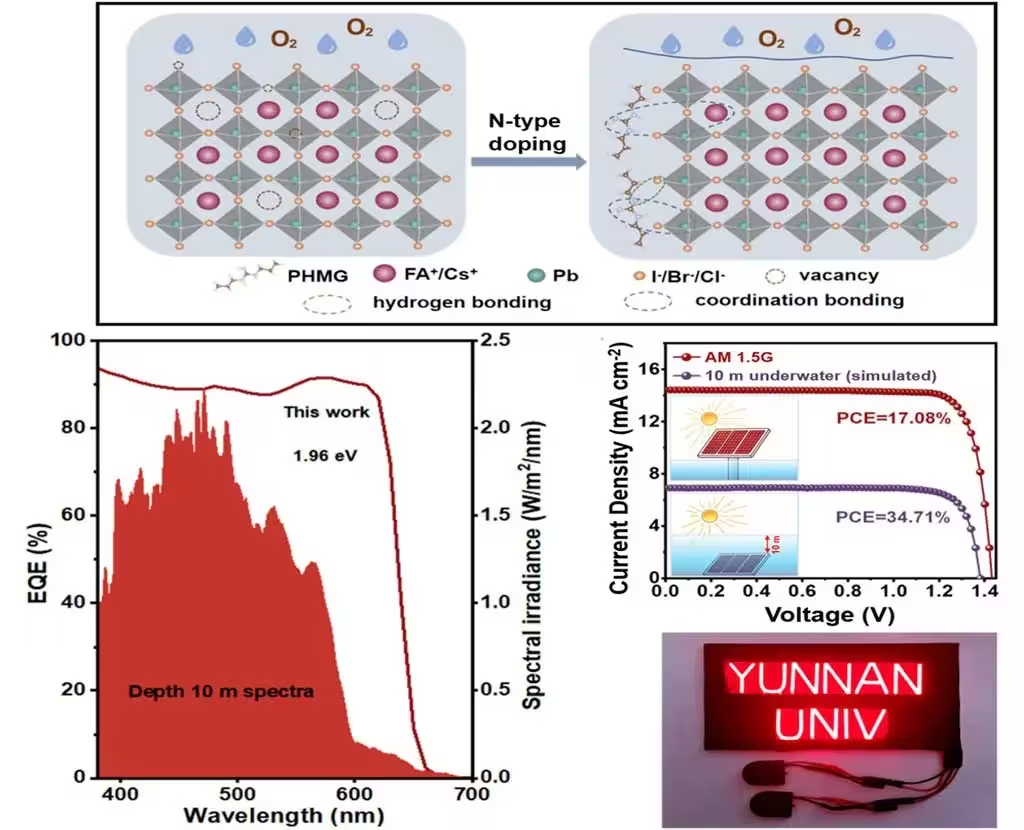
The answer came from experiments off the South China Sea. Researchers at Yunnan University lowered panels to ten meters and used them to charge several lithium batteries in about two hours. The trick wasn’t just dunking conventional cells; the team built new devices from lead-halide perovskites combined with a polymer called polyhexamethylene guanidine hydrochloride to boost performance and stability in seawater.
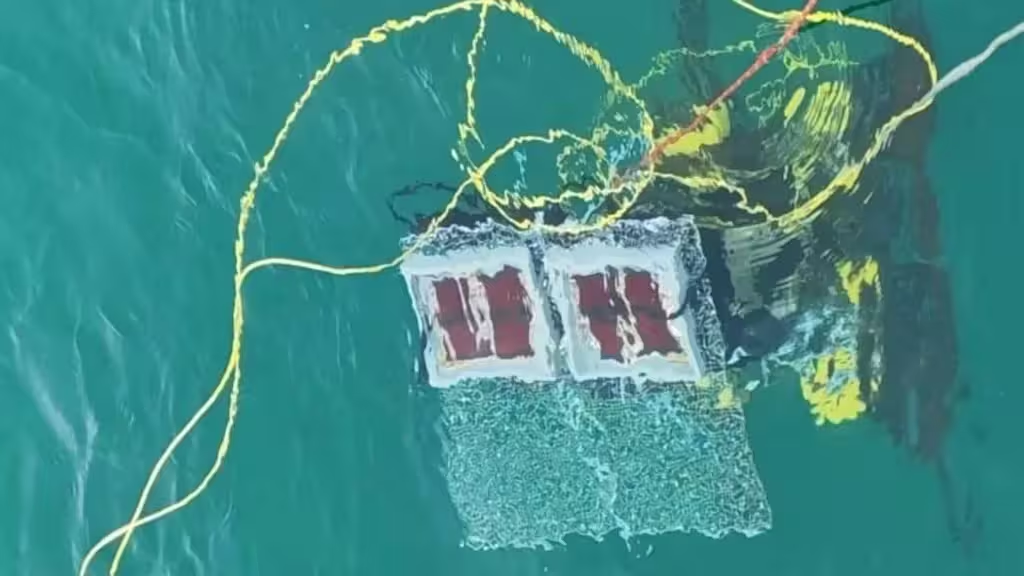
How much power are we talking? In trials the cells produced roughly 1416 milliwatt-hours at two meters, 752 milliwatt-hours at six meters, and 324 milliwatt-hours at ten meters. The overall conversion efficiency reached about 35 percent in lab measurements. Not enough to run a large propulsor, perhaps, but perfectly suited to small cameras, environmental sensors, and low-power communications systems operating near the surface.
What makes this notable is scale and durability. Previous underwater photovoltaics research mostly stayed within a couple of meters of depth—hardly useful for many field deployments. The Yunnan team says their panels could function underwater for more than five years without replacement, opening the door to long-term, maintenance-free stations on the seafloor or buoy-linked platforms.
There are caveats. Marine growth, from slime to algae and barnacles, can coat optical surfaces and slash energy capture. How these perovskite-based cells weather real ocean chemistry, storms, and biological fouling still needs prolonged field study. Will cleaning regimes or anti-fouling coatings be required? Likely so.
For now, the work points to a different model for ocean monitoring: distributed, autonomous sensors powered by ambient sunlight filtered through water. The study appears in the journal Cell, and it raises a practical—and optimistic—question: if solar tech can survive ten meters of seawater, how many more data gaps at sea could we finally fill?

Leave a Comment
Comments
No comments yet. Be the first.