
3 Minutes
SpaceX has pushed back the first orbital attempt of Starship by about a week, slipping the launch from September 22 to September 28. No explanation was offered. Short notice. Big implications.
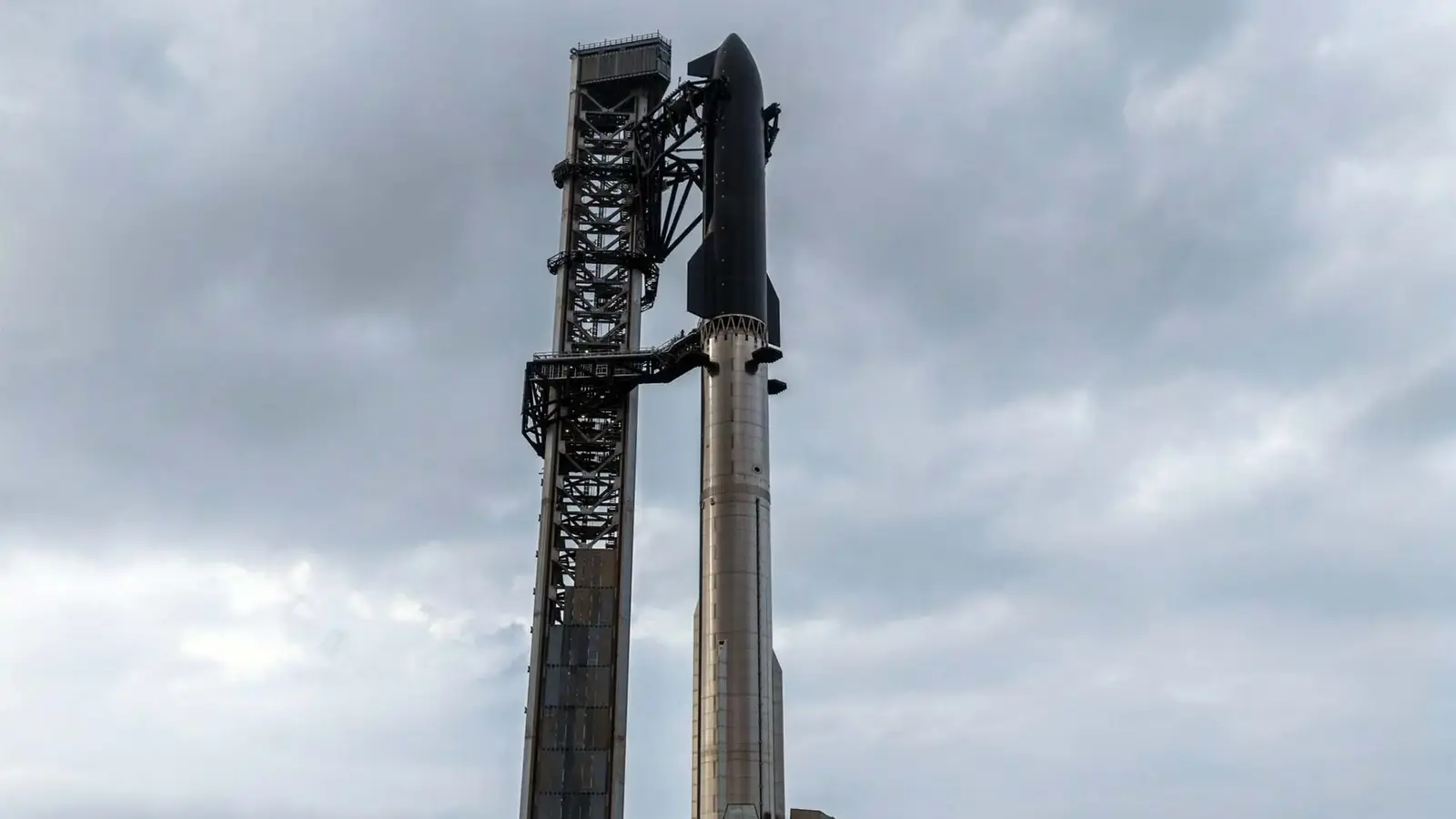
It would have been a line in the history books either way. Instead it's a delayed chapter. This 14th test flight is not just another hop; it is the first time the 124-meter system will try to reach orbit after 13 suborbital runs. Success would mark a turning point for a rocket designed to be fully reusable and to ferry humans and cargo to the Moon, Mars and beyond.
The launch will originate from Starbase in south Texas. The company has opened a 75-minute window that begins at 8:15 a.m. Eastern Time. If you want to watch, be ready when the clock opens.
What will Starship actually do if the plan holds? The 52-meter upper stage, commonly called Ship, is expected to insert into an orbit roughly 275 kilometers above Earth and complete six laps around the planet. After those orbits it will lower its trajectory and splash down in the Pacific, west of Chile, roughly ten hours after liftoff. The Super Heavy booster, meanwhile, will perform a familiar seven-minute descent and aim to touch down in the Gulf of Mexico—just as it has on a few recent flights.
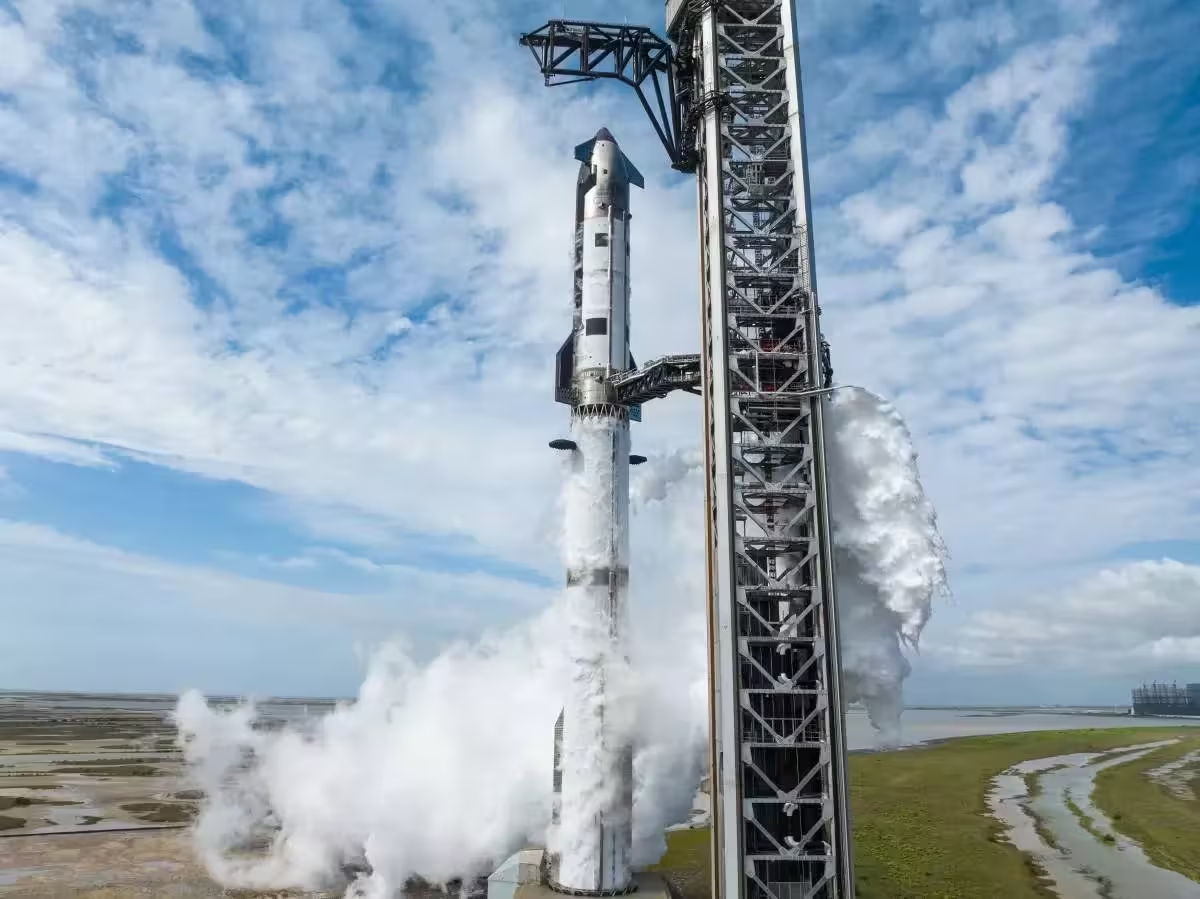
This mission also carries payloads: up to 26 of the new Starlink V3 satellites. These larger, more capable craft can only ride to space under Starship's enormous fairing. SpaceX says three of the satellites have onboard cameras tasked with photographing Ship's heat shield after deployment. Engineers will study those images to evaluate how the thermal protection fared during reentry, and to guide design improvements.
Why does all this matter? Because orbit changes everything. Suborbital hops validate engines, structure and basic handling. But reaching orbit reliably—and then recovering and reusing the hardware quickly—is the gateway to cheap, regular access to space. SpaceX has demonstrated catching the Super Heavy booster with the launch tower arms three times. Catching Ship itself with the so-called "chopstick" arms remains unproven. And orbital refueling of Ship, another critical capability for Moon and Mars missions, is still on the roadmap.
Starlink is another layer to the story. SpaceX's broadband constellation already counts more than 11,000 active spacecraft, but none are the beefed-up V3 satellites planned for this flight. Elon Musk has repeatedly said the goal is to scale Starlink with tens of thousands of V3s—he has mentioned figures as high as 100,000—boosting global bandwidth and resilience.
So this flight is a test of many things at once: orbital insertion, upper-stage survivability, mass deployment of larger internet satellites, and a step closer to routine reusability. Some milestones will have to wait. Catching Ship with the tower. On-orbit refueling. Those will come in later flights, if all goes well here.
Delays are part of pioneering. They buy time for checks and last-minute fixes. Still, the world will be watching when Starship next lights off—because when this behemoth works as intended, it will change how we reach space.


Leave a Comment
Comments
No comments yet. Be the first.