

Imagine a slow, invisible remodeling of your body — not a single dramatic event, but a steady drip of pressure that chips away at the heart's architecture. That is what researchers now warn may be happening to millions of people living with constant, low-level stress.
Scientists at Imperial College London analyzed health records, heart scans and blood tests from 488,579 volunteers and looked across 169 environmental and social exposures: everything from air pollution and smoking to sleep patterns, loneliness and financial strain. What emerged was a pattern linking chronic, low-grade inflammation with subtle but measurable changes in heart structure — smaller chambers, thickened walls and reduced pumping efficiency — alterations that can precede heart failure.
The pattern also showed up in outcomes. People in the highest fifth of inflammatory markers were about 43 percent more likely to suffer a major cardiovascular event (roughly 15 percent versus 11 percent over the study follow-up) than those in the lowest fifth. In plain terms: persistent stress and its biological footprints raise the odds of heart attack and stroke.
So what drives this hidden inflammation? The authors point to a mix of social and biological factors. Socioeconomic disadvantage and psychological distress were strongly associated with higher inflammation, alongside established risks like smoking, inactivity and higher body fat. There was a genetic signal too — some people appear genetically primed to be more vulnerable to inflammation from life’s pressures, while others are more resilient.
Finding inflammatory proteins linked to heart changes is a crucial clue. These molecules could become the targets for drugs designed to blunt the damage or the biomarkers used in blood tests to flag people at risk before the first emergency. Researchers suggest combining such biomarkers with genetic risk scores to identify those who would benefit most from early intervention.
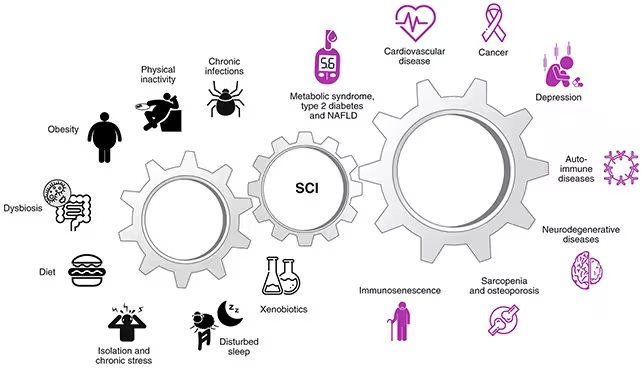
Chronic inflammation has been linked to several causes and consequences.
This study suggests that the costs of stress are not just emotional — they are structural, measurable and harmful to the heart.
Of course, correlation is not the same as causation. The study doesn’t prove that stress causes heart change in every case, but the evidence paints a credible pathway: daily stressors contribute to chronic inflammation, chronic inflammation alters heart muscle and chamber geometry, and those changes raise the chance of heart attack or stroke.
There are practical implications right now. Addressing deep-rooted social problems like poverty and mental-health access is essential but slow. Meanwhile, tried-and-true preventive measures remain powerful: smoking cessation, weight management, improved sleep, regular physical activity and a balanced diet can all lower inflammatory burden and cardiovascular risk.
Researchers behind the paper emphasize the scale of the issue: hidden inflammation may be widespread, quietly reshaping hearts in ways most people — and their doctors — don’t yet appreciate. The work appears in the European Journal of Preventive Cardiology and opens the door to new diagnostics and treatments aimed at the biochemical fallout of modern life.
We tend to think of stress as something we feel. This study urges a fuller view: stress can also be something that changes us, at the level of tissue and protein. If that’s true, then measuring and managing inflammation could become part of everyday cardiovascular care — and a reason to take both social factors and small daily habits seriously for the sake of our hearts.


Leave a Comment
Comments
No comments yet. Be the first.