
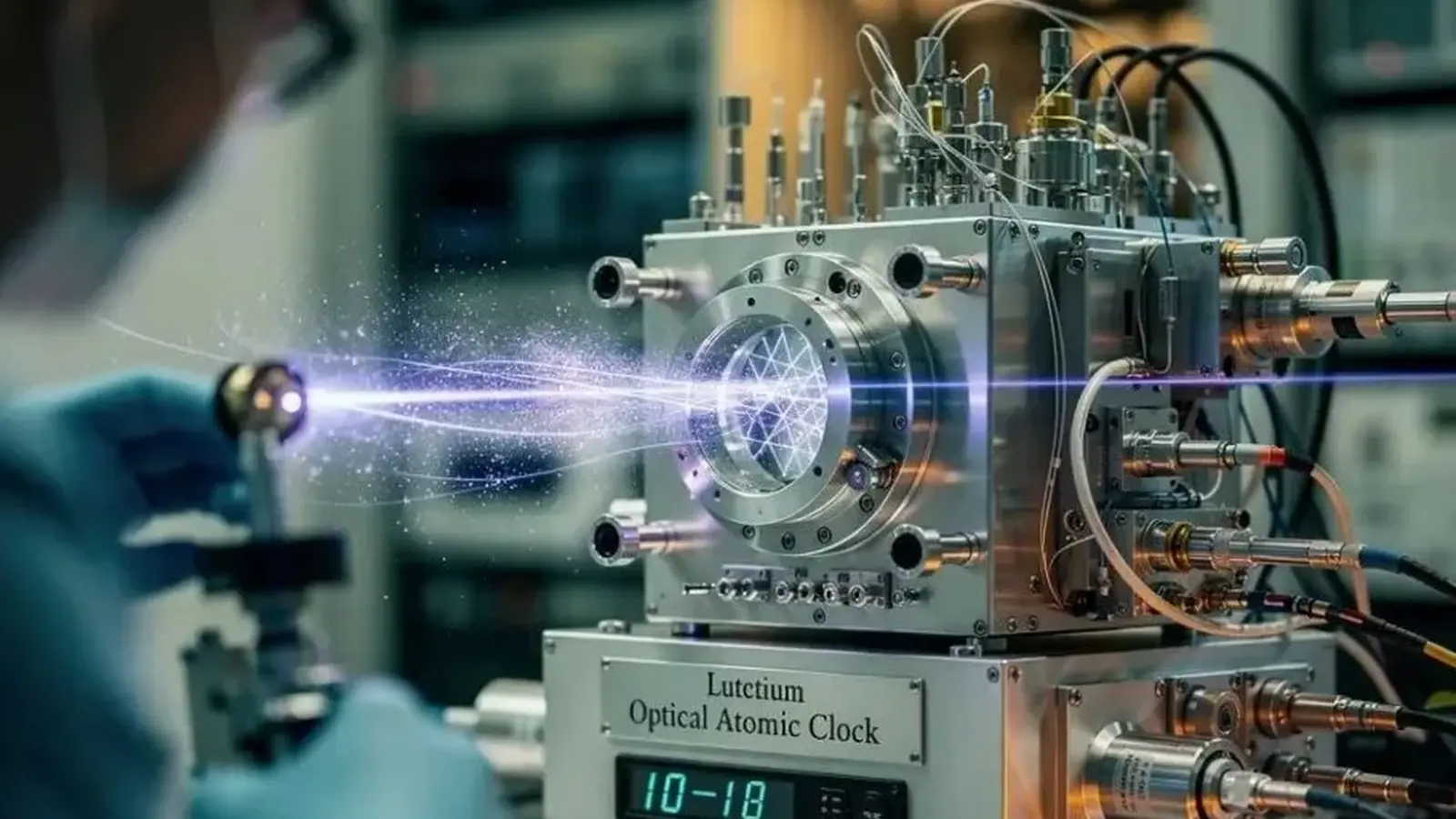
Imagine a clock so steady that it can sense the tiny tug of Earth's gravity across a few millimetres of height. Sounds like science fiction? Not anymore. Researchers at the Centre for Quantum Technologies in Singapore have unveiled an optical atomic clock based on lutetium that, in lab tests, outpaces every other atomic clock on record.
Atomic clocks keep time by watching electrons swing between energy states, like a pendulum in a grandfather clock but far faster and far finer. For decades, cesium ruled as the time standard. Lately, scientists have chased higher-frequency oscillators—ytterbium, strontium, aluminum—to squeeze more precision out of each tick. Lutetium, it turns out, is an exceptional new contender.
Lutetium sits at the tail end of the lanthanide series, just after ytterbium. It is heavier and, crucially for clocks, less prone to jitter from thermal radiation and magnetic-field shifts. Those environmental insensitivities translate into steadier beats. Murray Barrett, a physicist at the National University of Singapore who led the project, says the device remains stable in extremes—from Death Valley heat to Antarctic cold.
The Singapore team spent more than a decade mapping lutetium’s atomic behavior and developing a technique they call hyperfine averaging to define the clock transition with exceptional clarity. Then they built two identical lutetium clocks and ran them side by side for 200 hours. The pair achieved an uncertainty of 5.7×10^-19—making them the most precise pair of atomic clocks ever compared.
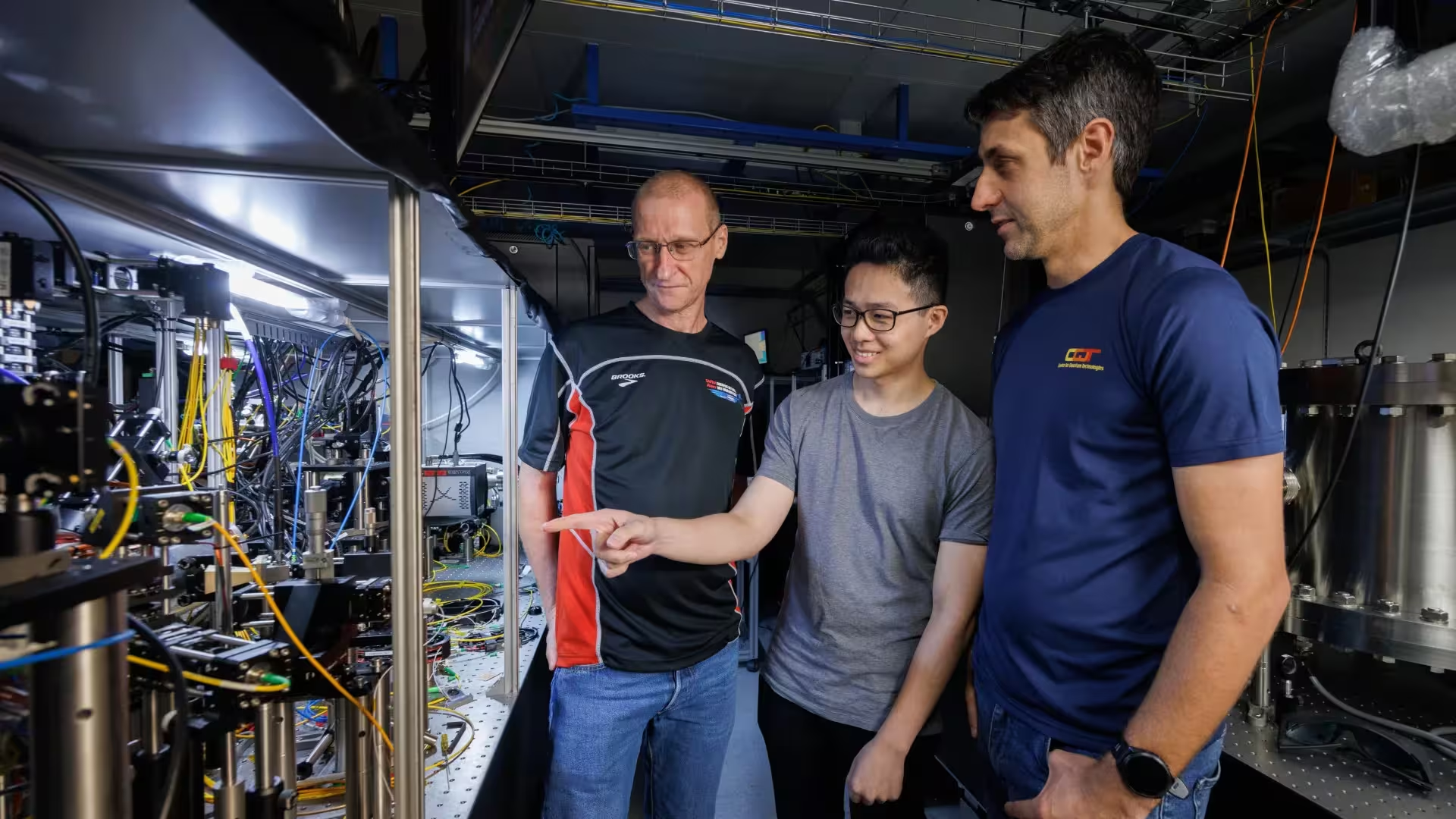
The clock’s frequency was measured to 19 decimal places, with an uncertainty as low as 1×10^-19—the smallest uncertainty reported for any optical atomic clock so far.
Why does this matter beyond bragging rights? Because at that level of precision timekeeping becomes a tool for sensing minute changes in gravity and height. The new lutetium clock can detect time shifts caused by gravitational differences over distances measured in millimetres. That opens doors for more accurate geodesy, underground mapping, and tests of fundamental physics.
The international body that oversees time standards, the BIPM, is already evaluating data from optical clocks for a possible redefinition of the second—likely around 2030 or later. Advances such as Singapore’s lutetium clock will be central to that conversation.
Next steps for the team are practical: shrink the apparatus and make it portable. A field-ready lutetium clock could reshape how we measure Earth, map resources, and synchronize technologies that rely on ultra-precise time. If a second can be pinned down this well, what new measurements will become possible?


Leave a Comment
Comments
No comments yet. Be the first.