
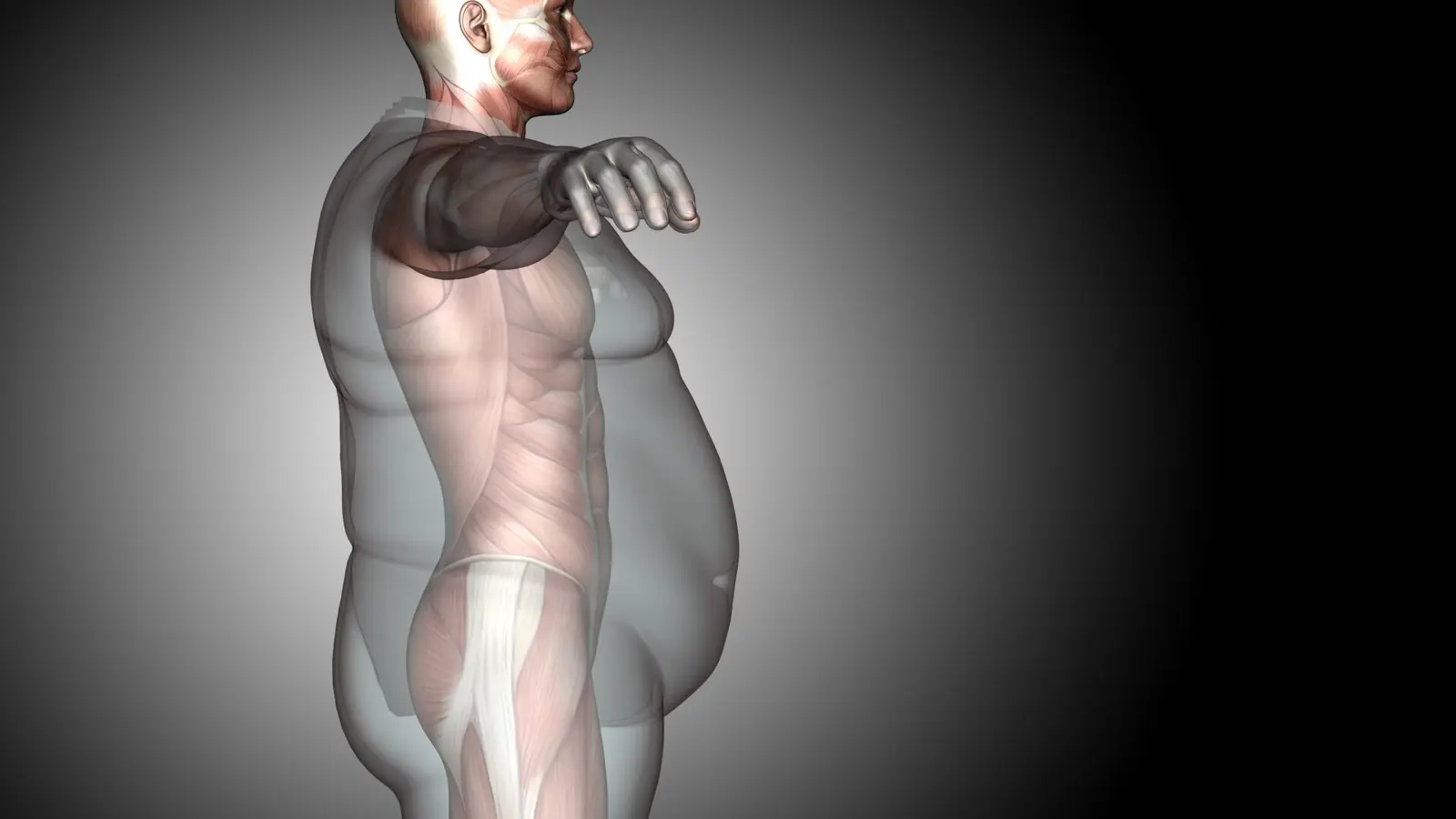
You’ve felt the scale drop. You’ve noticed your jeans loosen. But what actually happens to that vanished mass? The surprising answer is simple enough to test: breathe out.
If you picture fat as disappearing into thin air, you’re closer to the truth than you might think. Stored body fat is mostly carbon and hydrogen bound up with oxygen. When the body taps that reserve for energy, a cascade of chemical reactions breaks those molecules apart. Much of the carbon ends up as carbon dioxide, which we exhale. Much of the hydrogen combines with oxygen to form water, which the body sheds through urine, sweat and other fluids.
How does that chemistry play out inside us? Fat is stored as triglycerides inside adipocytes—fat cells. In times of calorie deficit, hormones and nervous signals flip a switch called lipolysis. Triglycerides split into fatty acids and glycerol, and the fatty acids travel into mitochondria, the cell’s power plants. There they undergo beta-oxidation, a stepwise process that trims carbon atoms from the chain and feeds them into the metabolic cycle that generates ATP, the body’s usable energy currency. The waste products of this biochemical furnace are carbon dioxide and water.
Numbers help make the result less abstract. Metabolic researchers estimate that roughly 84% of the mass lost from pure fat oxidation leaves the body as carbon dioxide breathed out through the lungs, while about 16% departs as water. So for every 10 kilograms of fat burned, roughly 8.4 kilograms becomes CO2 and about 1.6 kilograms becomes water—shed via sweat, urine, tears and other routes. Exact figures are tricky to pin down in humans, because tracking all outputs over weeks or months is logistically challenging, but the general balance is clear: the lungs do most of the heavy lifting.
That doesn’t mean exercise is redundant. Physical activity raises the rate at which your cells burn fuel and increases ventilation—you breathe more and deeper—so more of that carbon leaves as CO2. Diet plays the leading role by creating the calorie deficit; exercise accelerates and shapes where the energy comes from and how quickly the process runs.
Why does this matter beyond trivia? Because understanding the pathway helps debunk myths. Fat is not “turned into” muscle. It’s not simply excreted as junk. It’s oxidized. Its atoms are rearranged into gases and liquids that your body disposes of through familiar routes—mainly your breath.
If you want to lose fat: create a sustainable calorie deficit and move regularly—then breathe.
Think of weight loss less as losing matter and more as transforming it: carbon joins oxygen, floats away as CO2 and vanishes with each exhalation. Not glamorous. But elegant. And reassuringly physical.

Leave a Comment
Comments
No comments yet. Be the first.