
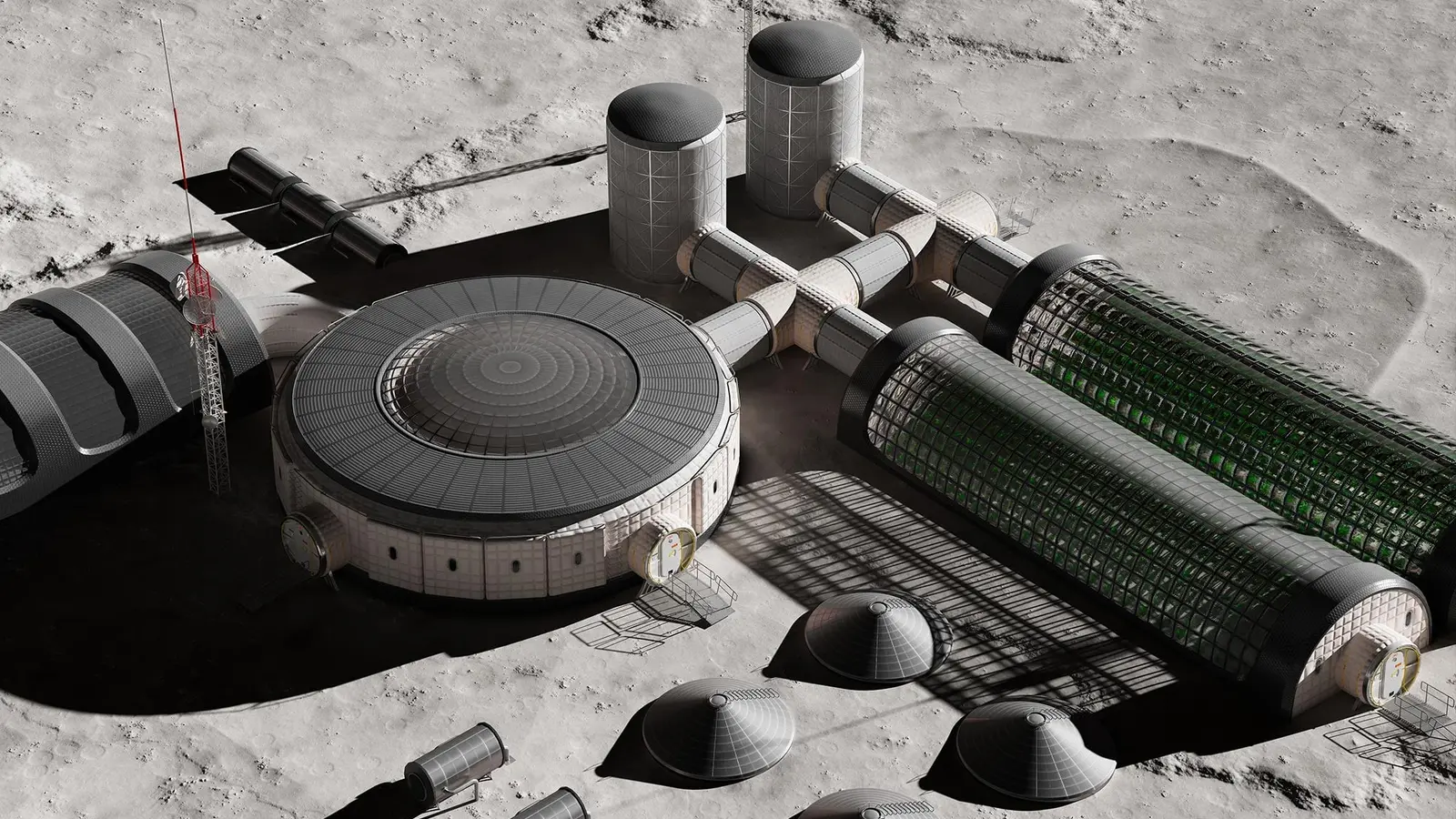
The dream of people living on the Moon hinges on a deceptively fragile resource: water. Imagine a town carved into the rim of a polar crater, where solar panels soak up near-constant sunlight while ice sleeps in the shadows below. It sounds sustainable. But the math is stubborn.
Polar cold traps—deep, permanently shadowed craters—hold water ice that has sat undisturbed for billions of years. Temperatures there can dip below about 110 kelvin, chilling the landscape to roughly minus 163 degrees Celsius. At those extremes, ice barely changes; sublimation would shave away no more than a millimeter in a billion years. That’s why planners fixate on these pits: they are nature’s slow-motion freezer, preserving water delivered by ancient asteroid impacts.
Sunlit rims nearby offer a complementary asset. Often called "peaks of near-eternal light," these high points receive long stretches of illumination and could host solar arrays or even kilometer-tall towers of panels. The idea is simple: dig for water in the cold shadows, power life on the bright edges. With local silicon and some manufacturing, those rims might generate gigawatts of electricity—enough to run habitats, factories, and computing centers.
So where does the problem arise? It’s a matter of scale and loss. Early studies have modeled settlements ranging from tiny outposts to cities of 100,000 or even a million people. Without recycling, even a generous stockpile—say, a billion tons of water—would vanish in a few years under urban demand. Recycling changes the story, but it doesn’t make the clock stop.
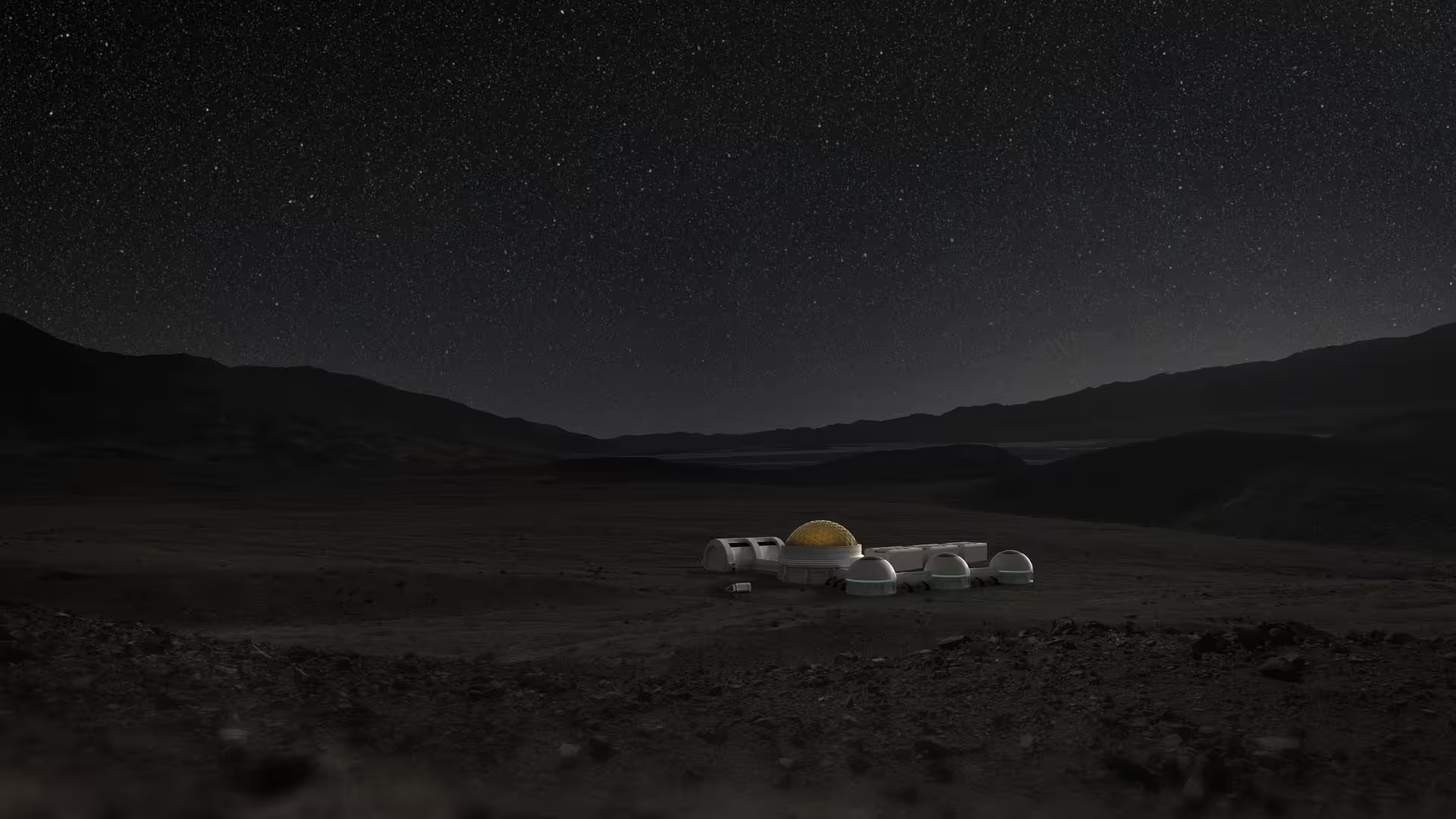
The International Space Station recovers roughly 98% of its water. If a lunar city matched that performance, the billion-ton example stretches to about a century for a million residents. That sounds better. Yet a 2% loss per cycle is a slow leak: tiny percentages compile into a dwindling reservoir over decades. Even tiny losses in recycling become a ticking clock for a million-person lunar city.
And the picture darkens when you compare optimistic reserves to current surveys. Present estimates place accessible lunar ice at roughly one-thirtieth of that billion-ton benchmark. Scale everything down by thirty, and a large settlement could burn through its allotment in only a decade. Smaller communities—thousands rather than millions—would fare far better, potentially stretching local supplies for centuries.
That tension—between settlements that are sustainable and those that are not—lies at the heart of competing visions for the Moon. Proposals range from modest science bases and agricultural villages to heavy industry and self-expanding cities. To make those larger ambitions real, planners have three levers: waste less, find smarter ways to meet demand, or discover more water.
Waste reduction means pushing recycling efficiency well beyond current norms. It also means cutting per-capita demand through design choices: closed-loop life-support systems, water-wise hygiene protocols, and techniques like vertical farming that squeeze yield from minimal water. Another strategy is import: hauling water from hydrated asteroids or other celestial sources. Feasible? Yes, but expensive and logistically complex.
Perhaps the most promising option is simply to look deeper. Remote sensing so far probes only a few meters below the regolith. Yet the loose, rubble-like layer of lunar soil can extend tens of meters down. Beneath the surface, within cold traps, there may be considerable ice that current instruments cannot detect. If so, the Moon's water budget could be far larger than we now imagine—and with it, the potential for long-lived settlements.
Dreams of lunar cities will have to grapple with arithmetic as much as engineering. The Moon offers water and power in proximity, but turning that into thriving, resilient communities means reconciling appetite with supply—or finding new sources before the tap runs out.
.avif "Chinese Scientists Pioneer Technology to Extract Oxygen, Water, and Rocket Fuel from Lunar Soil")

Leave a Comment
Comments
No comments yet. Be the first.