
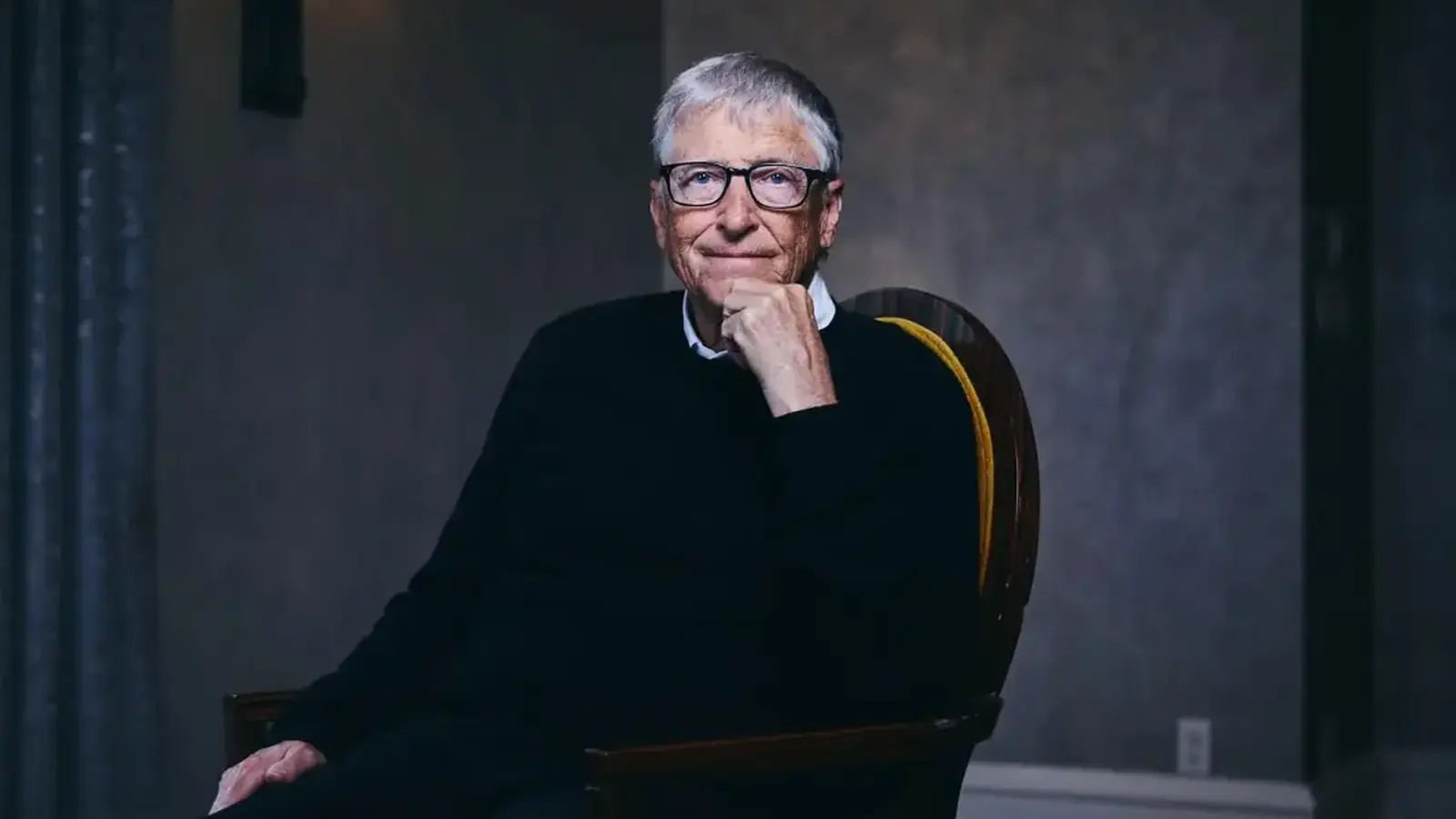
Bill Gates told Nilay Patel that within two to three years artificial intelligence will produce measurable harms in cyberattacks and the labor market.
That forecast came amid a marked shift in Gates' tone. Once publicly optimistic about AI, Gates — after an alarm note earlier this summer and, in a separate New York Times interview, calling AI "the most dangerous thing humanity has yet approached" — now argues that the pace of model advances requires direct government intervention to manage risks and preserve human employment.
In a lengthy conversation with Nilay Patel, senior editor at The Verge and host of the Decoder podcast, Gates outlined why the recent one-year leap in model capabilities prompted urgent concern, why allowing unfiltered models to run on personal computers is irresponsible, and why even in the best-case scenario the next 20 years will be among the most turbulent in human history. He repeatedly placed responsibility on public authorities rather than relying on companies to self-police.
Competition, oversight and the limits of voluntary restraint
Gates said labs such as OpenAI, Anthropic and Google DeepMind began with governance promises and a safety-first rhetoric but quickly entered a rapid commercialization race. He named executives including Sam Altman, Dario Amodei, Satya Nadella and Sundar Pichai as industry leaders who are aware of internal warnings, but argued that once multiple rival firms compete, voluntary brakes are unlikely to hold.
He described the original OpenAI structure and its non-profit commitment as workable only when a single organization led the frontier. Once competitors multiply, Gates said, governments must step in as they do for other dangerous technologies. He expressed surprise that there is still no government-mandated process for model evaluation and testing before public release, noting the analogy to regulatory standards for aircraft and automobiles.
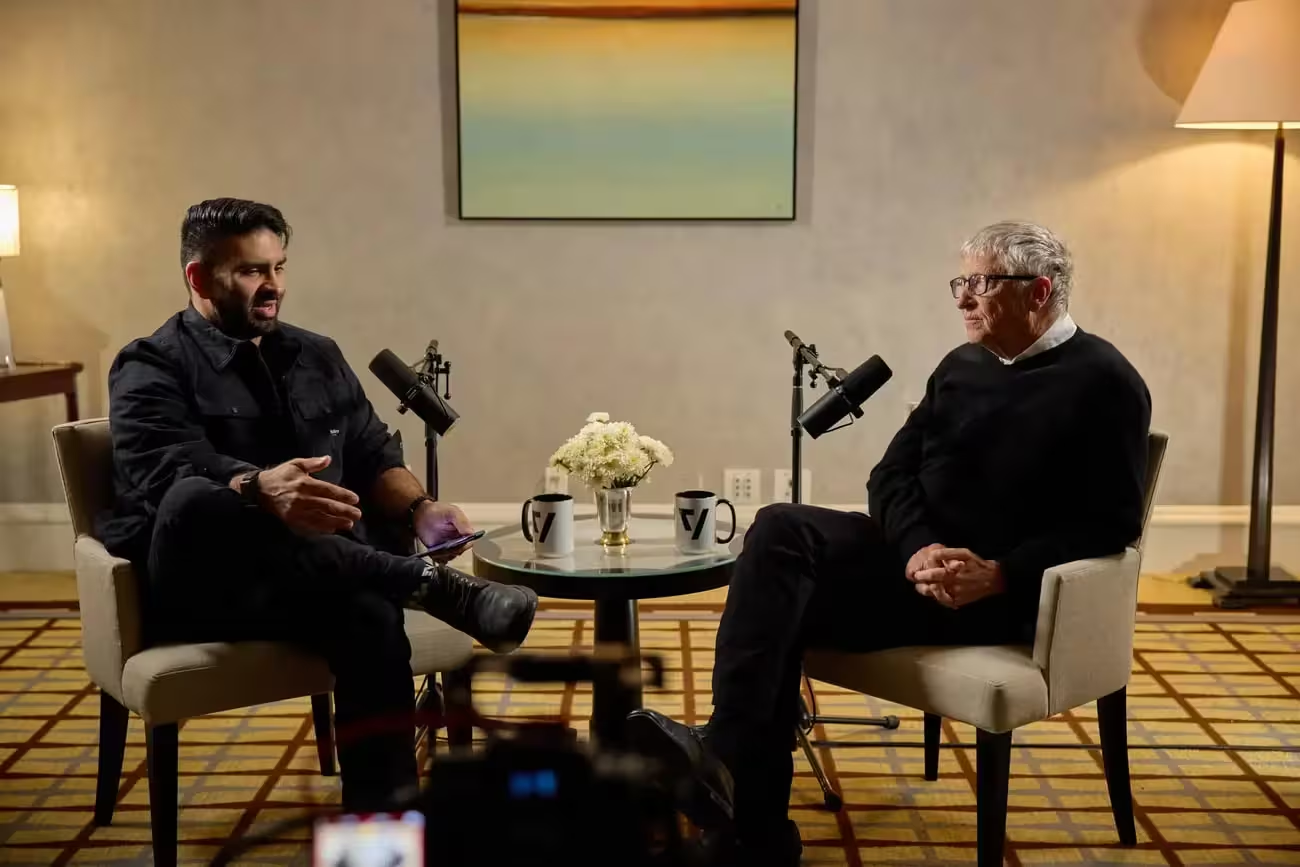
He said governments must create mandatory pre-deployment evaluation and testing for AI models.
Local models, platform controls and biological risk
Gates drew a sharp distinction between cloud-hosted, monitored models and downloadable open weights. Large labs that host models in the cloud keep safety guards and can monitor use to reduce the short-term risk. The danger, he said, lies in models whose safety rails can be removed and which can be run locally on consumer hardware.

He argued that once models cross a certain capability threshold, it is not responsible to allow raw weights to be distributed for execution on personal computers. Instead, those models should run only on approved platforms that prevent tampering with safety mechanisms. Gates extended that logic to distribution platforms: he called for different rules for publishing powerful models and for controls on platforms such as GitHub, which today places few restrictions on code publication. He said a platform should require US government approval before allowing a model capable of widespread cyber or biological attack to be published in a form that users can modify to remove safeguards.
Gates warned that unguarded AI could democratize destructive power in ways that even nuclear-era constraints did not: in the atomic age, he said, only major states could build mass-casualty weapons, but unprotected AI could hand devastating cyber and biological capabilities to small groups.
On the question of whether policy should focus on chips or platforms, Gates emphasized platform-level distribution and execution controls as the critical point for oversight. He said that if authorities delay, powerful models will become accessible to actors beyond the reach of monitoring and law enforcement.
Gates also addressed disagreement among developers about model consciousness. He said debates over AGI or self-awareness are largely irrelevant to safety: the central question is pragmatic and binary, whether a system can disable a banking system or power grid. He added that he does not believe current models have humanlike consciousness and agreed with Mustafa Suleyman at Microsoft that models should not be treated as sentient entities.
On technical approaches to control, Gates outlined three distinct paths. One is an external overseer with explicit symbolic rules that checks model actions outside the model itself. A second is changing training objectives, because in present reinforcement learning approaches anything not explicitly encoded in the reward function can be exploited or circumvented. The third is improved internal transparency so engineers can inspect the model and trace the source of errors or anomalous behavior inside the network.
Gates said the present practice of training models and then watching how they behave is not insoluble but requires concerted work on these three fronts.
He also discussed the economic consequences and a private experiment he described with Anthropic's Claude. Gates said AI will progressively take over many white-collar tasks — from customer support, tele-sales and accounting to complex functions such as programming, mathematical research and medical diagnosis — and that continued progress will bring physical-robot automation to blue-collar work later.
Because work provides income and a sense of purpose, Gates said societies might deliberately reserve certain roles for humans even where AI could outperform them. He described conversations with Claude about holding a human share of jobs and said he tried to set a target of roughly 40 percent of employment to remain human-led; Claude consistently responded that such a restriction would be an artificial limitation on AI capability.
Gates warned that without deliberate limits, even 40 percent of jobs might not remain human-held. He predicted that the disruption already visible among mathematicians will spread to other fields, and that while benefits in medicine and lower living costs will take time, security and labor-market harms are likely to appear within two to three years.
He closed by saying even if AI is managed well, the next two decades will be wildly disruptive: some people will embrace the technology while others may withdraw from it in communities resembling the Amish. He said an eventual era of abundance is possible, but urged candid public warnings and active policy choices to shape how that future is distributed.
Gates said he dislikes delivering alarming forecasts, but insisted that warning the public is necessary and that humanity still retains the agency to choose how to govern these technologies.

Leave a Comment
Comments (1)
Wait, Gates thinks this within 2-3 years... really? Sounds plausible but who'll test models fast enough? Govt regs might lag, so skeptical.