
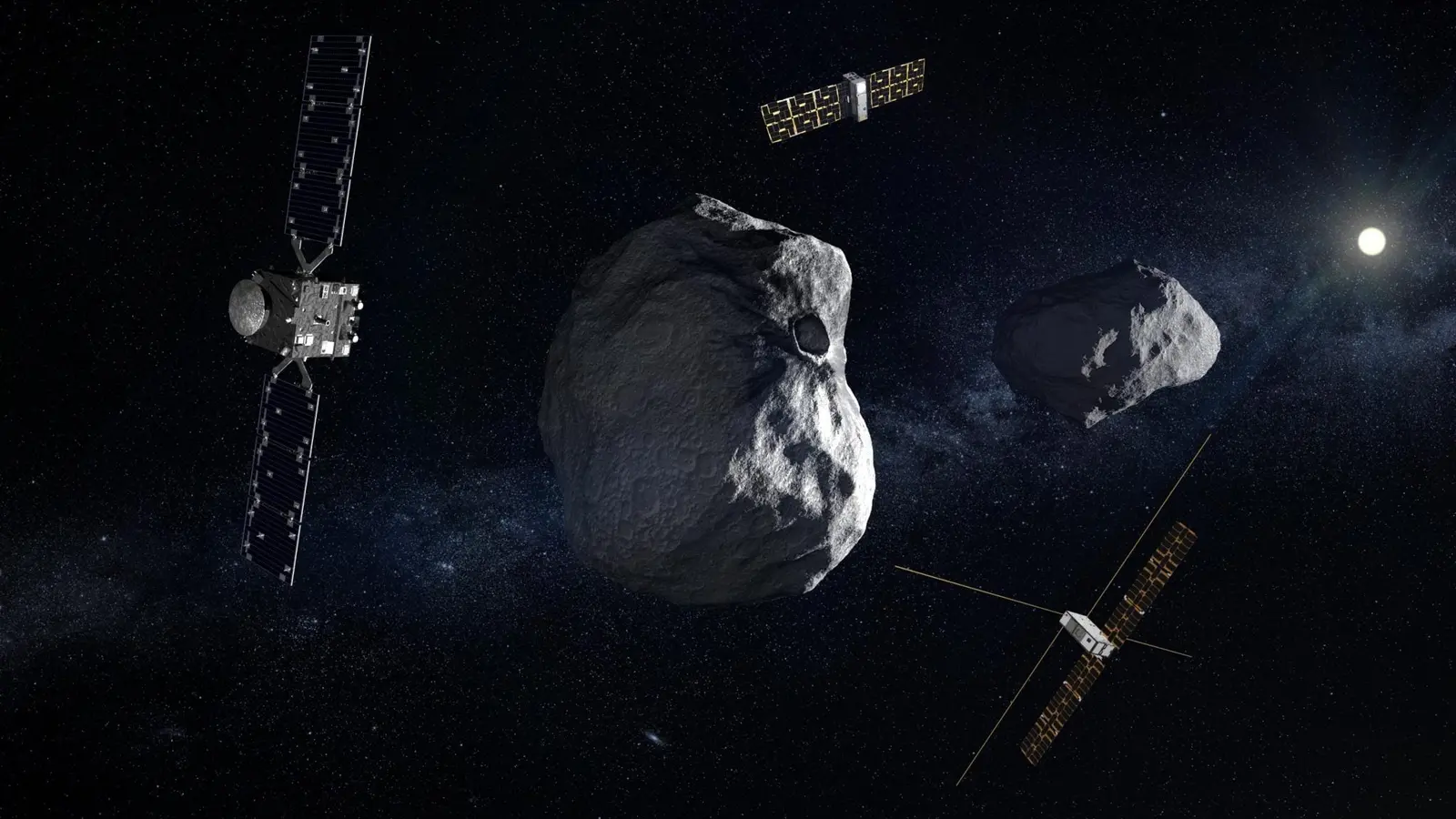
Think of a bruise on a pebble-sized world. Tiny, but telling. That bruise is Dimorphos, the smaller member of a binary pair that NASA deliberately struck in 2022, and now ESA's Hera has arrived to read the story written in dust and rock.
Only about the size of a small car, Hera is prowling the Didymos system at roughly 25 to 30 kilometers distance. It has entered an early characterization phase, the careful first look that missions take before moving in closer. Images and measurements collected now will frame every subsequent experiment, from mapping surface scars to measuring how the asteroid's orbit and shape responded to a hypervelocity impact.
Why the fuss? Because on September 26, 2022, NASA sent the DART spacecraft—a 580-kilogram vehicle—hurtling into Dimorphos at more than 6 kilometers per second. The collision unleashed a plume of debris that spread for thousands of kilometers and shortened Dimorphos' orbit by about 33 minutes. The method used, called kinetic impact, proved capable of nudging an asteroid. But it also raised hard questions: did DART dig a crater, or did it shatter and reshuffle the surface? How much mass did the moonlet actually have? Why was the change larger than models predicted?
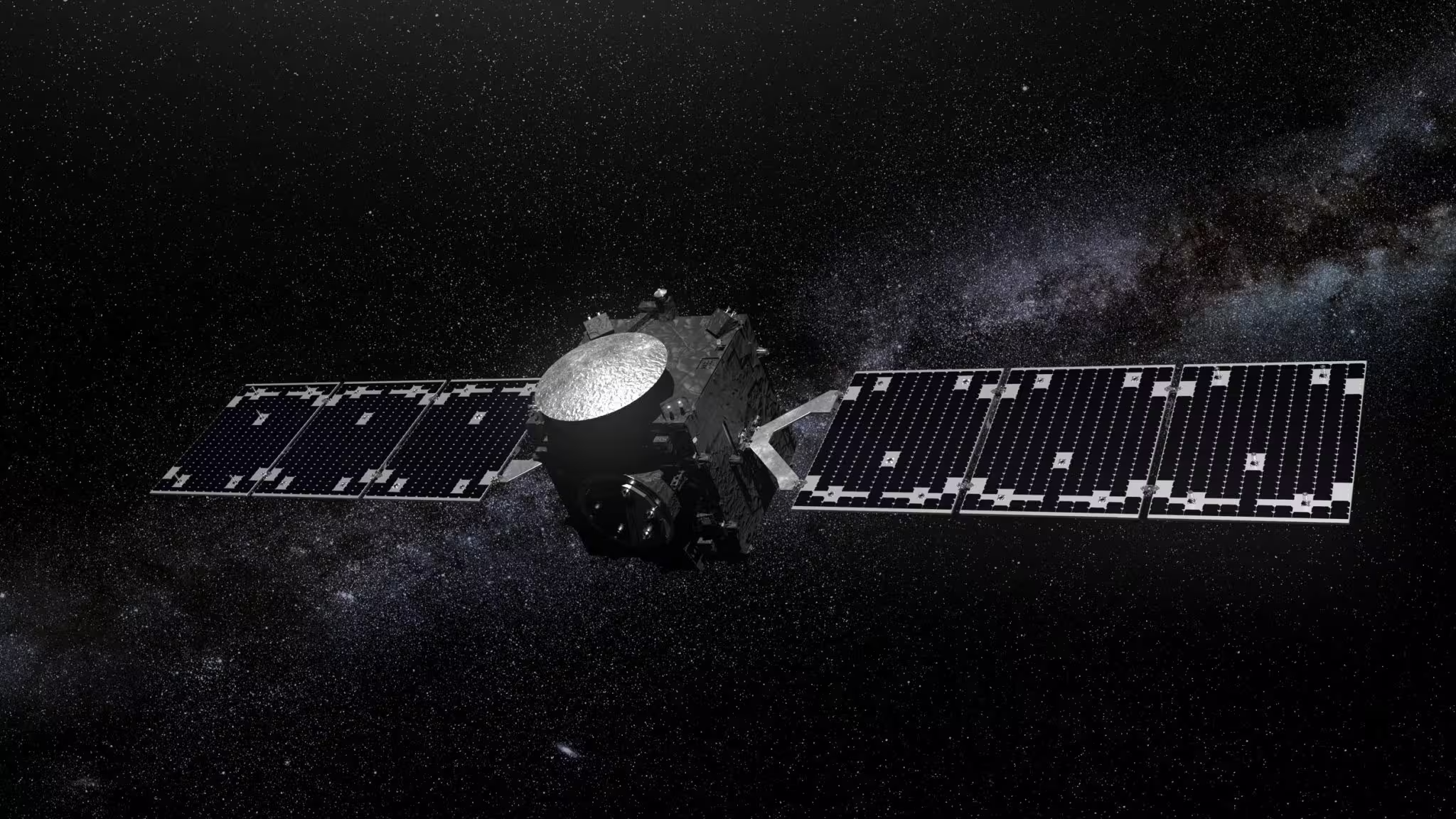
ESA’s Hera mission is humankind’s first mission to explore a binary asteroid system. The mission will perform a close-up survey of the Dimorphos asteroid, which has previously had its orbit shifted by kinetic impact with NASA’s DART spacecraft.
Hera's job is to answer those questions. The spacecraft will map the crash site in unprecedented detail, gather precise measurements of mass and internal structure, and sample how ejecta was thrown into space. Two shoebox-sized CubeSats will peel off and fly even closer, offering perspectives Hera cannot safely take from its higher perch. Together they will turn a single bold test into meaningful, repeatable science for planetary defense.
Navigating a tiny binary system is nothing like orbiting a planet. Gravity near Didymos and Dimorphos is whisper-light: the larger rock's gravity is roughly 40,000 times weaker than Earth's, the smaller around 200,000 times weaker. A smooth circular orbit would be impractical—Hera instead follows a choreography of near-straight segments, tracing rectangular paths as it drifts around the pair. Its net speed relative to the system is astonishingly slow, roughly 12 centimeters per second. Slow and safe. If a thruster firing were to fail, Hera will drift outward, not toward a collision. Fuel bills stay modest too.
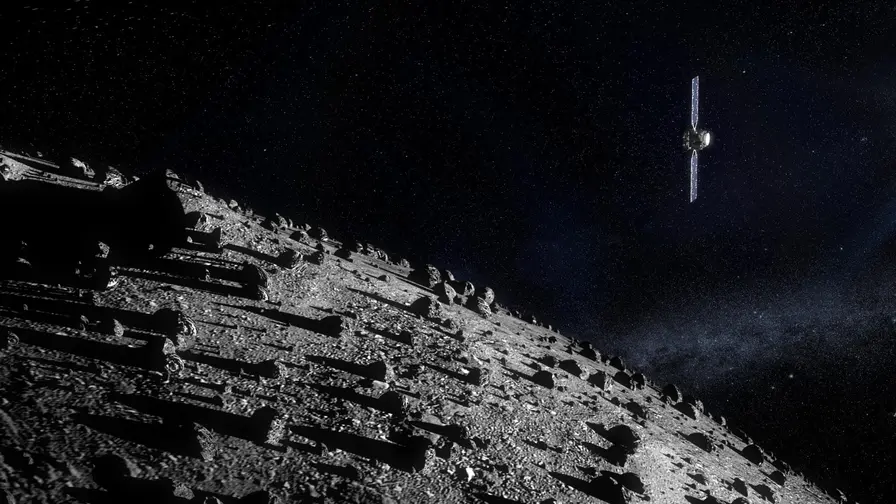
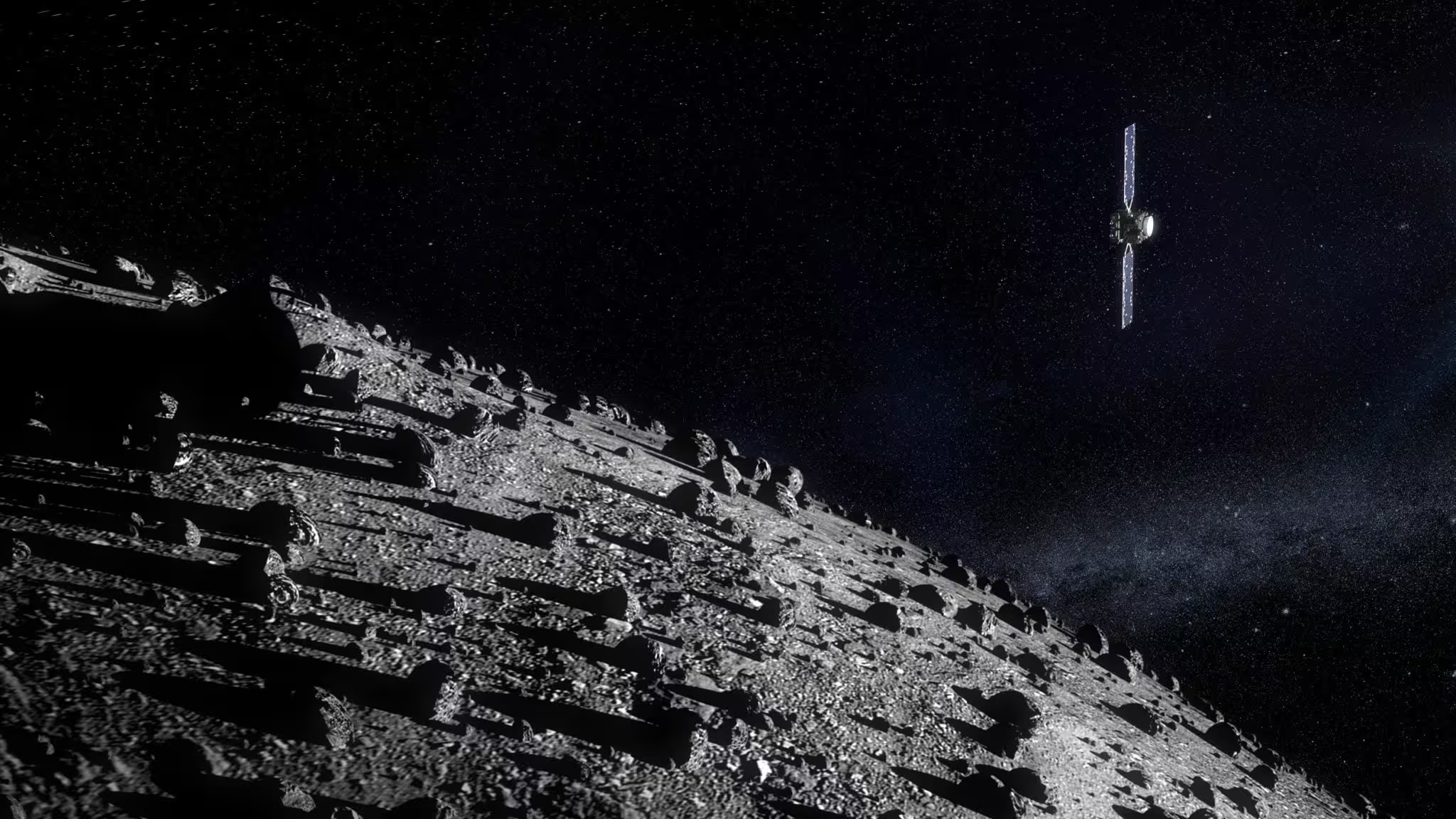
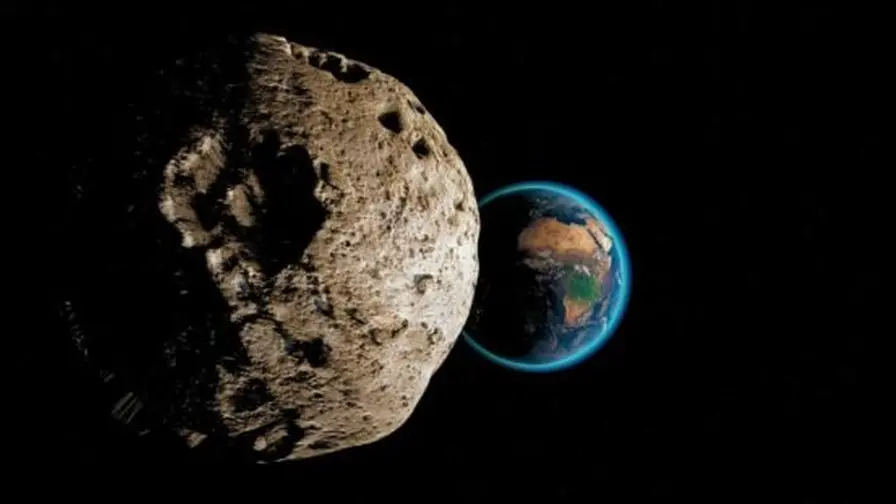
ESA’s Hera mission for planetary defense is seen approaching the boulder-strewn Dimorphos asteroid.
These maneuvers borrow lessons from Rosetta, and mission control in Darmstadt runs the show. Controllers speak to Hera for about eight hours each day from Earth, relaying commands across a network of deep-space antennas in Argentina, Spain, and Australia. Flight dynamics specialists constantly refine Hera's position, turning radio signals and telemetry into steering decisions measured in centimeters and hours.
Next up is a more intimate phase. The spacecraft will switch to tighter paths, sometimes described as bowtie-like or composed of hyperbolic arcs, edging toward distances near 20 kilometers. That is where the instruments can resolve surface features, boulder fields, and the geometry of whatever crater or collapse DART produced. It is where mass estimates sharpen, and where scientists can finally test competing models against the messy reality on Dimorphos.
None of this is academic. If humankind ever faces a dangerous near-Earth object, we will want to know whether a kinetic strike reliably does what physics says it should. Did ejecta amplify the effect? Did internal porosity or rubble-pile structure change the outcome? Hera may reveal that some models were lucky, others incomplete, and a few simply wrong.
The mission is the first to survey a true binary asteroid system so close up. It transforms a dramatic stunt into a laboratory experiment spread across millions of kilometers of space. We are learning how to read impact scars, how to weigh worlds without dropping a scale on them, and how to choreograph a delicate dance around gravitational whispers.
Hera will spend months turning raw images and radio data into answers. For now, it watches. We watch with it. Because this is not just about one rock in the solar system; it is practice for protecting a planet that still has much to learn about its smallest threats.

Leave a Comment
Comments
No comments yet. Be the first.