

New international research shows that soaring temperatures are doing more than stressing ecosystems and public health—they are disrupting how very young children reach basic learning milestones. The study links heat exposure to reduced rates of early literacy and numeracy achievement, with the strongest effects among children already living in poverty or with limited access to basic services.
Heat and early milestones: what researchers uncovered
Scientists analyzed development data for 19,607 children, ages three and four, across six countries: Gambia, Georgia, Madagascar, Malawi, Palestine, and Sierra Leone. The team combined measures of child development with local climate records and household surveys to ask a simple but urgent question: does unusually high temperature exposure make it less likely that young children will meet expected literacy and numeracy milestones?
When average monthly maximum temperatures climbed above about 86 °F (30 °C), researchers found a clear drop in the probability that a child would reach basic reading and number skills. After accounting for season and region, children exposed to these hotter-than-usual months were roughly 5–6.7% less likely to meet literacy and numeracy benchmarks than peers who experienced milder months.
How the study measured development and climate
The research used the Early Childhood Development Index (ECDI) to assess four developmental domains: literacy and numeracy, social-emotional skills, learning behaviors, and physical development. Survey data from the Multiple Indicator Cluster Surveys (MICS) — including household education, health, nutrition, and sanitation indicators from 2017–2020 — allowed the team to control for family- and community-level factors while matching each child to local temperature records.
Why those measures matter
The ECDI is a widely used screening tool for population-level monitoring of early skills; it flags whether a child is achieving age-appropriate milestones, not clinical diagnoses. Coupling that with detailed household data and month-by-month temperature records let the researchers isolate the association between heat exposure and early learning outcomes across diverse geographic settings.
Who is most vulnerable?

The heat-linked setbacks were not evenly distributed. Children from economically disadvantaged households, those lacking reliable access to clean water, and children in urban environments experienced larger declines in literacy and numeracy attainment. That pattern suggests heat amplifies existing inequalities: environmental stressors and resource constraints combine to make some children particularly susceptible to developmental disruption.
“Because early development lays the foundation for lifelong learning, physical and mental health, and overall well-being, these findings should alert researchers, policymakers, and practitioners to the urgent need to protect children’s development in a warming world,” says Jorge Cuartas, the study’s lead author and an assistant professor of applied psychology at NYU Steinhardt. The team emphasizes that further work is needed to identify the precise mechanisms—whether the pathway is biological (heat effects on sleep, nutrition, or neurodevelopment), behavioral (reduced caregiver-child interaction during heat), or infrastructural (schools and homes without cooling).
Possible mechanisms: why heat might impede learning
Several plausible explanations could link higher temperatures to slower early learning. Heat stress can disrupt sleep and appetite, affecting brain function and attention; caregivers working in hot conditions may spend less time in stimulating interactions; schooling and community services may be less effective during heat waves; and compromised health (dehydration, infections) can indirectly reduce engagement in learning activities. The study does not yet isolate which of these drives the observed effects, but it highlights clear targets for future research and intervention.
Policy implications and practical steps
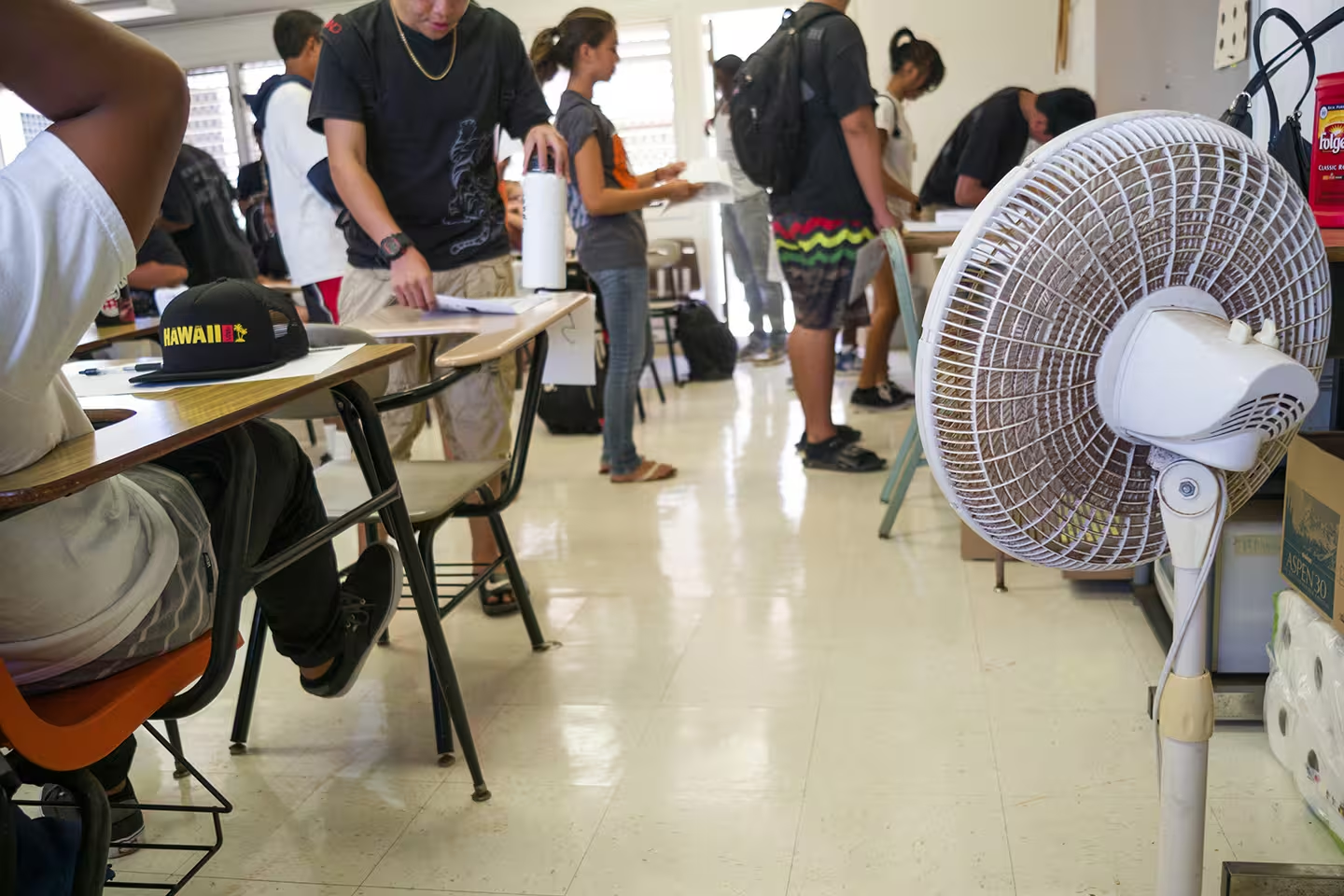
The findings point to an urgent agenda for policymakers and child welfare programs. Improving access to clean water, creating cool, safe learning environments, integrating heat-aware scheduling into early-childhood services, and prioritizing heat adaptation in urban planning could all blunt the developmental impacts of warming. Importantly, interventions that reduce inequality—improving nutrition, sanitation, and caregiver support—may also increase resilience to climate-related stressors.
Expert Insight
Dr. Maria Santos, a child development specialist not involved in the study, notes: “This research bridges climate science and early childhood policy in a compelling way. We have long-known that social conditions shape developmental trajectories; adding temperature as a measurable risk factor helps target adaptation strategies. Simple, low-cost interventions—shade, hydration, altered timing of activities—could make a measurable difference for young learners in hot regions.”
As global temperatures continue to climb, understanding and mitigating the ways heat alters early development will be essential. Protecting children’s first years is not only a matter of health and equity—it is an investment in future learning and human capital across communities worldwide.


Leave a Comment
Comments (2)
Is this even causal? Could be confounders, like school quality or malnutrition. But if true, sleep+hydration are obvious targets. curious tho
wow didnt expect heat to mess with toddlers learning this much. so sad, poor kids get hit hardest. shade, water, naps, shift timing, simple fixes