
11 Minutes
Compact, practical and now two very different futures
When Mercedes launched the GLB around 2019 it was a surprise hit: a compact SUV that rejected the swoopy, ostentatious trends of the era and embraced a clear, boxy utility. The first-generation GLB carved out a distinct identity inside the brand lineup. It felt pragmatic, German, and oddly charming — a small family hauler wearing a three-pointed star without the pretense of a larger Mercedes SUV.
Fast forward to late 2025 and Mercedes has accelerated the model cycle. The second-generation 2026 GLB arrives earlier than the usual seven-year cadence and it does more than freshen the look. Mercedes has rethought what a compact SUV can be, offering two divergent powertrain philosophies under the same nameplate: a refined 48V hybrid that keeps the familiarity of internal combustion, and a purpose-built 800V electric GLB EQ. The result is a single model that aims to serve both transition buyers and full EV adopters.
A concise background: why the GLB mattered
The original GLB (internal code X247) stood out by being unapologetically utilitarian. Taking visual cues from the G-Class, it was boxy in a way that emphasized space and functionality rather than athletic posture or sheer luxury. Unlike many compact SUVs whose rear seats were afterthoughts, the GLB offered up to seven seats, respectable luggage room and a line-up focused on efficiency rather than high-strung performance.
That combination made the GLB more than a niche oddity: it became a sensible Mercedes for families who wanted the badge and usable space but did not need a full-size GLS. It also spawned the EQB, an all-electric close cousin that proved the platform could carry both ICE and EV interpretations — until now.
What changed for 2026?
On paper the new GLB looks evolutionary, yet it is a comprehensive redesign. Mercedes says every visible and invisible component is newly developed. That includes a brand new multi-link rear suspension, improved steering, revised body surfaces and, importantly, two distinct powertrain architectures sharing a unified exterior.
The big news is how Mercedes split the model into two technical identities:
- A conventional model series powered exclusively by enhanced hybrid engines using a 48V integrated motor inside an 8-speed dual-clutch transmission.
- A dedicated GLB EQ electric car built on an 800V architecture with fast charging and battery capacities aligned to long-range expectations.
This is pragmatic engineering with a strategic purpose: make the GLB relevant to buyers who still prioritize pump-and-go convenience, while offering a full EV that is not a retrofit but a ground-up electric design.
Design language: familiar but more purposeful
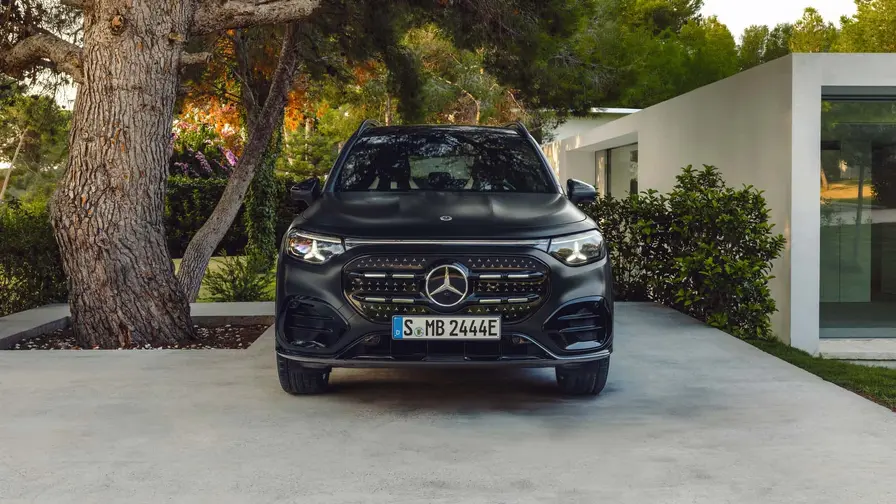
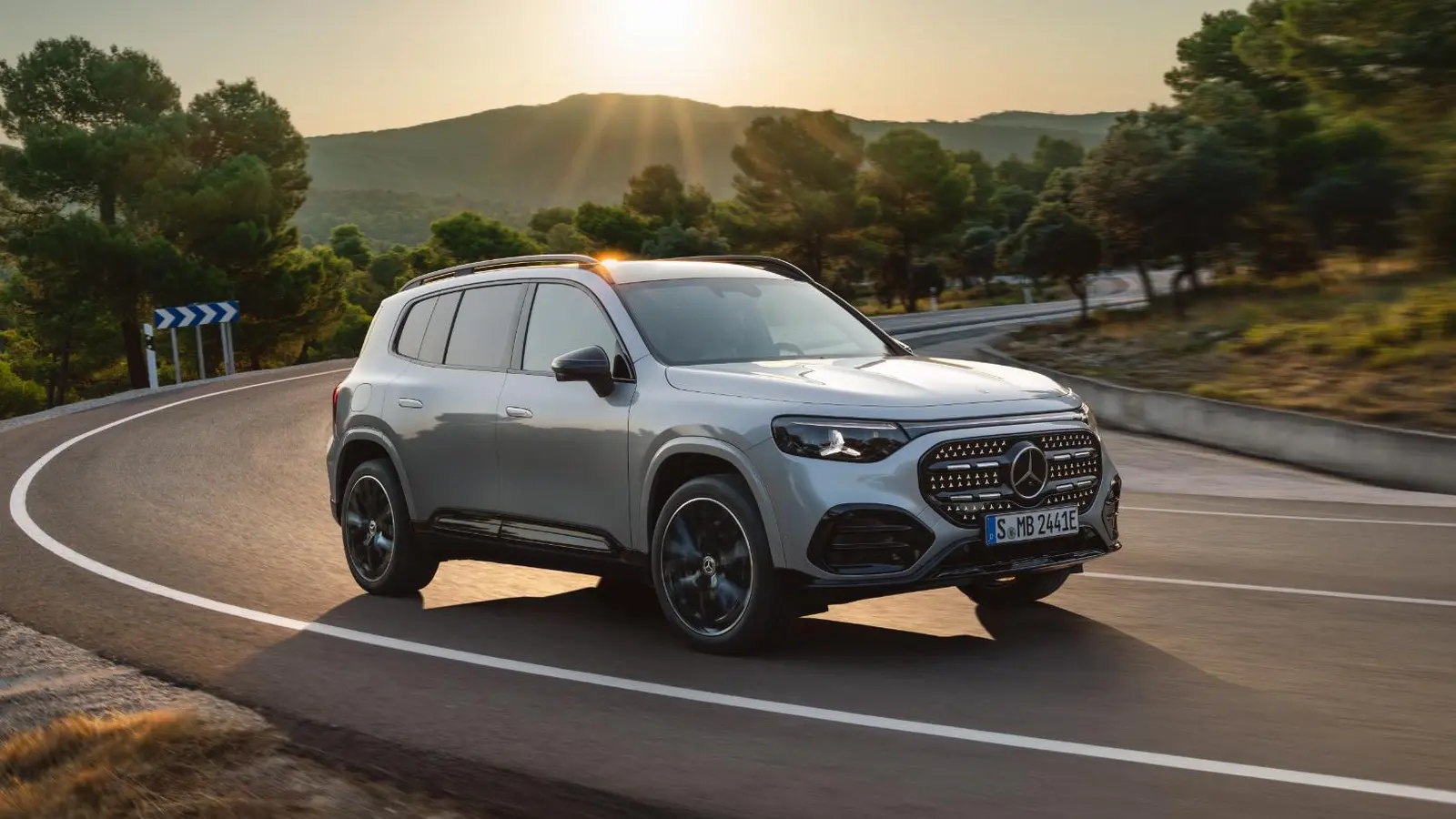
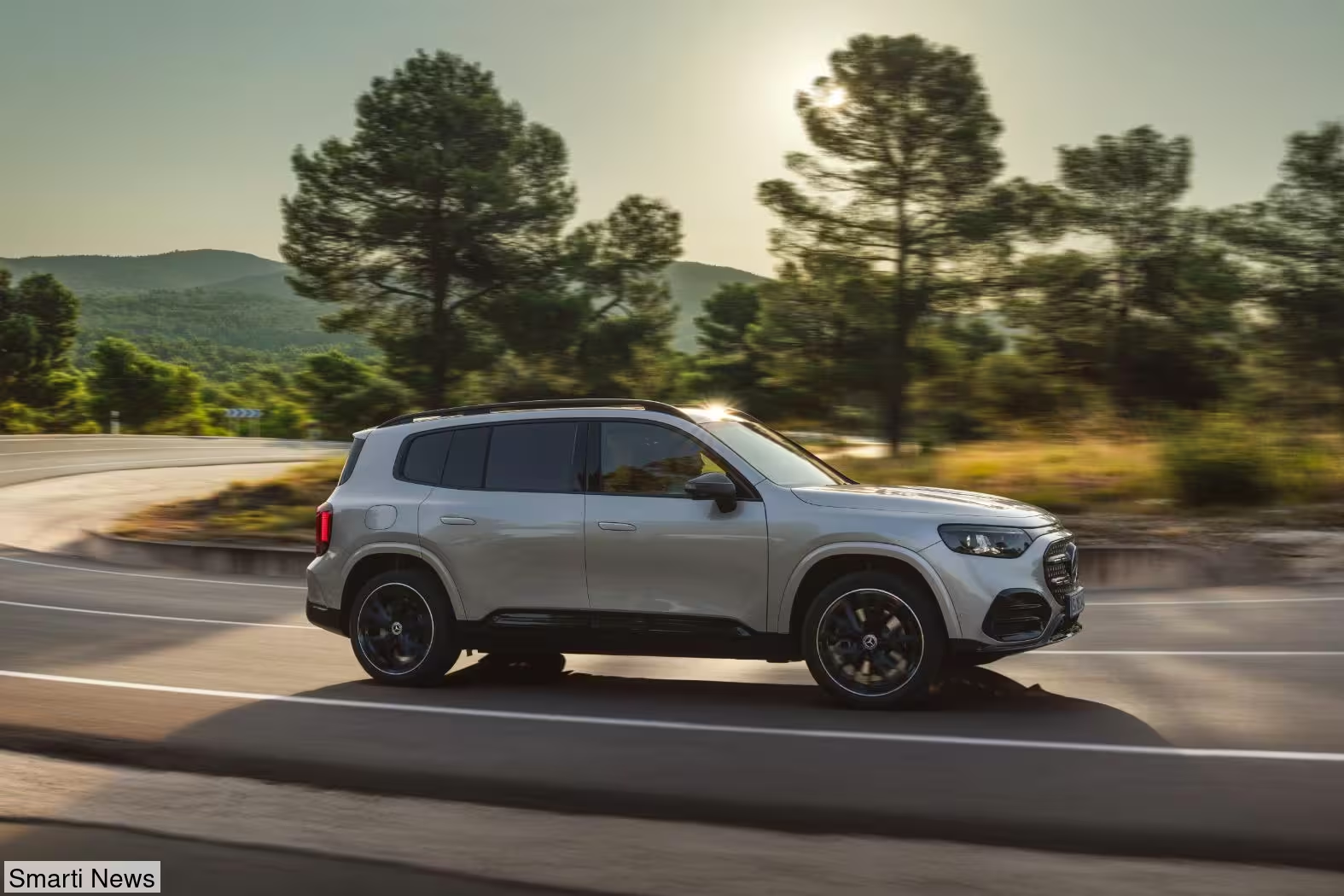
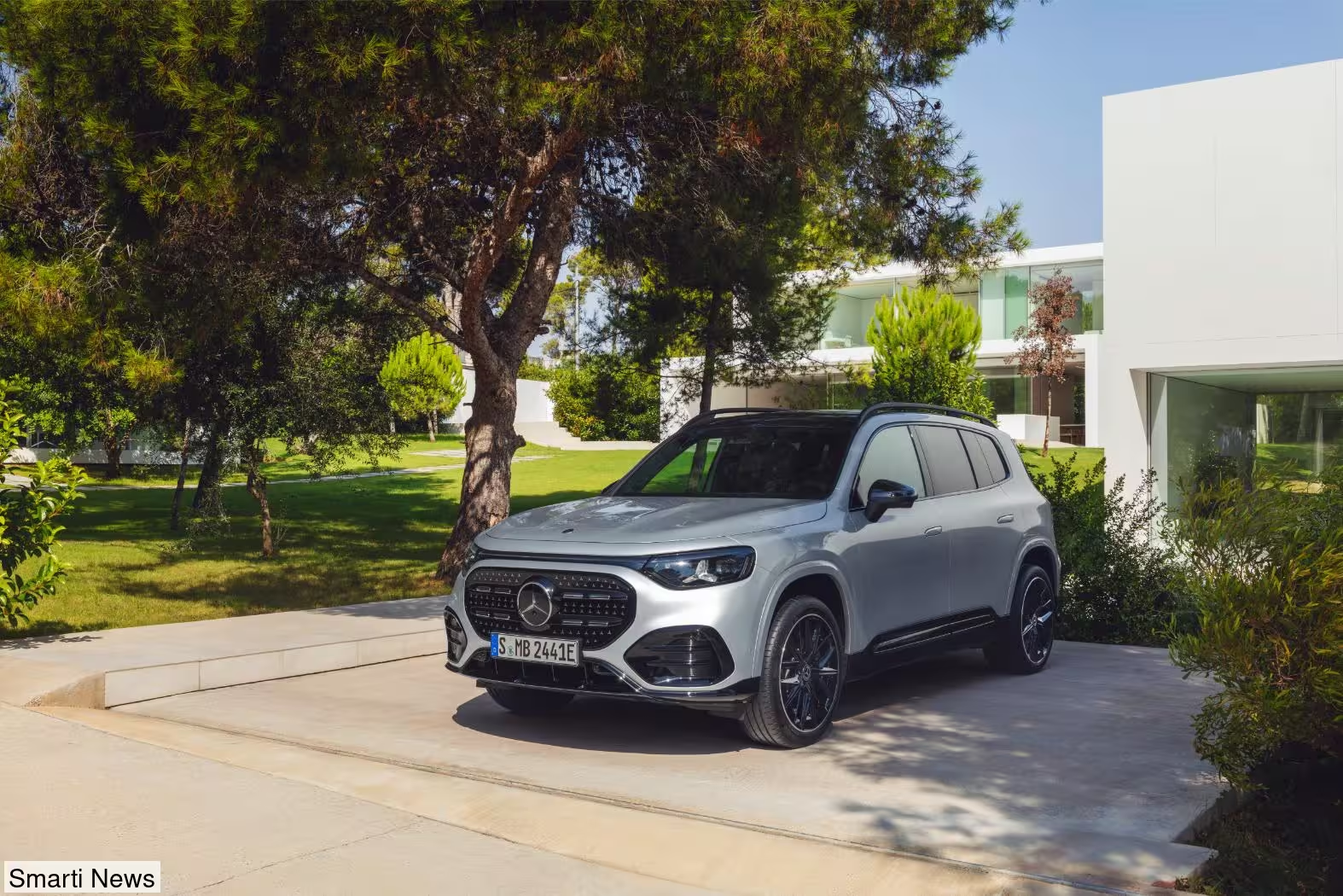
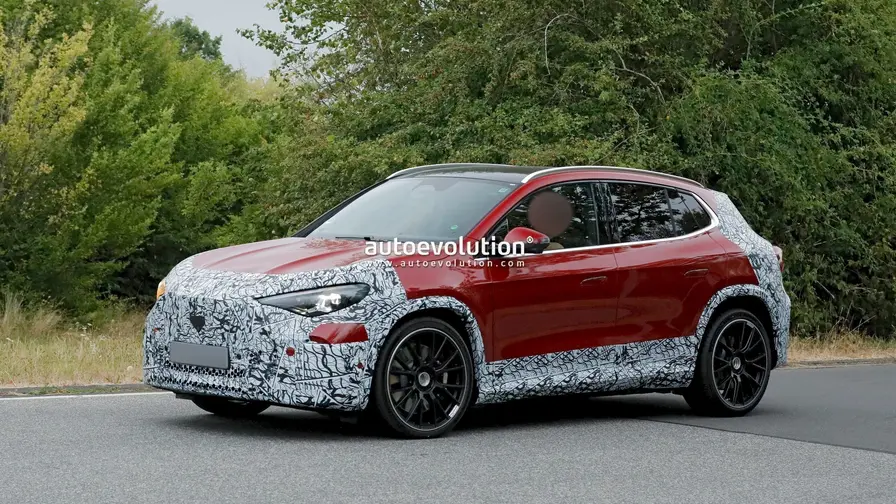
From a distance the new GLB retains the upright, squared silhouette that made the original feel like a compact utility box. But the details read as a subtle design revolution. The shape is a little more composed: a flatter roofline, broader hips, pronounced but tasteful wheel arches and shorter overhangs. Wheel options go up to 20 inches, helping the car sit more planted.
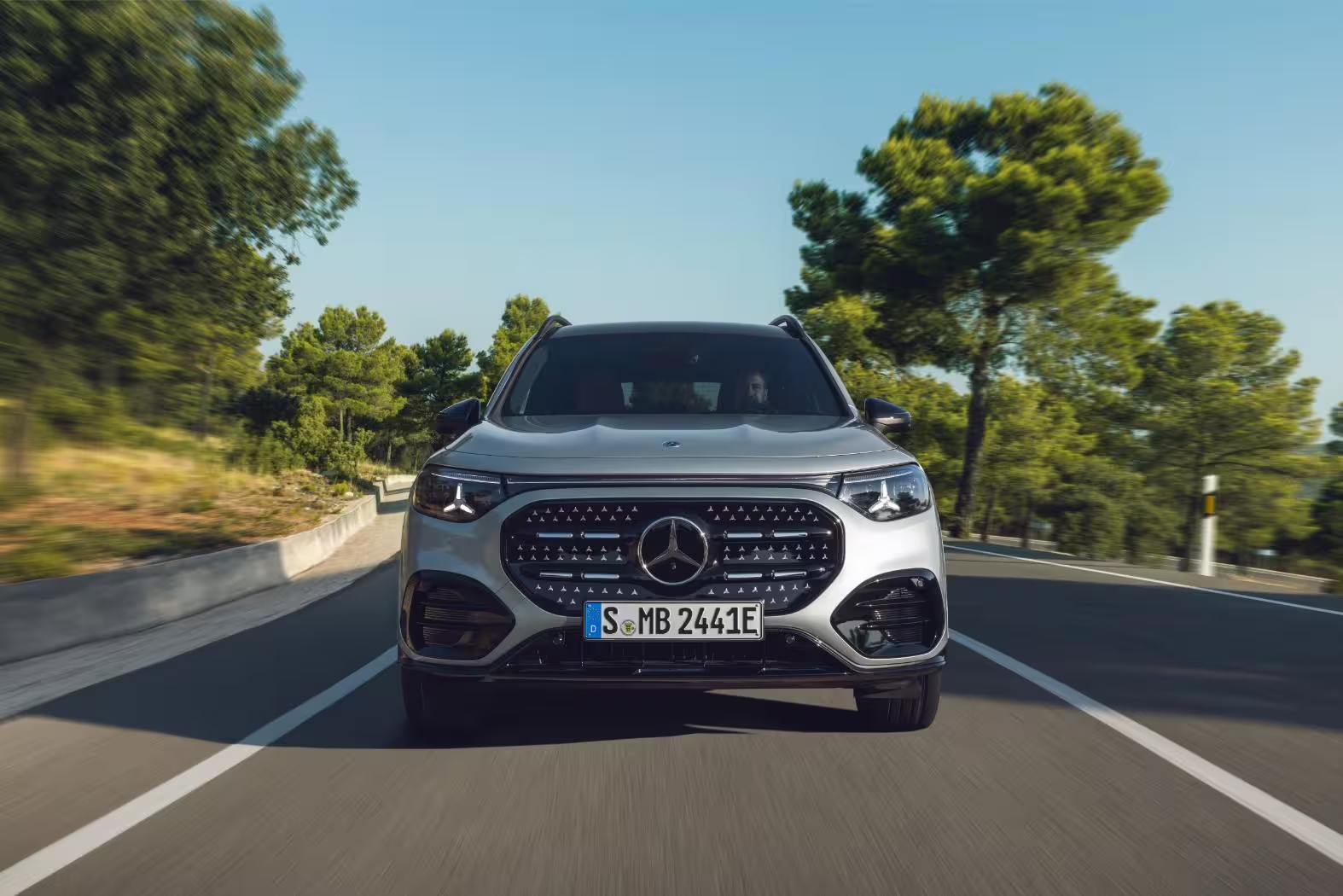
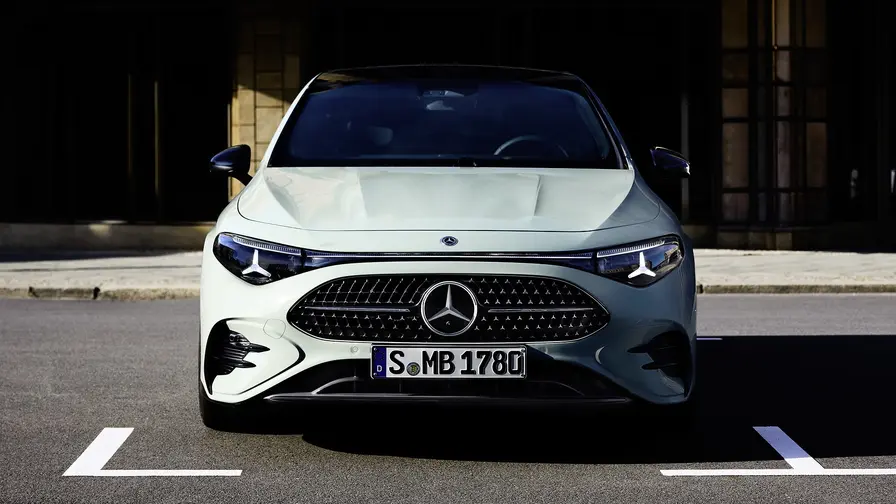
At the front the new headlights are sleeker and linked by a unifying strip or "unibrow" that gives the face a more intentional expression. The grille differentiates hybrid from electric: hybrid models wear a traditional radiator grille with chrome Mercedes pattern trimmed by an LED light guide; the GLB EQ uses a blocked-off front fascia with an illuminated pattern of 94 LED stars, announcing its electric identity.
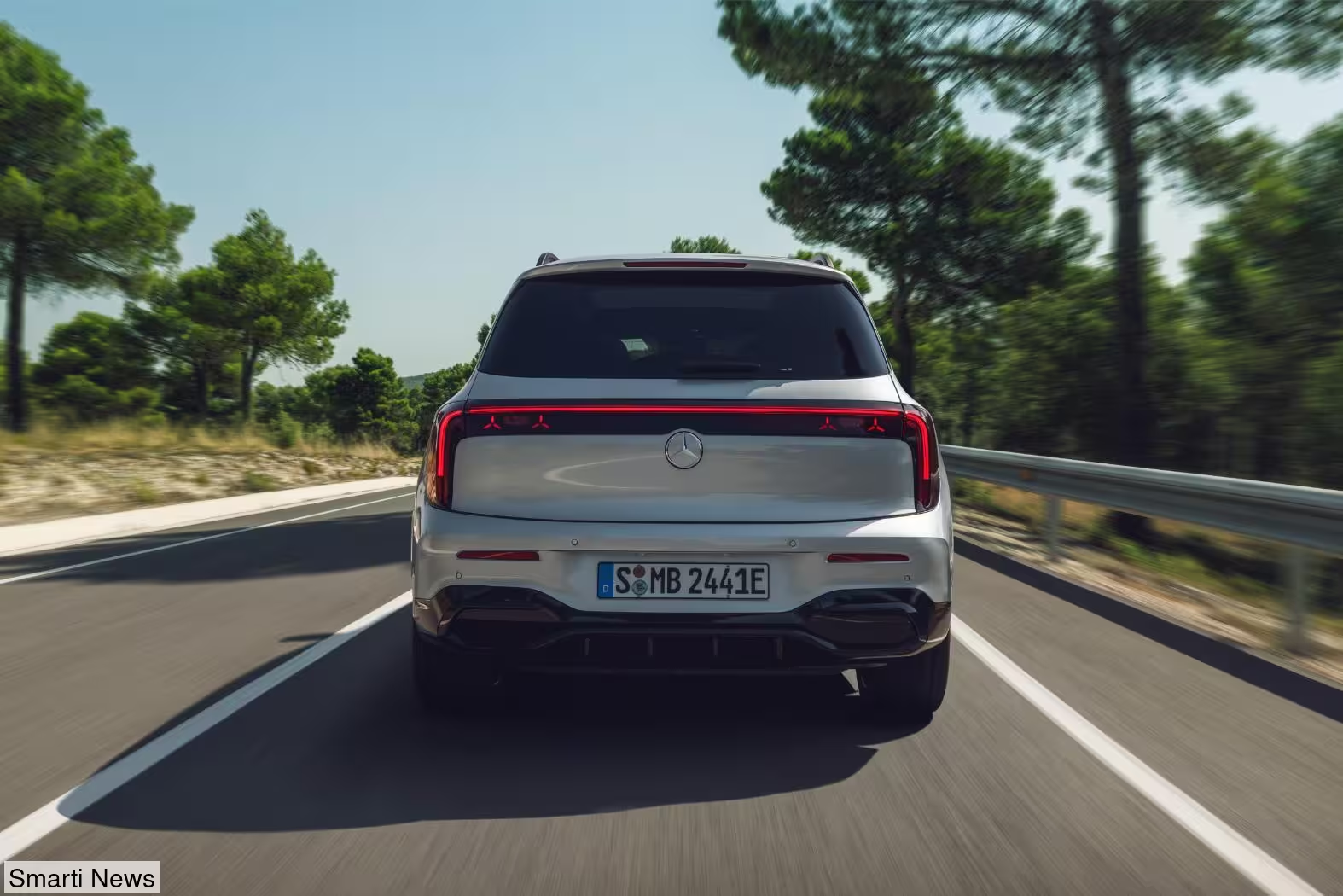
The rear shows the most obvious change: new L-shaped taillights connected by a thin LED bar, helping the compact proportions look wider and better balanced rather than top-heavy or bulbous.
Interior: large on space, upgraded on tech
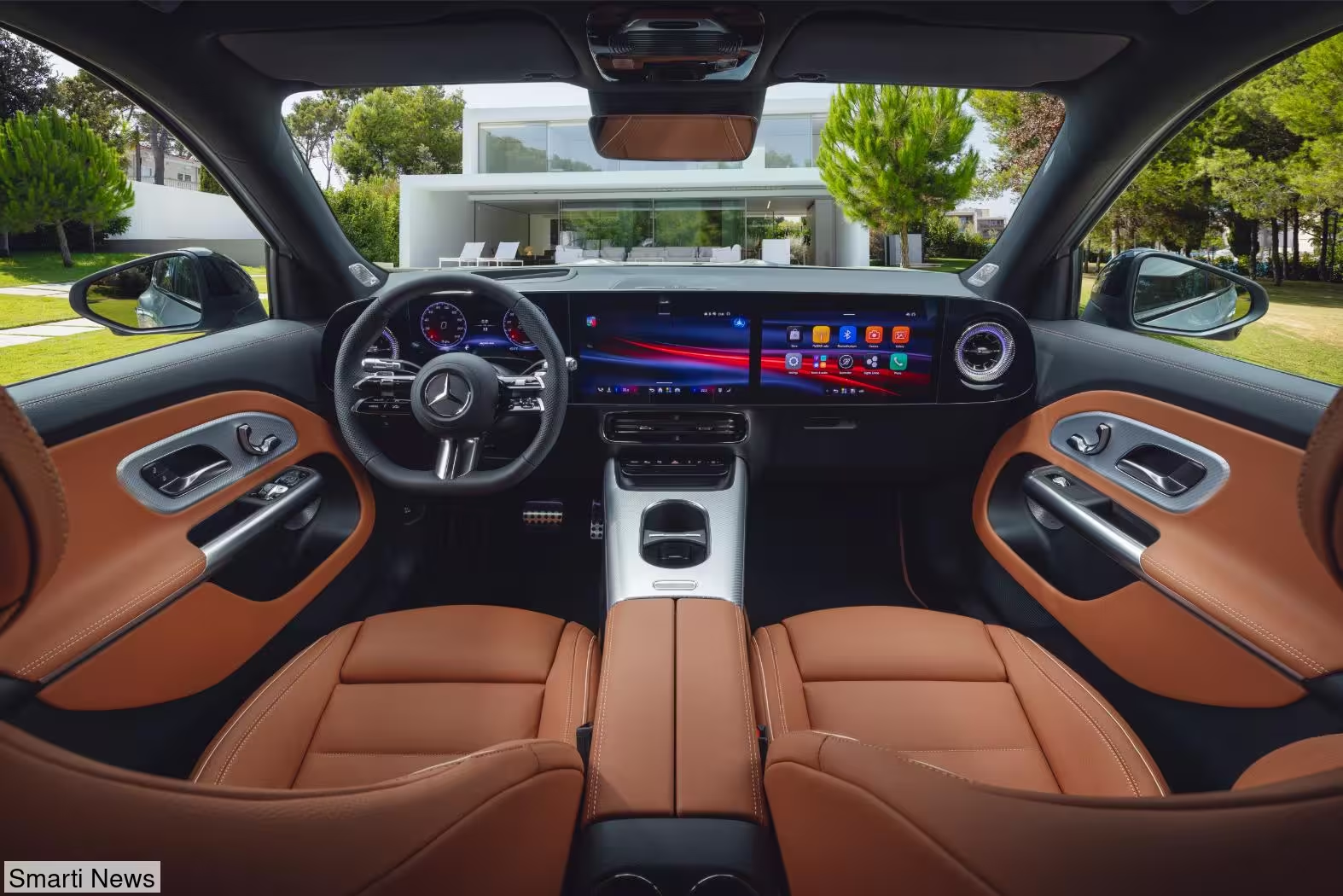
What made the GLB attractive originally was real usable space. Mercedes preserved and improved that. The cabin can still be specified with up to seven seats, and ergonomics receive a clear upgrade. Headroom and knee room are generous across rows, and the middle bench is longitudinally adjustable. Optional third-row seats fold into the floor, creating flexible cargo configurations.
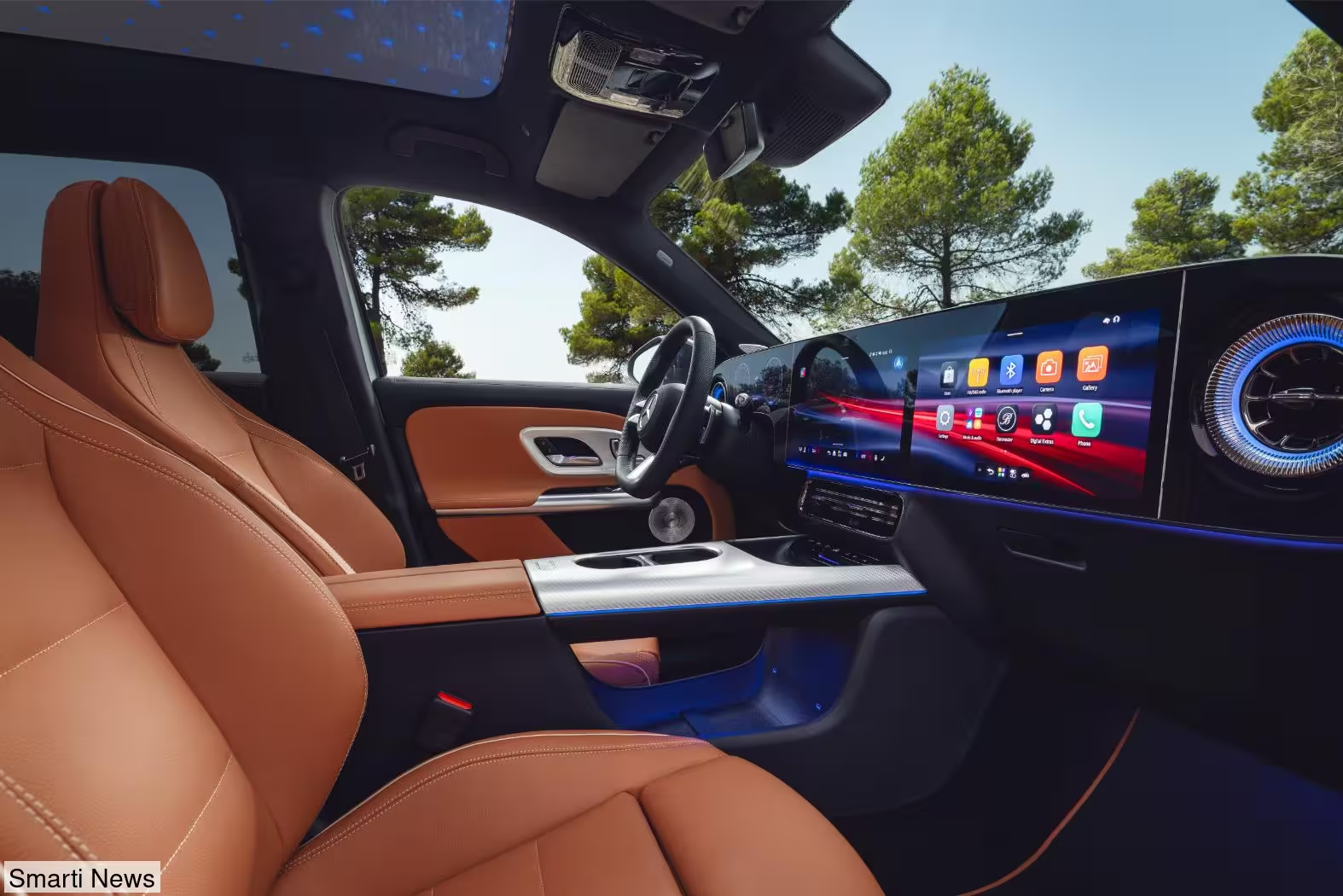
Mercedes offers an optional MBUX Superscreen that visually spans the dashboard under a single glass pane. That arrangement integrates the driver display, the central infotainment screen and a passenger display. But the car is not all flash: Mercedes appears to have balanced big-screen appeal with practical layout and controls.
Material choices reflect the GLB's mission. Lower trim levels use sensible, robust surfaces rather than ultra-luxury finishes, while items you regularly touch feel appropriately premium. Features available to buyers include:
- Panoramic roof as standard, with optional electrochromic glazing that darkens at a button press
- Massaging front seats in higher spec levels
- Advanced ambient lighting with multiple scenes
- A capacious front trunk (frunk) of 127 liters in the electric GLB EQ
Cargo capacity ranges from 540 liters for a 5-seat layout down to 480 liters for the 7-seat configuration. With second and third rows folded or removed, luggage volume in the 5-seat variant expands to an impressive 1,715 liters, giving SUV buyers real van-like practicality in a compact footprint.
Powertrain split: one name, two directions
The most defining element of the new GLB is the dual-path powertrain approach. Mercedes has chosen not to offer a plug-in hybrid. Instead, the brand focused on two clear strategies: refine the internal combustion model with an advanced 48V hybrid system, and present a proper all-electric GLB EQ built on 800V hardware.
These are not cosmetic differences. Each path was engineered with specific objectives: the hybrid for everyday practicality and fuel economy without changing driver habits; the EQ for range, fast recharge and electric performance.
The 48V hybrid: efficient, familiar and clever
Rather than a traditional plug-in system, the non-EQ GLB range initially arrives with a 48V mild-hybrid arrangement that integrates a 30 PS electric motor within the 8-speed dual-clutch transmission. All initial engine variants use a newly developed 1.5-liter turbocharged four-cylinder designated internally as M 252, part of Mercedes Family of Modular Engines (FAME).
Key hybrid attributes:
- 1.5-liter turbocharged petrol engine with multiple output states
- Integrated 48V electric motor inside the transmission delivering 30 PS (29.5 HP)
- 1.3 kWh battery capable of recuperating up to 25 kW during braking
- Available with front-wheel-drive or all-wheel-drive depending on trim
Mercedes claims the new mild-hybrid GLB will deliver at least 20 percent better fuel economy compared with the first-generation GLB of comparable output, and it cuts diesel-style compromises while improving acceleration. Early figures indicate about a one-second improvement to 0-100 kph (62 mph) versus the predecessor for models with equivalent power, despite a modest weight increase.
Why 48V? This system sits between a conventional mild-hybrid and a full hybrid. It does not promise long-distance electric-only driving, nor dramatic EV torque. Instead, it provides genuine efficiency gains, smoother start-stop operation, torque fill on acceleration and limited low-speed electric propulsion when conditions permit — all without requiring plug-in charging or range anxiety.
The GLB EQ: a proper 800V electric compact SUV
If the hybrid is the pragmatic choice, the GLB EQ is the forward-looking one. Mercedes made a conscious decision to design the EQ as more than a battery bolted onto an ICE platform. This GLB EQ rides on an 800V architecture designed for faster charging, better thermal management and compact packaging.
At launch the GLB EQ is offered with an 85 kWh lithium-ion NMC battery pack and DC fast-charging capability up to 320 kW. That is substantial for a compact EV and translates into rapid replenishment: under ideal conditions Mercedes quotes roughly 260 km (162 miles) of range added in 10 minutes at maximum charge rates.
Range and power figures quoted under WLTP metrics are impressive for the class:
- Single-motor, rear-wheel-drive GLB 250 EQ: 631 km (392 miles) WLTP
- Dual-motor, all-wheel-drive GLB 350 4Matic EQ: 614 km (382 miles) WLTP
Power outputs and acceleration:
- GLB 250 EQ single-motor: 272 PS (268 HP), 0-100 kph in 7.4 seconds
- GLB 350 4Matic EQ dual-motor: 353 PS (348 HP), 0-100 kph in 5.5 seconds
These figures suggest Mercedes wants the GLB EQ to serve buyers who need real electric range and quick charging capability in a compact package, not just urban commuting.
Driving impressions and practical implications
Although long-term road tests remain pending, the hardware changes give clear expectations. The multi-link rear suspension and revised steering hint at improved composure and a more grown-up ride compared with the previous model. Wider track, shorter overhangs and larger wheel diameters all help the GLB sit more planted.
In the hybrid variants, the integrated 48V motor should make for smooth power delivery and better urban efficiency. Owners will enjoy improved start-stop refinement and modest electric assist without adopting charging routines. For many buyers in markets with uneven EV infrastructure, this is a pragmatic choice.
For EV buyers, the GLB EQ represents a compact class option with uncommon long-range WLTP figures and very high DC charging rates. The single-motor RWD version emphasizes efficiency and range, while the dual-motor AWD variant focuses on stronger performance and traction.
How the GLB fits Mercedes strategy and the market
The GLB’s dual approach neatly aligns with broader industry shifts. OEMs must balance an accelerating transition to EVs with the reality that many customers are not yet ready to fully commit to all-electric driving. Mercedes appears to be acknowledging two undeniable truths:
- Some customers will adopt EVs rapidly if vehicles meet range, charging and practicality expectations.
- A large portion of buyers still value the range and convenience of internal combustion or hybrid systems without the burden of changing daily habits.
By offering both a sophisticated 48V hybrid and a purpose-built 800V EV under the same name, Mercedes hedges its bets. The GLB effectively becomes a bridge product: it keeps the brand accessible to traditional buyers while giving early EV adopters a full-featured electric option without compromise.
Specifications snapshot
.avif "Husqvarna 2026 Enduro Lineup: Suspension Upgrades and Refreshed Design for TE and FE Models")
Key numbers to remember:
- Battery (GLB EQ): 85 kWh lithium-ion NMC
- DC fast charging: up to 320 kW
- Electric range WLTP: up to 631 km (392 miles) single-motor RWD
- Electric power: 272 PS (268 HP) single motor; 353 PS (348 HP) dual motor
- 0-100 kph: 7.4 s (single motor); 5.5 s (dual motor)
- Hybrid electric motor: 30 PS (29.5 HP) integrated 48V unit
- Hybrid battery: 1.3 kWh, recuperation up to 25 kW
- Cargo volume: 540 liters (5-seat) / 480 liters (7-seat)
- Max cargo with seats folded: up to 1,715 liters (5-seat)
- Frunk (GLB EQ): 127 liters
Pricing, trims and competition
Mercedes has not published final global pricing across markets at the time of the announcement, but positioning will be crucial. The GLB competes inside a crowded compact SUV segment where buyers compare price, space, badge prestige and tech. Key rivals include premium compact crossovers from BMW, Audi and Volvo, along with mainstream contenders offering family-friendly packaging.
Competitive strengths for the GLB:
- Real seven-seat flexibility in a compact footprint
- Strong interior ergonomics and minivan-like utility
- High-speed charging capability on the EQ variant
- A choice between convenient hybrid ownership and full EV ownership
Potential challenges:
- Buyers focused on pure luxury might opt for larger Mercedes models
- The premium price of EV versions may limit crossover appeal in some markets
Final thoughts: a pragmatic evolution, not a reinvention
The 2026 Mercedes GLB is a smart, market-aware evolution. It preserves the practical DNA that made the first GLB successful, but updates the package with modern tech, improved ride architecture and a split personality on powertrains to meet different buyer needs.
More importantly, Mercedes has avoided a half-measure. The GLB EQ is not an afterthought; it is an 800V EV with strong range and fast-charging credentials. At the same time, the internal-combustion range is not a tired carryover: the 48V hybrid system is a deliberate choice that improves economy and drivability while keeping ownership simple.
In short, the 2026 GLB plays a long game. It gives buyers choices without diluting the model identity: same exterior silhouette, same generous interior, but two distinct driving philosophies. For many buyers the decision will come down to lifestyle and charging access. For Mercedes, the GLB is proof that the brand can shepherd customers from fuel to electrons without leaving anyone behind.
Highlights
- Two different powertrain architectures: advanced 48V hybrid and purpose-built 800V EV
- GLB EQ features an 85 kWh battery and up to 320 kW DC fast charging
- Up to 631 km WLTP range for the single-motor GLB EQ
- Interior remains flexible with up to seven seats and up to 1,715 liters cargo capacity
- New multi-link rear suspension and updated steering for improved ride and handling
Whether you want the reassurance of a hybrid that keeps conventional fueling habits intact or the long-range, rapid-charging promise of the GLB EQ, Mercedes has clearly designed this second-generation GLB to answer both demands. For buyers in the market for a compact, practical and well-equipped SUV, the 2026 GLB is now a compelling choice in two very different flavors.
.avif "Mercedes EQB Recalled in the U.S.: Potential Power Loss Prompts Battery Inspect & Replacement")

Leave a Comment
Comments (4)
Looks like Mercedes trying not to lose anyone, classic compromise. nice tech tho, but will it feel cohesive? 🤔
I had a first-gen GLB for 3 yrs, perfect for family trips and bulky kit. If the new suspension really is better and the EQ range holds in winter, I might upgrade. but price and real charging availability will decide.
631 km WLTP for a compact SUV? seriously? WLTP is often optimistic, and 320 kW chargers arent everywhere. is Mercedes counting on networks appearing overnight?
wow didnt expect this, both an 800V EQ and a 48V hybrid in one GLB? kinda brilliant, kinda confusing. curious about real world range, charging at cold temps...