

Atlanta will pilot Glydways’ fully autonomous public transit
Atlanta is preparing to test what could be the world’s first fully autonomous public transit loop. California-based Glydways has begun construction on an initial trial route that uses small electric self-driving vehicles running on a dedicated guideway. The company says the system aims to deliver light-rail-level capacity at bus-fare prices while dramatically reducing downtown congestion.
Route, timeline and trial details
The pilot will feature an approximately 800-meter loop linking the ATL SkyTrain station at the Georgia International Convention Center to the Gateway Center Arena. Glydways calls this the first global deployment of its Automated Transit Network (ATN), and plans to open the free public trial in December 2026.

Key facts at a glance
- Length: ~800 meters
- Connection: ATL SkyTrain to Gateway Center Arena
- Launch: Free public trial from December 2026
- Guideway width: as narrow as 2 meters in full scale
- Claimed capacity: up to 10,000 passengers per hour
How Glydways’ system works
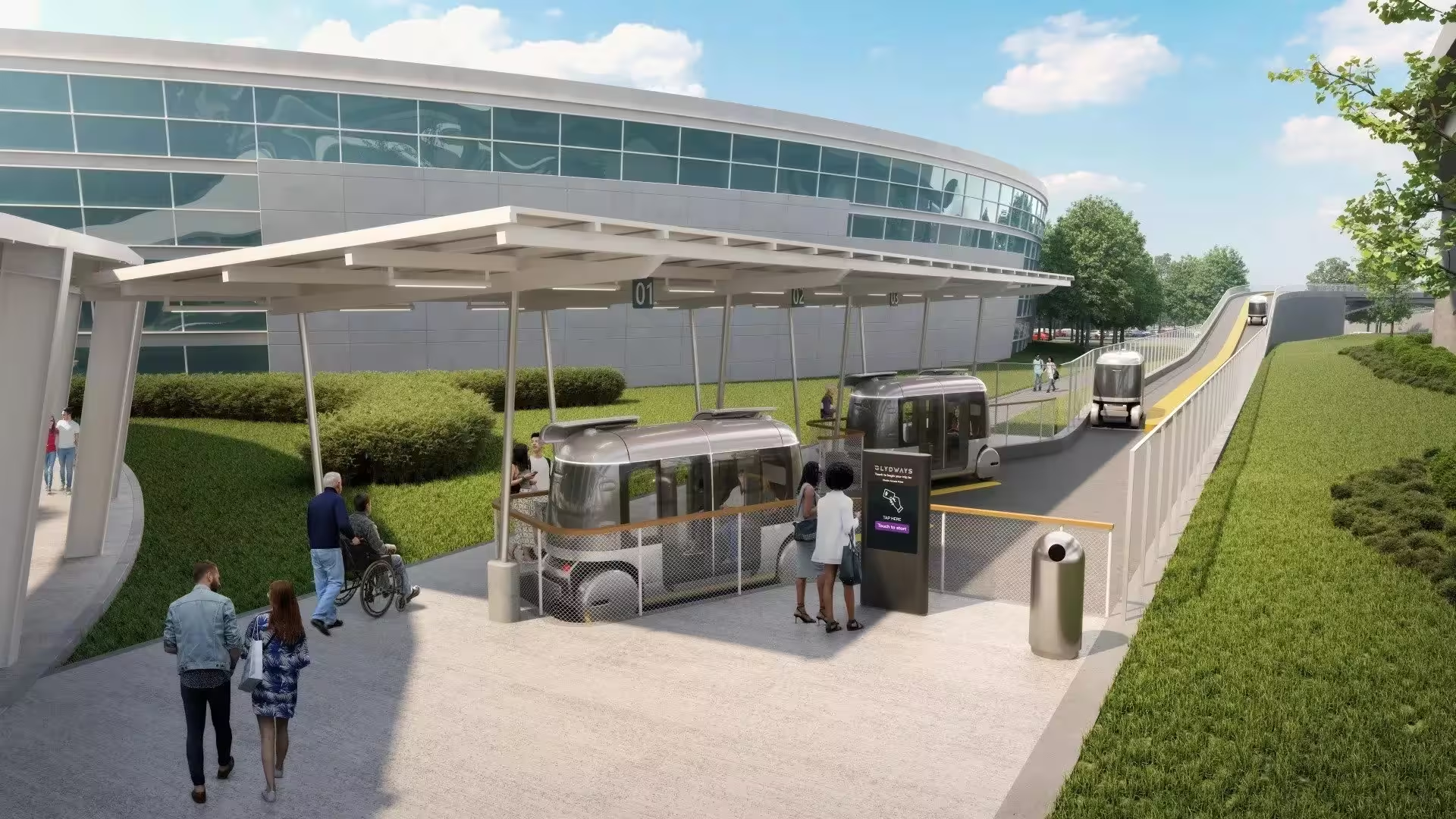
Glydways places compact electric vehicles on segregated guideways, preventing interaction with private cars, SUVs or service trucks. An AI fleet-management platform coordinates vehicles 24/7 on demand: riders request trips via an app, and a dedicated or shared pod picks them up and travels non-stop to the destination.
“Cities need new transit capacity that doesn’t compete with existing road infrastructure,” says Glydways co-founder and CEO Mark Seiger.
The company highlights two operational advantages: tightly packed platoons of vehicles traveling at a stable speed (which increases throughput compared with mixed-traffic autonomous cars) and a lighter infrastructure cost compared with traditional rail projects.

Performance, economics and market positioning
Glydways claims a full-scale guideway only two meters wide could move as many passengers per hour as a light rail line, but with a fraction of the capital expense. The lower cost comes from simpler guideway construction and smaller electric vehicles instead of heavy rail cars and tunnels.
Operating economics also lean on three pillars: no drivers, electric propulsion and minimal maintenance. The company intends to run fares comparable to local bus tickets — a central part of its commercial plan — though an exact price for Atlanta’s pilot has not been announced.
What to watch next
Key questions remain about permitting, safety certification and public acceptance. Still, the Atlanta pilot will be an important early test of whether automated transit networks can be scaled as a cost-effective alternative to light rail and subway projects.
For car and transit enthusiasts, Glydways’ trial is a notable moment: it blends automotive-grade autonomous vehicle tech with urban transit thinking, and could reshape how mid-sized corridors are served in cities worldwide.
Highlights:
- On-demand autonomous electric pods on dedicated guideways
- Target capacity comparable to light rail (up to ~10,000 passengers/hr)
- Free public trial in Atlanta from December 2026


Leave a Comment
Comments
No comments yet. Be the first.