
2 Minutes
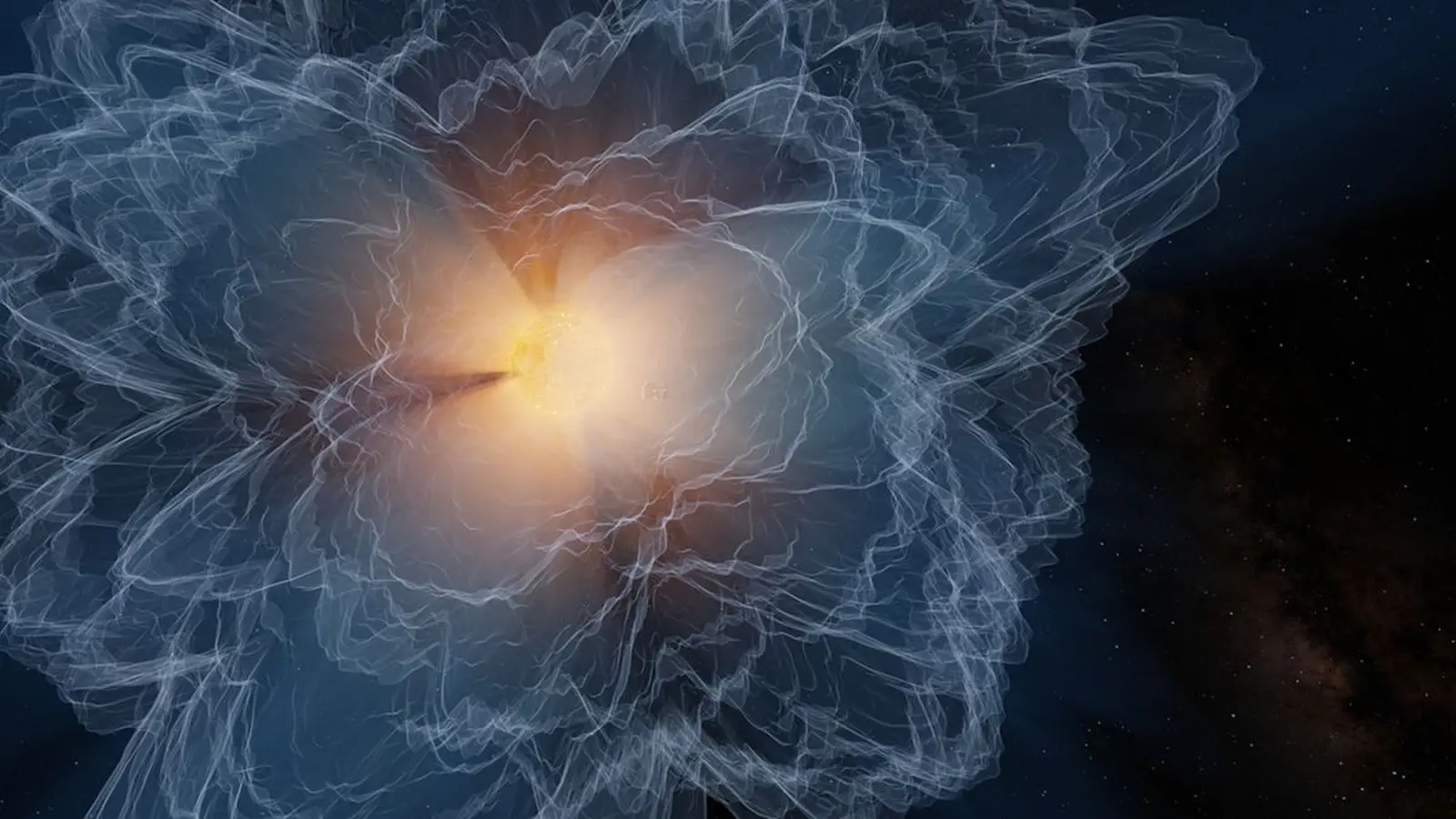
New close-in measurements from NASA's Parker Solar Probe reveal that the Sun's Alfvén surface — the invisible boundary where the solar wind escapes the star's magnetic hold — is expanding and developing sharper, spike-like features as solar activity evolves. This direct mapping confirms what theorists long predicted and opens a clearer window into near-Sun dynamics.
Mapping the Sun's magnetic frontier
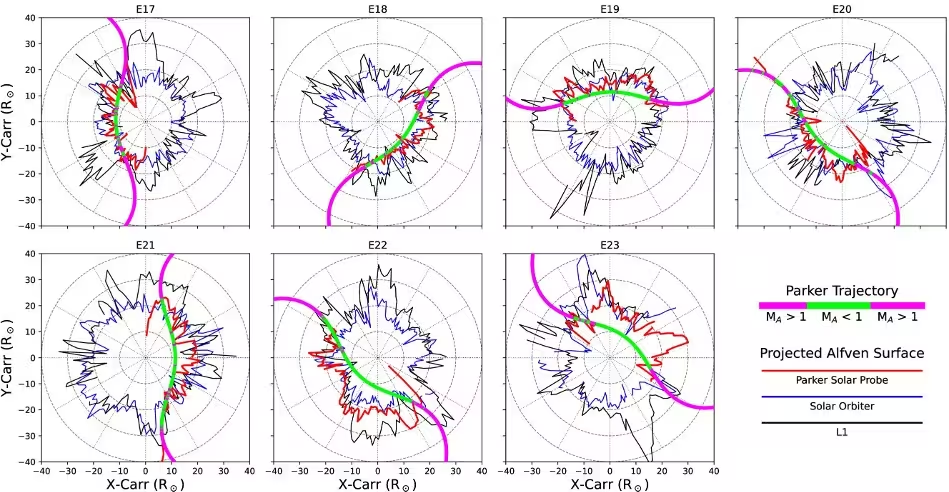
The Alfvén surface is the region where charged particles carried by the solar wind reach speeds that let them break free from the Sun's magnetic influence. Until Parker's perihelion passes, scientists could only infer this boundary from distant measurements. High-resolution data from multiple close approaches now show the surface has grown larger and more irregular, with pronounced protrusions that change with the solar cycle.
"We expected the boundary to become both larger and more 'spiky' as solar activity waxes and wanes," says Badman, a researcher on the project. "Parker's observations let us map those changes and directly relate them to local plasma and magnetic conditions."
Why this discovery matters beyond the Sun
Knowing precisely where magnetic control ends is vital for modeling solar wind formation, forecasting space weather, and predicting how energetic particles propagate through the heliosphere. For other stars — particularly strongly magnetic ones — the Alfvén boundary can reach much farther into surrounding space. That expanded magnetic reach can affect close-orbiting planets by increasing particle flux, stripping atmospheres, or otherwise altering habitability prospects.
How Parker measured the boundary
Parker Solar Probe samples plasma density, flow speed, and magnetic field strength during repeated perihelia. By identifying where particle velocities exceed local Alfvén speeds and by correlating those crossings with changing solar activity, researchers constructed a time-resolved map of the Alfvén surface. Continued observations, especially as the Sun approaches solar minimum, will refine those maps and improve our physical models.
Broader implications and next steps
The confirmed expansion and increased irregularity of the Alfvén surface validate theoretical predictions and provide a practical framework for future inner-heliospheric missions. As the team gathers more close-approach data, they will be able to track boundary evolution in near real time — offering an unprecedented laboratory to test solar magnetic and plasma physics.













Leave a Comment
Comments
No comments yet. Be the first.