

4 Minutes
Bamboo is cropping up in nutrition studies and food trends alike: packed with protein, fiber and micronutrients, its shoots have shown promising effects on metabolism, gut health and inflammation. But before you start calling bamboo a miracle ingredient, scientists warn that preparation and stronger human trials are essential. Here’s what the evidence says—and what still needs answering.
What the review found: promising benefits, limited evidence
An international team of researchers pooled results from 16 studies—ranging from laboratory experiments to small human trials—to map the health impacts of consuming bamboo and bamboo-derived extracts. The collective picture is encouraging: studies report improvements in metabolic markers such as blood sugar regulation, reduced inflammation and cellular toxicity, and benefits for digestive health that may lower risk for chronic conditions.
One recurring result was better glycemic control after consuming bamboo shoot components—an effect that could translate to lowered diabetes risk or improved management for people with the disease. Other studies suggested bamboo has prebiotic or probiotic-boosting effects, increasing beneficial gut bacteria and supporting intestinal health.
What’s in bamboo that might drive these effects?
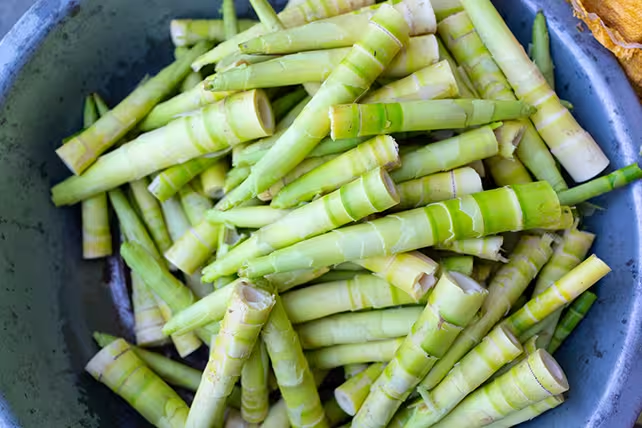
Bamboo shoots are naturally high in dietary fiber and provide notable amounts of protein, essential amino acids, vitamins and minerals while remaining low in fat. Those macronutrients and bioactive compounds—antioxidants and anti-inflammatory molecules identified in lab analyses—likely underpin many of the observed health benefits.
Safety first: toxins, heavy metals and correct preparation
Not all bamboo is ready-to-eat. The review highlights safety concerns: some bamboo species contain potentially toxic compounds (for example, certain cyanogenic glycosides that can release cyanide if not properly processed), and other studies flagged elevated lead content and cases of thyroid swelling linked to poorly prepared bamboo products.
“Bamboo is already commonly eaten in parts of Asia, and it has huge potential to be a healthy, sustainable addition to diets worldwide – but it must be prepared correctly,” says Lee Smith, a professor of public health at Anglia Ruskin University. Proper boiling, soaking or fermentation removes harmful compounds in many traditional preparations—techniques that will be crucial if bamboo is scaled up beyond regional diets.

Research gaps: small trials and lab studies dominate
Despite encouraging signals, the evidence base is thin. The review authors found only four high-quality human studies that met their criteria; many papers were small, short-term, or limited to in-vitro (cell) or animal models. That mix means promising mechanistic data exist, but robust clinical proof—large, controlled human trials showing clear, repeatable benefits—is largely missing.
The team framed their paper as a call to action: larger, better-controlled human trials are needed to quantify benefits, determine effective serving sizes, and identify which bamboo species and processing methods are safest and most nutritious.
What this means for consumers and food policy
For now, bamboo shoots can be a nutritious addition to diverse diets, especially where traditional preparation methods are used. They may offer sustainable nutrition: bamboo grows quickly, requires relatively little fertilizer, and can be harvested without clearing forests—attributes that matter as food systems look for lower-carbon protein and fiber sources.
Still, regulators and food producers should invest in testing for contaminants and standardizing safe processing. Farmers, nutritionists and supply-chain specialists will need to collaborate to ensure that scaling up bamboo as a commercial food source does not increase exposure to heavy metals or natural toxins.
Expert Insight
“Bamboo has the nutritional profile and the ecological credentials that make it attractive for sustainable diets,” says Dr. Maya Patel, a food-systems researcher. “But nutritional promise is not the same as proven public-health benefit. We need randomized trials that test real-world servings and monitor safety outcomes before labeling bamboo a true ‘superfood’ for global markets.”
As research continues, bamboo remains an intriguing candidate for healthier, more sustainable diets—but one that demands rigorous science and careful processing to deliver on its potential.













Leave a Comment
Comments (2)
Nice eco pitch, bamboo seems sustainable, but scaling safely will need rules, testing and better recipes. curious.
Wait so bamboo can help blood sugar? Sounds promising but where are the big human trials, tho? not convinced yet