
4 Minutes
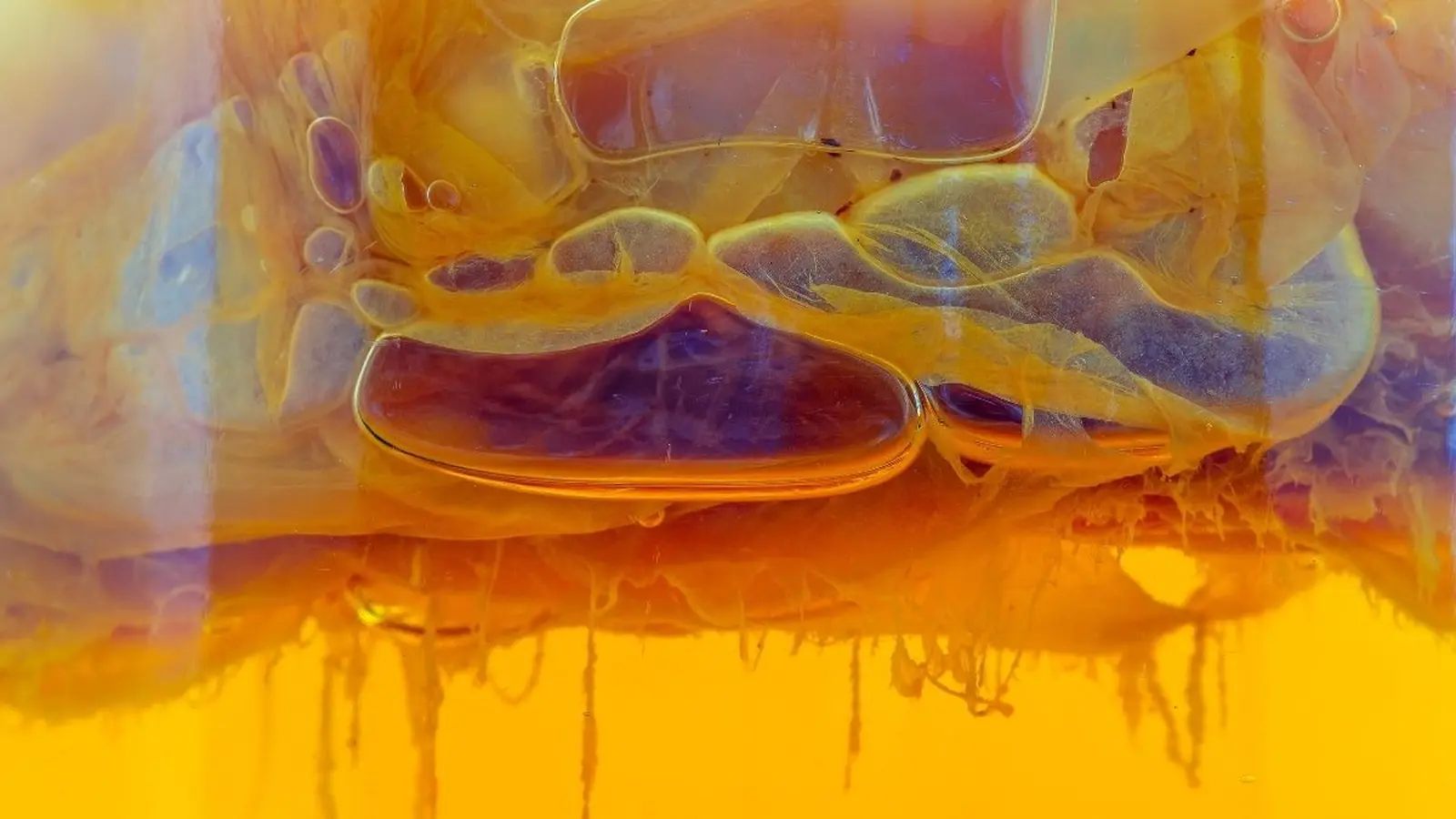
Imagine the origin of life not as a tidy container full of soup, but as a grimy, sun-baked smear of sticky goo clinging to a rock. Strange image? Yes. Plausible? Increasingly so. A growing cohort of researchers now argues that life’s first steps may have unfolded inside semi-solid gels — biofilm-like matrices that trapped, protected and organized molecules long before membranes and true cells appeared.
Why a gel, not a pond?
The traditional picture places prebiotic chemistry in open water: shallow pools, hydrothermal vents or tidal flats where molecules drift and collide. Those scenarios explain many chemical pathways, but they struggle with a basic problem: concentration. How do dilute, reactive monomers — activated nucleotides, amino acids and other building blocks — find each other long enough to assemble into polymers like RNA and proteins? How do fragile intermediates survive intense ultraviolet radiation on a young Earth with few atmospheric shields?
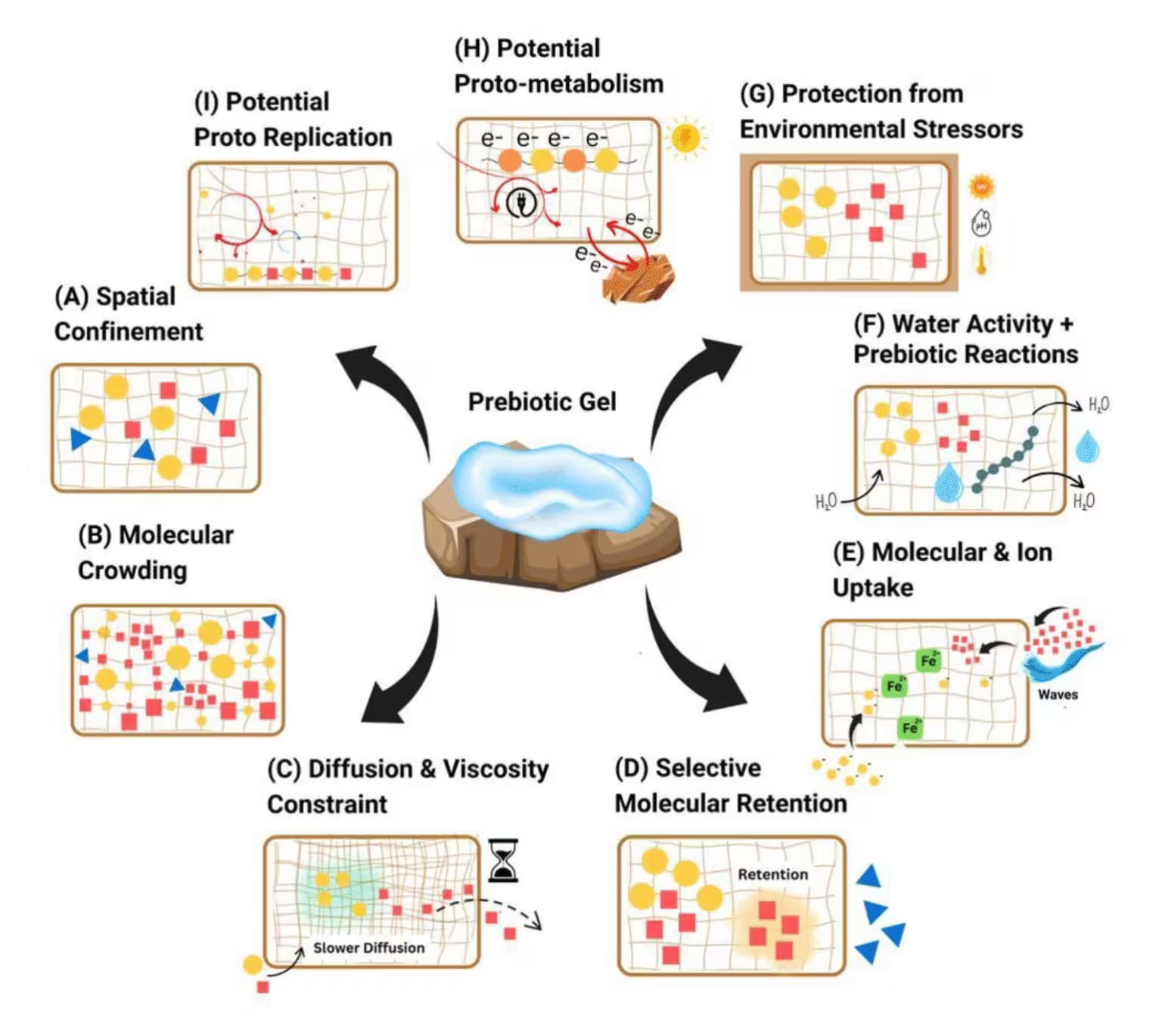
The gel-first idea addresses both issues. A semi-solid matrix can act like molecular scaffolding: concentrating reactants, selectively holding onto useful compounds and excluding destructive agents. Within such a matrix, water activity is reduced. That matters because low water activity favors polymerization over hydrolysis; in other words, it helps link monomers into longer chains rather than breaking them apart. In addition, gels can buffer temperature swings and attenuate ultraviolet flux, creating microenvironments where delicate chemical steps might proceed.
A gel would be a good place to construct the raw materials of life.
Hiroshima University astrobiologist Tony Jia and his co-authors reframe gels as active participants in prebiotic chemistry rather than passive settings. 'Instead of centering on biomolecules alone, our framework gives gels a foundational role at life's outset,' Jia explains, proposing that surface-attached gel matrices could have hosted networks of reactions that grew more complex over time. In this picture, protocells — primitive membrane-bound entities — are not the origin point but an emergent consequence of chemistry organized within gels.
Mechanisms that gels could enable
Within a gel, monomers can be concentrated into pockets and microchannels. That spatial organization increases the chance of productive collisions and allows reactive intermediates to build on one another. Gels can also be selective: their polymer networks interact differently with charged and neutral molecules, meaning some species are retained while others diffuse away. Energy input comes from multiple sources. Visible and infrared light penetrate shallow gels; ultraviolet light may be attenuated but still reach internal layers, driving photochemical reactions that resemble primitive photosynthesis. Meanwhile, electron transfers among chemicals trapped in the matrix could seed the earliest metabolic-like cycles.
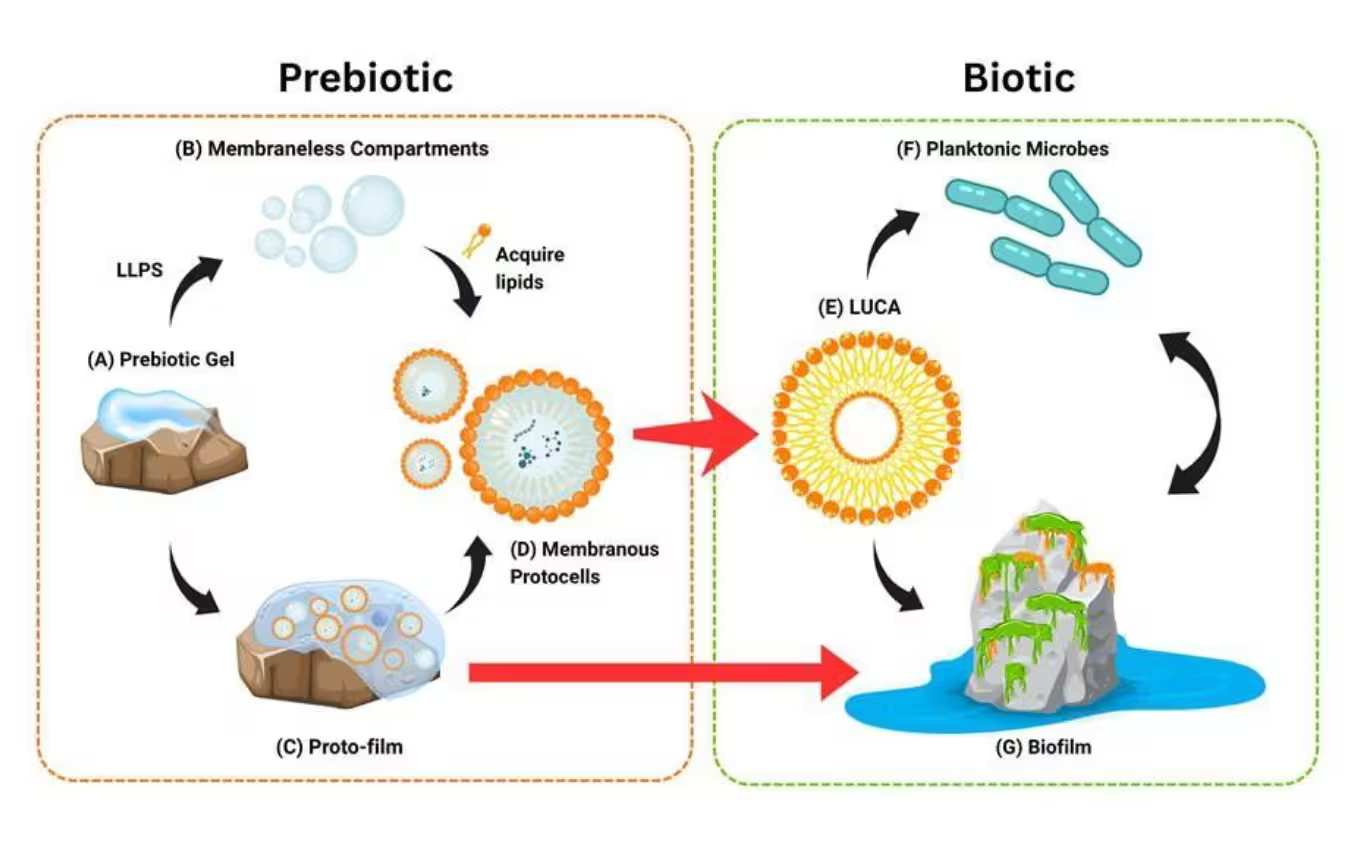
Schematic representation of potential prebiotic gel-based pathways leading to the emergence of life
The idea is not entirely new — gel-first proposals date back to mid-2000s work — but the 2025 ChemSystemsChem paper synthesizes experimental evidence with theoretical models to make a stronger case. Laboratory studies of modern biofilms and soft-matter chemistry show that gels can concentrate and protect biomolecules, while computer models illustrate how reaction networks could scale up inside these matrices.
Implications for astrobiology and life detection
If life can arise in gels, our search strategies should shift. Rather than seeking specific molecules alone, missions to Mars, icy moons like Europa and Enceladus, or the surfaces of rocky exoplanets might look for structures or mineral settings that support gel formation: porous rocks, wet-dry cycling zones, or substrates rich in organics and salts that promote gelation. Instruments tuned to detect gradients in water activity, micro-scale organic concentration, or polymeric networks could be as valuable as gas chromatographs and mass spectrometers.
This perspective widens the targets for life-detection technology. It suggests that signatures of life may not always look like DNA or familiar cell walls; they might be embedded in soft, complex materials that require different sampling and imaging approaches.
Expert Insight
'Gels give us a middle ground between the chaos of open water and the constraint of a closed vesicle,' says a fictional but realistic astrobiochemist, Dr. Elena Márquez. 'They create pockets where chemistry can mature — where feedback loops form and complexity can accelerate. For mission planners, that points to terrains with fluctuating moisture and mineral surfaces that can host soft matrices.' This view underscores a practical shift: designing instruments that can find and probe soft, sticky deposits rather than just analyzing bulk rock samples.
Thinking of life emerging from slime may feel unglamorous, but the mechanism fits several stubborn problems in origin-of-life research: concentration, protection, and a route to increasing chemical complexity. Whether the first organisms were born in puddles, vents or gels, the new emphasis on soft-matter environments expands the vocabulary of possible life-bearing worlds and changes where we point our telescopes and landers next.

Leave a Comment
Comments (2)
this is wild, picturing Earth as a dusty gooey lab, kinda gross but brilliant. if true that flips a lot of assumptions!
Wait so life could start in sticky goo? hmm makes sense but is there real lab evidence yet or just models? curious, skeptical