
3 Minutes
Imagine a tiny reptile pausing in the mud nearly 300 million years ago, leaving behind a fingerprint for deep time. That muddy pause has now produced something extraordinary: the earliest known fossil imprint of an amniote cloaca — the multi-purpose vent used for excretion, reproduction and egg-laying — preserved alongside keratinous scales.
Discovery and context
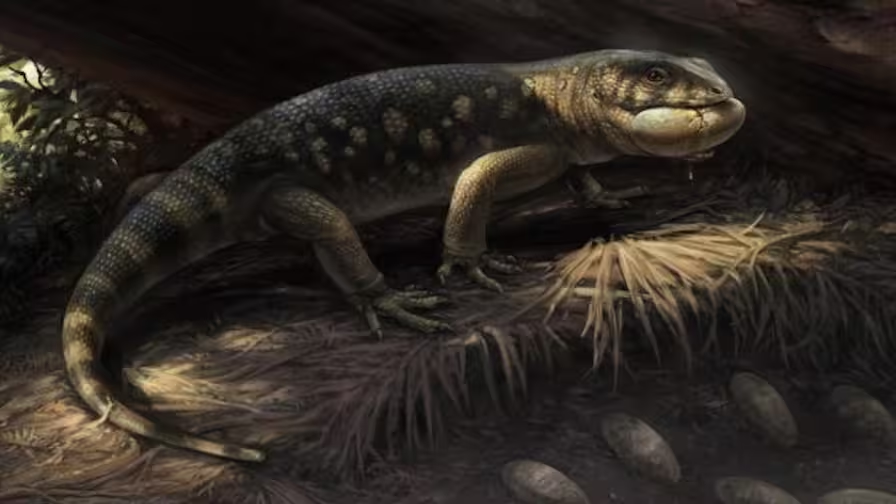
Excavated from the Goldlauter Formation in Germany’s Thuringian Forest Basin, the trace impression measures the resting mark of a reptile roughly 9 centimeters long. Paleontologists have named the trace fossil Cabarzichnus pulchrus, classifying it as a distinct resting trace rather than a body fossil. Nearby footprints and size estimates point to a bolosaurian — an early branch of reptiles that diversified during the Asselian stage of the early Permian, about 295 million years ago.
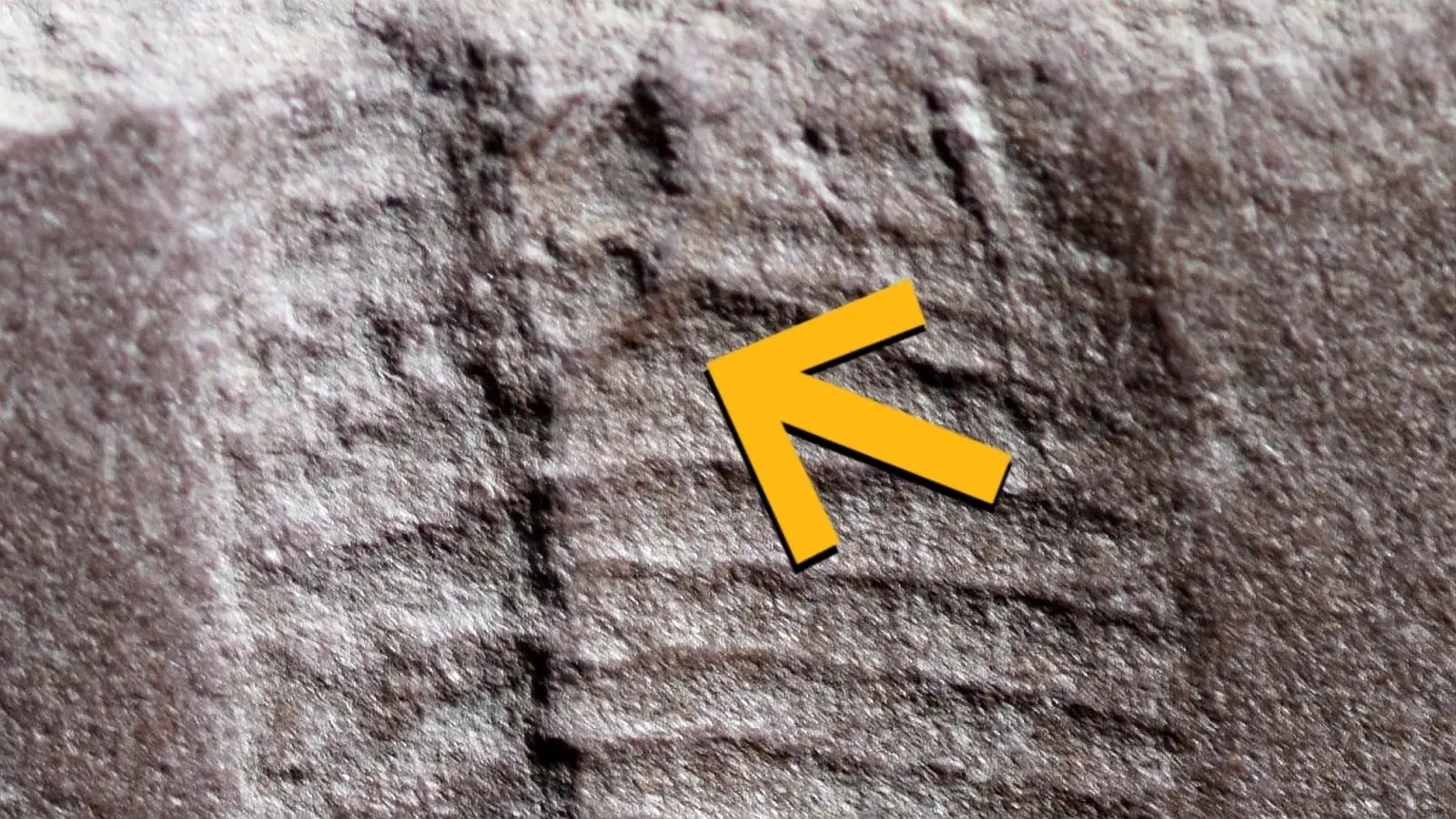
The preservation is remarkable. Across trunk, limbs, head and tail, rows of polygonal epidermal scales are visible. These are keratinous, not bony dermal plates, indicating skin closer in composition to modern lizards and snakes than to some older armored fish or amphibians. At the tail base, a ring of modified scales surrounds a vent-like opening that researchers interpret as a cloaca — a soft-tissue detail rarely retained in fossils and one that shatters previous records by more than 170 million years.
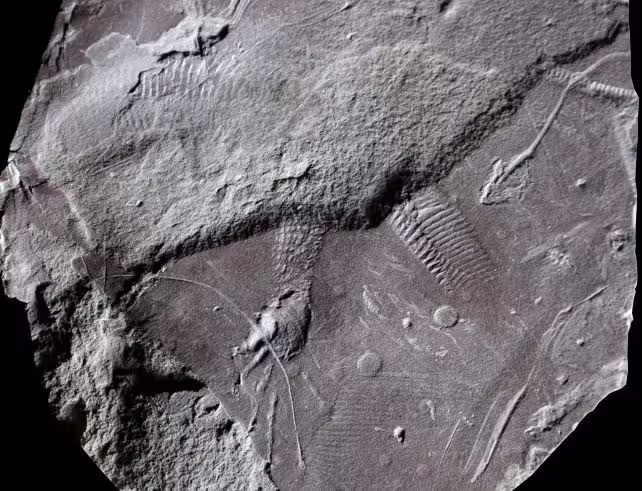
The resting trace of an early reptile.
Why this matters for reptile evolution
Soft tissues almost never fossilize. When they do, they reshape how scientists reconstruct anatomy and behavior. Trace fossils like C. pulchrus are not mere footprints; they can conserve anatomical features lost in skeletal remains. The cloacal vent here supports long-standing hypotheses that the cloaca was present in the earliest amniotes, reinforcing the idea that many reproductive and excretory features seen in modern reptiles date back to the Carboniferous–Permian transition.
Interestingly, the shape and orientation of this cloaca are not identical to those found in some dinosaurs and crocodilians. Instead, its morphology more closely resembles vents of turtles, lizards and snakes. That suggests that certain soft-tissue arrangements were already diversified among early reptile lineages, or that convergent forms evolved repeatedly under similar functional pressures.
“Trace fossils can capture anatomical detail that body fossils miss,” says Lorenzo Marchetti of the German Natural History Museum in Berlin, noting that such finds broaden our window into early terrestrial vertebrate biology. The team published their findings in Current Biology, arguing the specimen provides the earliest fossil record of a cloacal vent in amniotes.
Beyond anatomy, the impression hints at behavior: a brief resting event, a momentary contact between soft belly and wet substrate that nature then fossilized. It’s a small event with outsized implications. It helps fill a gap in the fossil record, links modern reptile anatomy to deep time, and underscores the scientific value of trace fossils in reconstructing life’s distant past.

Leave a Comment
Comments
No comments yet. Be the first.