
5 Minutes
Think the rise in short-sightedness is all about screens? The answer looks more subtle — and darker — than that.
A team at the State University of New York College of Optometry has pushed a different idea into the conversation: not just how close we hold our devices, but how little light reaches the retina while we stare at them. Their experiments on volunteers show that the eye's reflexes during near work — the focusing, the inward turning of the eyes, and the shrinking of the pupil — may conspire indoors to reduce retinal illumination and bias visual development toward myopia.
How the study worked and what was measured
The investigators recruited 34 adults: 21 with myopia and 13 with normal vision. In a controlled lab setting, each participant fixated on square targets that varied in brightness and contrast while the research team recorded three linked behaviors: accommodation (the lens changing shape to focus), convergence (how the eyes rotate inward), and pupil size. The protocol isolated responses from one eye at a time and adjusted visual stimuli to probe the retina’s ON and OFF channels — neural pathways that signal light increments and decrements, respectively.
Why those pathways? Previous work has hinted that a relatively weaker ON pathway correlates with myopia, but the mechanism remained fuzzy. This study adds a physiological chain of events: contrast, more than absolute brightness, drives how strongly the eyes converge and how much the pupil constricts during near work. In people with myopia, the eyes began in a more converged state and showed stronger pupil constriction for the same visual task than emmetropes. The net result is less light on the retina, which the researchers argue weakens ON signaling and could steer ocular growth toward an elongated eyeball — the anatomical hallmark of myopia.
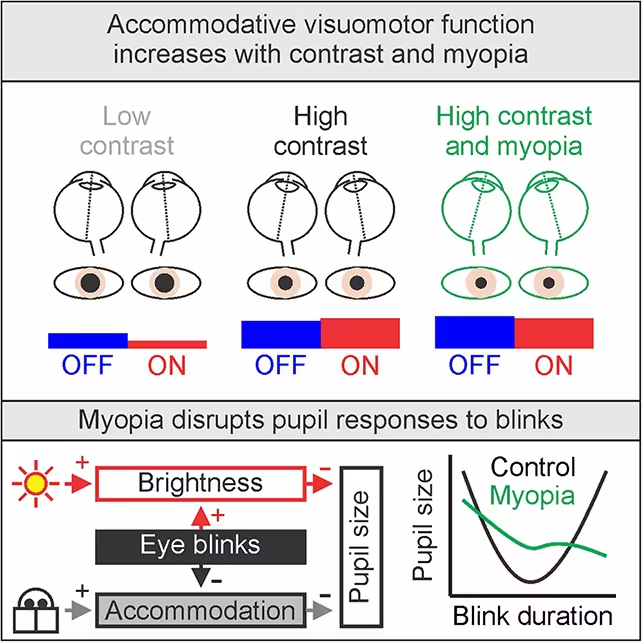
Put bluntly: indoors, with lower ambient light, a person leaning in to read or scroll may create a double hit. The pupil narrows to sharpen the near image while the eyes are already turned inward; this combination reduces retinal illumination far more than we might expect. The SUNY authors propose a feedback loop in which focus is prioritized over brightness, and the visual system’s preference for sharpness gradually undermines the very retinal stimulation needed to guide normal eye growth.
Interpretation, caveats and broader context
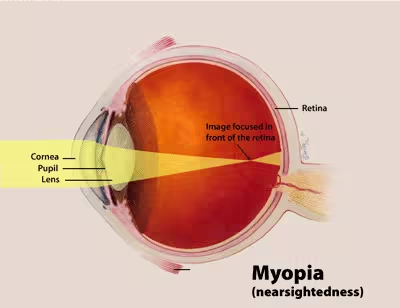
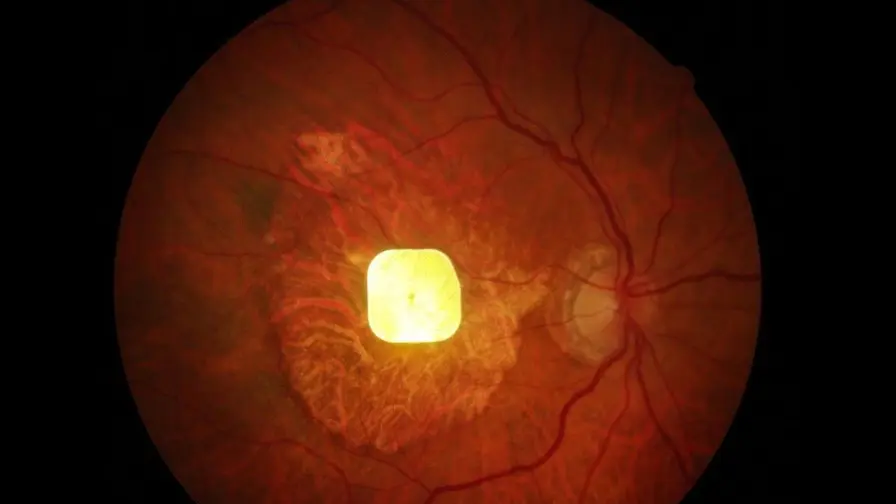
The implications are tempting. If dim indoor lighting and sustained near work reduce ON-pathway stimulation, then children who spend most of their waking hours indoors could be at higher risk of developing myopia. That helps explain an epidemiological pattern seen worldwide: as urban lifestyles shift toward indoor leisure and education, myopia prevalence has climbed. Projections suggest that nearly 40 percent of young people may be myopic by 2050, a public-health trend with long-term consequences for ocular disease risk.

But the study has limits. It tested a modest number of adults at a single point in time. It did not track eye growth longitudinally, nor did it directly compare indoor and outdoor behaviors across development. Genetic predisposition remains a major driver of myopia risk, and environmental factors interact with inherited susceptibility. The SUNY team, led by visual neuroscientist Jose-Manuel Alonso, frames their work as a physiology-based hypothesis rather than a definitive cause.
"Myopia has reached near-epidemic levels worldwide, yet we still don't fully understand why," Alonso says. "Our findings suggest that a common underlying factor may be how much light reaches the retina during sustained near work — particularly indoors."
Other practical threads deserve attention. Corrective lenses that overcorrect or are too strong might reduce retinal illumination as well as change focus, potentially worsening the problem the researchers describe. That raises questions about how we prescribe children’s glasses and whether lens designs could be optimized to preserve retinal light while correcting refractive error.
Expert Insight
Dr. Elaine Park, a pediatric ophthalmologist who studies environmental influences on eye growth, notes: "This study is important because it reconnects behavior — where and how we use our eyes — with measurable retinal physiology. The idea that reduced retinal illumination during near work could weaken ON signaling is plausible and aligns with population data. But what we need now are longer-term studies in children and tests of simple interventions: brighter classrooms, timed outdoor breaks, and lens strategies that maintain retinal light.
"Even small shifts in policy — better daylighting in schools, encouraging outdoor play — could have outsized benefits if the hypothesis holds up," she adds.
The research opens practical lines for prevention and further study. Photobiology is one route: exploring how spectral composition and intensity of light affect ON/OFF pathways. Optics is another: designing lenses that preserve light throughput while correcting focus. Public health and urban design also matter — from classroom illumination standards to city planning that makes safe outdoor time more accessible.
Scientists stress caution. The SUNY results are a valuable piece but not the whole puzzle. They prompt experiments that follow children's eyes over years, compare natural indoor versus outdoor lighting in real-world settings, and test whether lighting or lens interventions can alter myopia onset or progression.
What feels clear is this: myopia isn't simply a symptom of more screen hours. It's a biological response to the visual environment, shaped partly by light itself. Understanding that response could change how parents, educators, and clinicians think about prevention — and it might turn some of the rising numbers around.

Leave a Comment
Comments (2)
Whoa this feels a bit spooky! Not just screens, light matters. Suddenly classrooms matter. Brighter windows pls, kids need real light
Wait, so dim rooms + leaning in could literally reduce retinal light and drive myopia? sounds plausible but this was adults only, small sample... can we trust it?