
5 Minutes
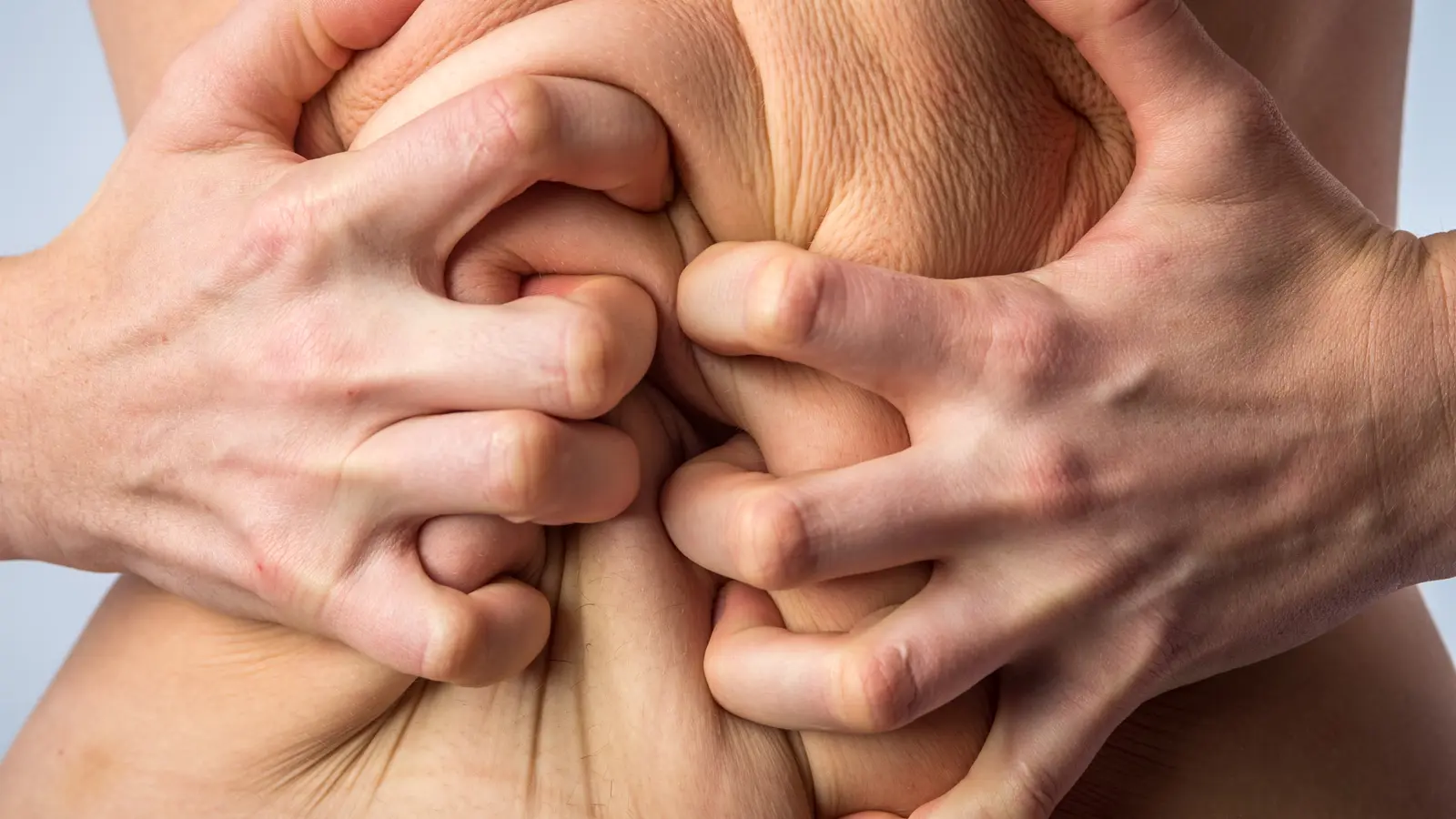
Imagine being told your internal organs are quietly tethering themselves together, and the only reliable way to confirm it is to go under the knife. This has been the grim reality for millions of people living with endometriosis—a condition that can produce stabbing pelvic pain, infertility, and life-disrupting symptoms that too often go undiagnosed for years.
Why diagnosis has lagged behind the science
Endometriosis occurs when tissue similar to the uterine lining grows outside the uterus, stitching itself to other pelvic structures. In most cases the lesions are superficial and hormones can manage symptoms. But in deep infiltrating endometriosis, tissue pushes into organs such as the bowel or bladder and creates adhesions—fibrous bands that can bind organs together and warp normal function. Estimates suggest roughly one in ten people with a uterus of reproductive age will develop endometriosis; a smaller fraction, perhaps one to five percent of them, experience the deep form that poses the greatest surgical risk.
Diagnosis has been a persistent bottleneck. Ultrasound, MRI and CT can show telltale signs, but interpretation depends heavily on training and experience. For decades the gold standard remained laparoscopy: a diagnostic surgery in which a camera is inserted into the abdomen. Precision comes at a price. Surgery carries trauma, cost and delay. Many patients face a wrenching choice: accept the risk of an exploratory procedure to finally get answers, or continue to live with unexplained pain.
How a simulator changes clinical training
Swedish med-tech firm Surgical Science has introduced an Endometriosis Simulation Module that aims to shift that balance. It is a training tool built around ultrasound imaging that lets clinicians practice scanning for signs of deep endometriosis—most notably adhesions—without a patient on the table. The module recreates ultrasound images and the tactile feedback of sliding an ultrasound probe, enabling repetitive, standardized training.
The feature clinicians are most interested in is the so-called "sliding sign." Move the probe across the abdomen: if the bladder or bowel glides smoothly against adjacent tissue, adhesions are unlikely. If the tissues feel stiff or resist movement, that’s a red flag. Simple in concept. Hard to master in practice. That’s where simulated, repeatable scenarios add real value—especially in settings where exposure to advanced pelvic ultrasound is inconsistent.
In validation testing, clinicians who trained with the simulator markedly improved their ability to recognize deep infiltrating endometriosis on ultrasound. Reported recognition rates rose substantially, and user confidence increased by more than 100 percent in some measures. Those are promising numbers, though the simulation does not replace high-resolution MRI or the ability to visualize inflammatory lesions that are not yet adhesive.

Practical implications for patients and care pathways
The potential benefit is straightforward: earlier, non-invasive identification of patients who need surgical treatment versus those who can be managed medically. Detecting adhesions before they become severe reduces the risk that organs will become permanently stuck together. Even when surgery is ultimately required to remove lesions and free organs, preoperative imaging that more accurately maps disease can make operations shorter and safer.
This is especially meaningful when you consider the global burden: roughly 190 million people worldwide live with some form of endometriosis. Most have superficial disease, which can often be treated without cutting into the abdomen. But the specter of an unnecessary diagnostic surgery—physical and emotional—looms for many. Better ultrasound training, embedded into clinical education, could shorten diagnostic delays and lower the threshold for offering a confident, non-surgical answer.
Related technologies and future prospects
Ultrasound simulation is part of a broader shift toward competency-based training in medicine. Virtual reality, haptic feedback devices, and AI-assisted image interpretation are converging to make ultrasound a more reliable, widely deployable diagnostic tool. Machine learning models that flag suspicious patterns, paired with simulation-based practice, may further boost accuracy and reduce inter-operator variability. Still, limitations remain: some adhesions lie deep or in regions inaccessible to transabdominal probes, and inflamed lesions without fibrosis are invisible to the sliding-sign technique.
For health systems, the calculation is practical. Investments in training technology can reduce downstream costs—fewer unnecessary surgeries, fewer complications, and a faster path to tailored care. For patients, the benefit is even deeper: less time living with unresolved pain and a clearer roadmap to relief.
Expert Insight
"The simulator doesn't promise to replace surgery as a therapeutic step," says Dr. Maya Lindström, a gynecologic sonographer and an educator in pelvic imaging. "What it does is teach clinicians to 'see' and 'feel' patterns on ultrasound they might otherwise miss. That changes conversations: you can counsel a patient with greater certainty about the likelihood of adhesions and whether operative management is needed. In practice, that clarity matters more than any single percentage point of diagnostic accuracy."

The path ahead involves careful validation, broader training rollout, and integration with other diagnostic tools. But the direction is clear: equipping more clinicians to detect endometriosis non-invasively can shorten the diagnostic odyssey for millions, reduce unnecessary surgeries, and restore agency to patients who for too long have had to live with silence when their bodies were speaking in pain.











Leave a Comment
Comments (2)
Can a simulator really catch deep adhesions in the pelvis? Seems promising but MRI and surgeon judgement still matter. Need bigger studies, more real world data tho
wow this hit me, as someone with chronic pelvic pain the idea of a sim making diagnosis less surgical is huge... still nervous about accuracy tho