
3 Minutes
Imagine a newborn star system as a crowded nursery where gravity tosses toddlers—planets—into one another. Chaos reigns. Collisions are frequent. Some young worlds are flung outward, some spiral inward, and a stubborn few are swallowed whole.
That's the picture emerging from recent research: planetary engulfment may not be a rare cosmic tragedy but a common episode in a system's youth. As protoplanets jostle and migrate, a fraction are nudged onto star-grazing trajectories. The result? Stars that have eaten planets and carry the chemical fingerprints of those meals in their atmospheres.

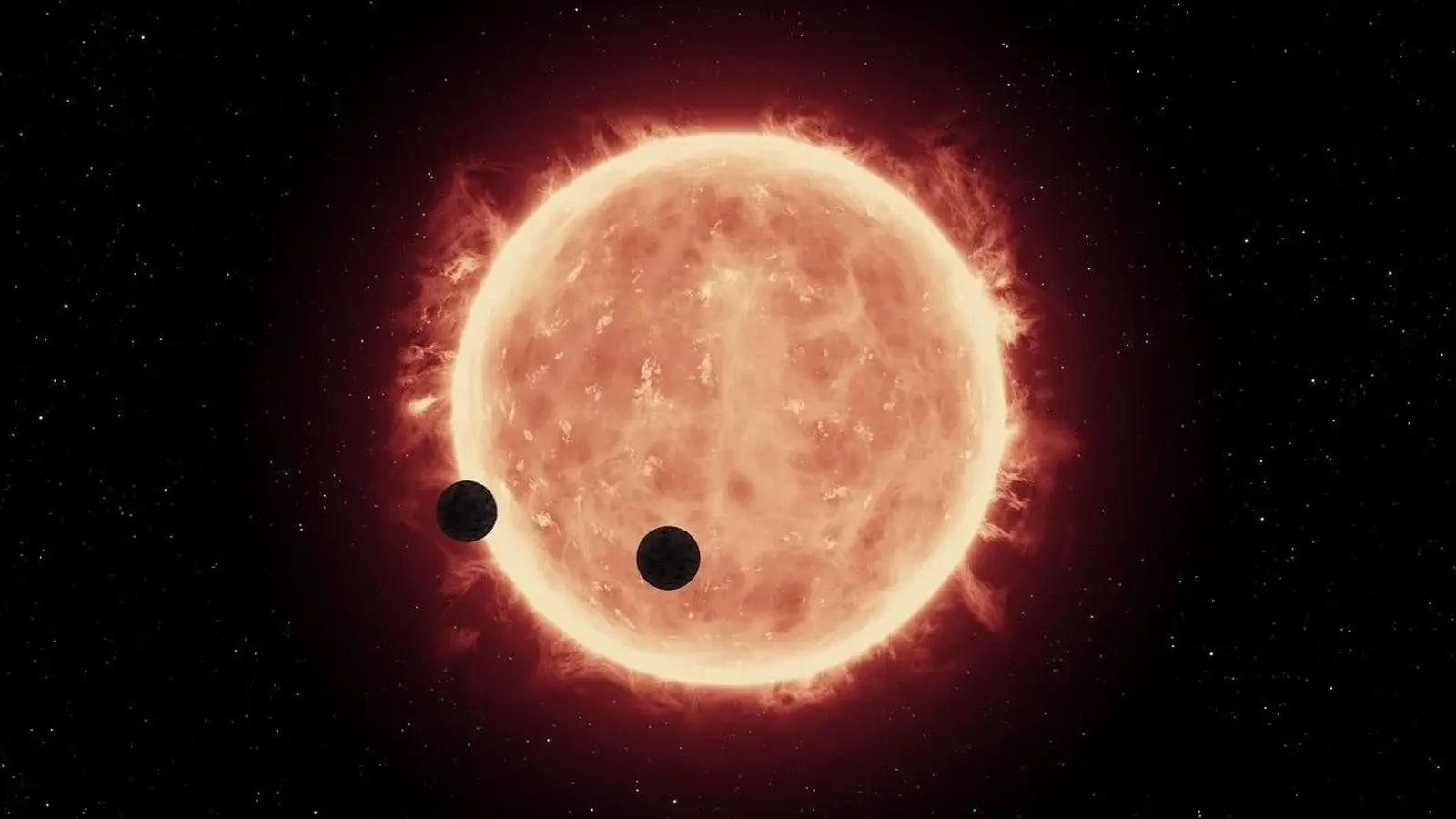
Red dwarfs, the small, long-lived stars that make up the bulk of our galaxy's stellar population, are turning out to be especially useful in this detective work. Tiny fluctuations in their spectra can betray the presence of elements that don't belong, leftovers from worlds that once orbited them. Because red dwarfs evolve so slowly, the signatures of ancient planetary dinners may linger, giving astronomers a longer window to study the mechanics of system formation.
Why does this matter beyond a morbid curiosity about cosmic cannibalism? Because how planets end their early lives—whether they collide, escape, or vanish into their parent star—directly shapes the architecture of mature systems. The same violent processes that doom some planets may seed others with volatile materials or scatter debris that later clumps into moons.

There's a surprising connection here to another emerging idea: free-floating, or rogue, planets might be able to form their own satellites. If small worlds can gather debris and build moons while adrift, then the line between planet formation and moon formation blurs. Observing signatures of engulfment around red dwarfs could therefore illuminate a broader spectrum of outcomes for planetary bodies, whether they remain bound to a star or roam the galaxy alone.
Red dwarfs could act as laboratories for the chaotic early lives of planetary systems, preserving evidence that brighter, faster-evolving stars erase too quickly.
Not everything in the research reads like a courtroom drama, but the authors use legal metaphors to make a point: the evidence for frequent planetary consumption is mounting. The verdict, however, isn't a cosmic life sentence handed down for trillions of years. Instead, it's an invitation to study processes that play out over vast stretches of time—long enough that tiny chemical traces survive to tell the tale.

The new findings were published in the Monthly Notices of the Royal Astronomical Society, adding to a growing literature that reframes violent early dynamics as a natural and informative part of planetary evolution. For observers, the take-home is clear: look to red dwarfs. They may hold preserved records of planetary birth, rivalry, and death—stories that help explain why some systems end up neat and stable while others remain restless for billions of years.
So the next time you hear about a star that 'ate' a planet, don't imagine a single dramatic gulp and then silence. Think instead of a long, messy adolescence in which many fates are possible, and of small, stubborn stars that keep ugly secrets written in starlight.

Leave a Comment
Comments
No comments yet. Be the first.