
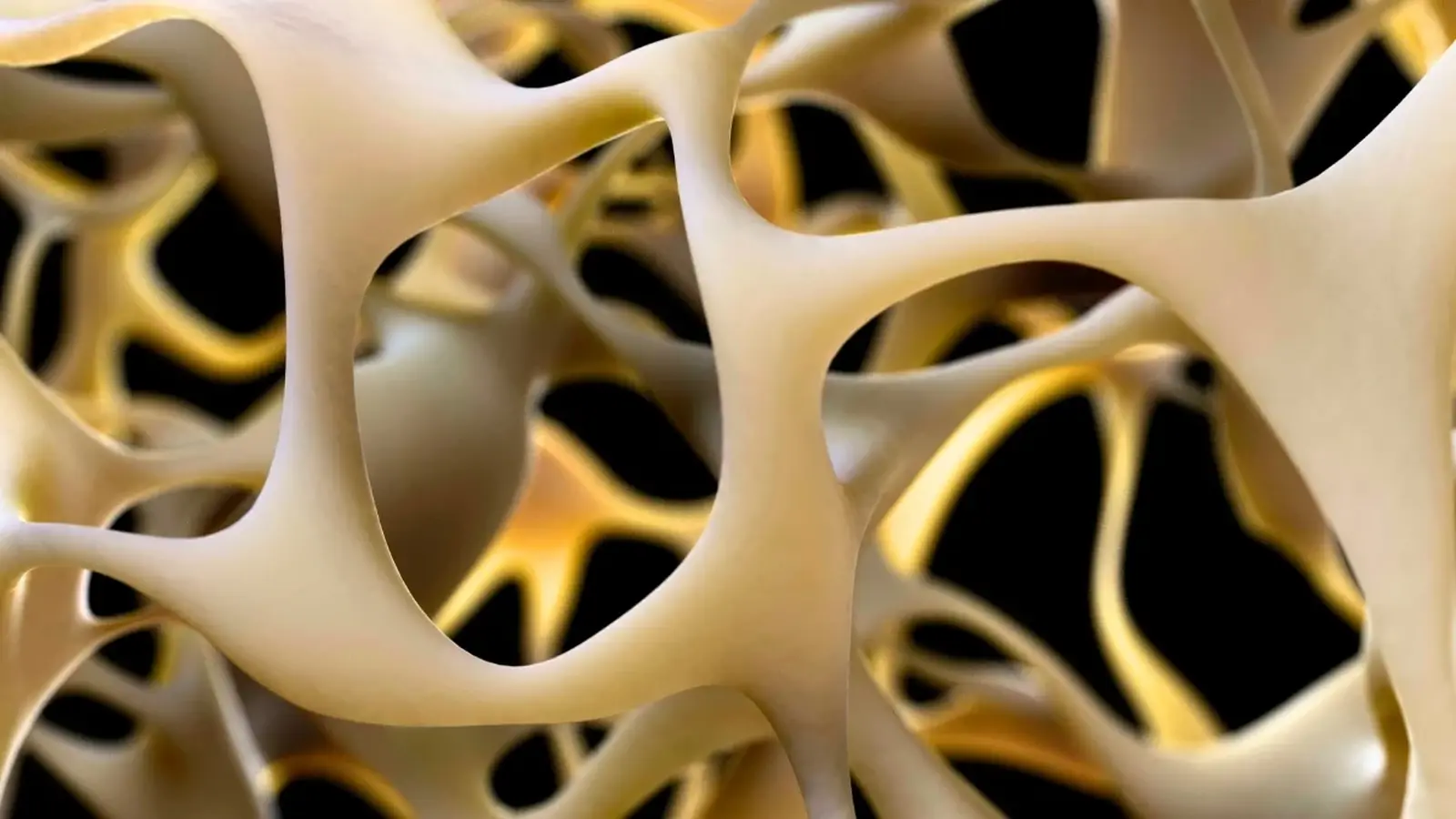
There are moments in the lab that feel like a door opening. This is one of them. Scientists have pinpointed a single cell receptor that, when switched on, turns ordinary bone-building cells into much tougher architects of the skeleton.
Meet GPR133, also labeled ADGRD1. Genetic hints tying variants of this receptor to bone density led researchers at the University of Leipzig and Shandong University to ask a striking question: what happens if we remove or activate this protein? The answer came from mice engineered to lack the gene and from experiments that flicked the receptor on with a small molecule called AP503.
The result was dramatic. Mice without GPR133 developed fragile, under-mineralized bones resembling human osteoporosis. Flip the switch with AP503 and osteoblasts — the cells that lay down new bone — ramp up their activity. Bone mass and strength increased. Even better: when AP503 treatment was combined with exercise, the gains were larger still. Short sentence. Big effect.
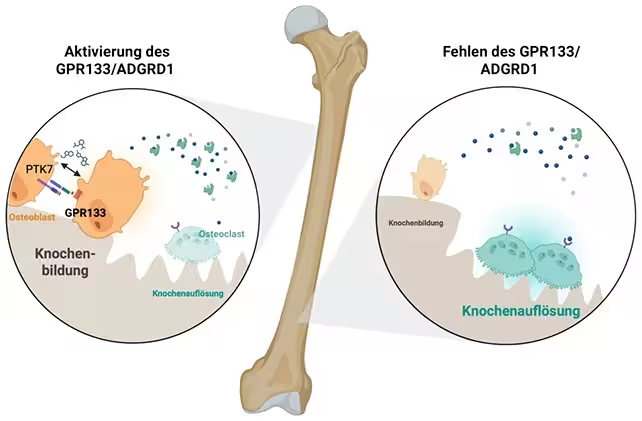
AP503 acts like a biological button, coaxing osteoblasts to work harder and rebuild the matrix that gives bone its resilience. Ines Liebscher, a biochemist involved in the study, described the compound as a recently discovered stimulator of GPR133 that significantly improved bone strength in both healthy and osteoporotic mice. These findings, published in Signal Transduction and Targeted Therapy, make the receptor a compelling target for future therapies.
Why does this matter? Because current osteoporosis drugs mainly slow bone loss. They rarely rebuild bone to its former strength, and many carry long-term side effects or waning benefit. A treatment that actively restores bone — rather than only preventing further decay — would change the clinical landscape, particularly for older adults and menopausal women at high fracture risk.

This work does not stand alone. In 2024, engineers and biologists unveiled a blood-derived, gel-like implant that supercharges the body’s repair toolkit. The so-called biocooperative regenerative material combines patient blood with synthetic peptides to create a 3D-printable scaffold that supports bone healing in animal tests. Cosimo Ligorio, a biomedical engineer on that project, called the approach exciting because blood is readily available and can be transformed into a highly regenerative implant.
And then there is the curious case of a hormone discovered in 2024 by a team at the University of California, San Francisco. Named maternal brain hormone, or MBH, it appears to trigger unusually dense and strong bone formation in mice. The mineralization seen with MBH outperformed previous strategies, according to researchers testing bone strength and repair.

Taken together, these advances sketch a future where multiple biological levers — receptors like GPR133, regenerative biomaterials, and novel hormones — could be pulled to rebuild bone rather than simply preserve what remains. Caution is necessary: mouse biology is not a perfect map of the human condition. Still, the convergence of genetic, molecular, and biomaterial discoveries raises the real possibility of therapies that restore skeletal integrity instead of merely managing decline.
For now, researchers are focused on translating these findings safely into human trials, determining dosing windows, long-term effects, and whether receptor activation yields the same durable bone in people. The skeleton, it seems, may hold surprises yet — and switching the right molecule back on might rewrite how we treat fragile bones.

Leave a Comment
Comments
No comments yet. Be the first.