
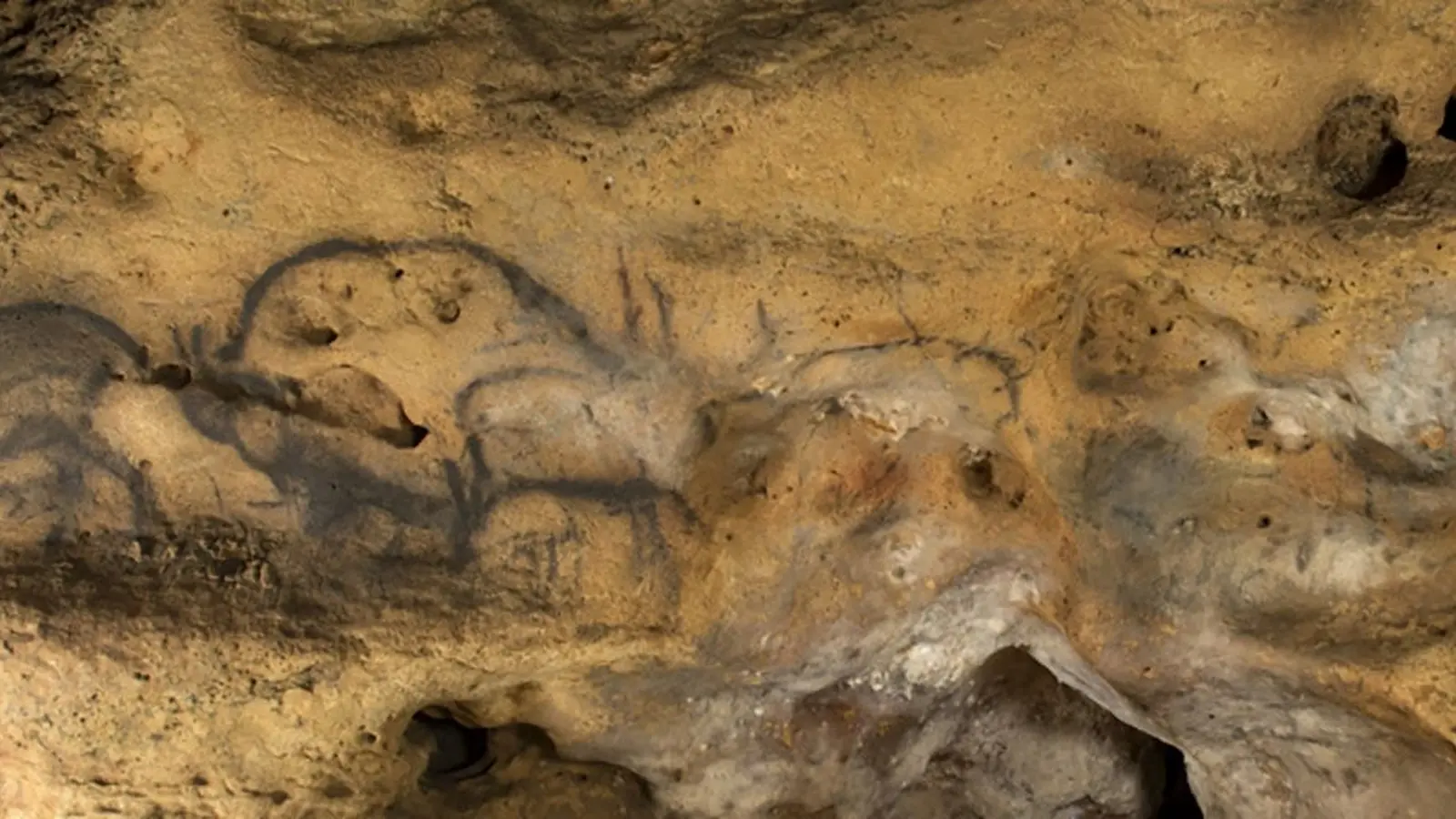
A hundred years of debate ended not with a dramatic excavation, but with a whisper of charcoal hiding in plain sight. That tiny trace, buried inside the black strokes at Font-de-Gaume, has given researchers the first direct clock for some of France’s most famous Ice Age images.
In Les Eyzies, Dordogne, a team led by a CNRS researcher turned to methods that treat rock art like fragile evidence, not museum pieces to be prodded. They used Raman microspectrometry and hyperspectral imaging—noninvasive techniques that reveal chemical fingerprints and subtle contrasts invisible to the eye. The results were surprising: the black pigment on several figures contains real charcoal, not only manganese or iron oxides as long assumed.
Why does that matter? Because charcoal can be radiocarbon dated. Up until now, scientists working in this region could not reliably apply carbon-14 dating to cave paintings; the pigments were believed to lack any organic carbon. No one had actually proven the absence. With charcoal confirmed along the black lines, the team received exceptional permission to collect microscopic samples for AMS radiocarbon analysis.
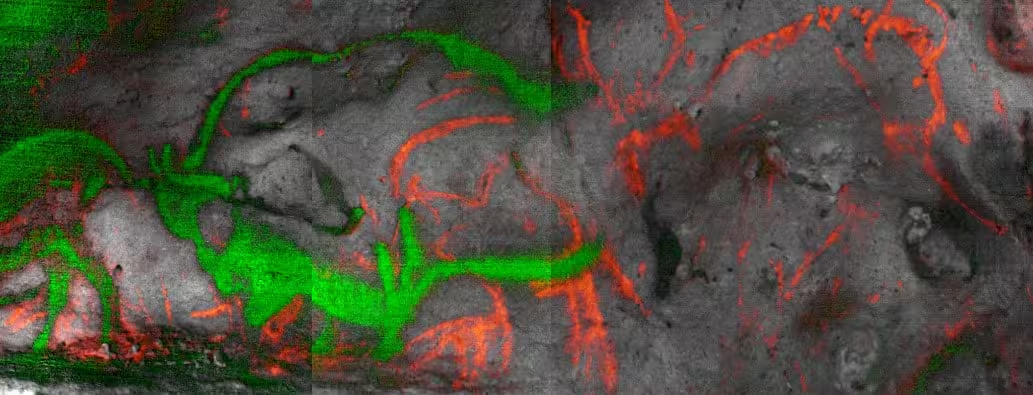
Hyperspectral image obtained using Reflectance Imaging Spectroscopy (RIS) of the Carrefour panel, showing visual contrast between figures created with carbon black (red; Cervid HB14 and Bison HB15) and those created with black manganese oxides (green; Bison HB14).
Tiny samples. Difficult work. Precision mattered. And the dates that came back landed squarely in the Upper Paleolithic—some a little younger than previous estimates, others spanning much older episodes of activity on the cave walls. One bison figure calibrated to between 13,461 and 13,162 calBP. A painted mask yielded multiple ages across different sections: about 8,993–8,590 calBP for one fragment and older ranges near 15,981–15,121 calBP and 15,297–14,246 calBP for others.
These staggered ages hint at a more complex history than a single creative burst. People returned, reworked, or layered images over millennia. The new dating approach gives archaeologists a way to separate episodes of artistic activity and to ask who was making these images, and when.
The technique itself—combining reflectance imaging spectroscopy and micro-scale chemical analysis—opens doors. If similar charcoal signatures exist elsewhere in Dordogne caves, researchers may finally begin to build chronologies for sites long resistant to direct dating, including places like Lascaux where pigment composition has complicated radiocarbon efforts.
Science often advances by finding what was overlooked. A sliver of carbon, hidden in the black paint strokes of Font-de-Gaume, is doing exactly that: turning mystery into measurable history and reframing how we read the deep past.

Leave a Comment
Comments
No comments yet. Be the first.