
5 Minutes
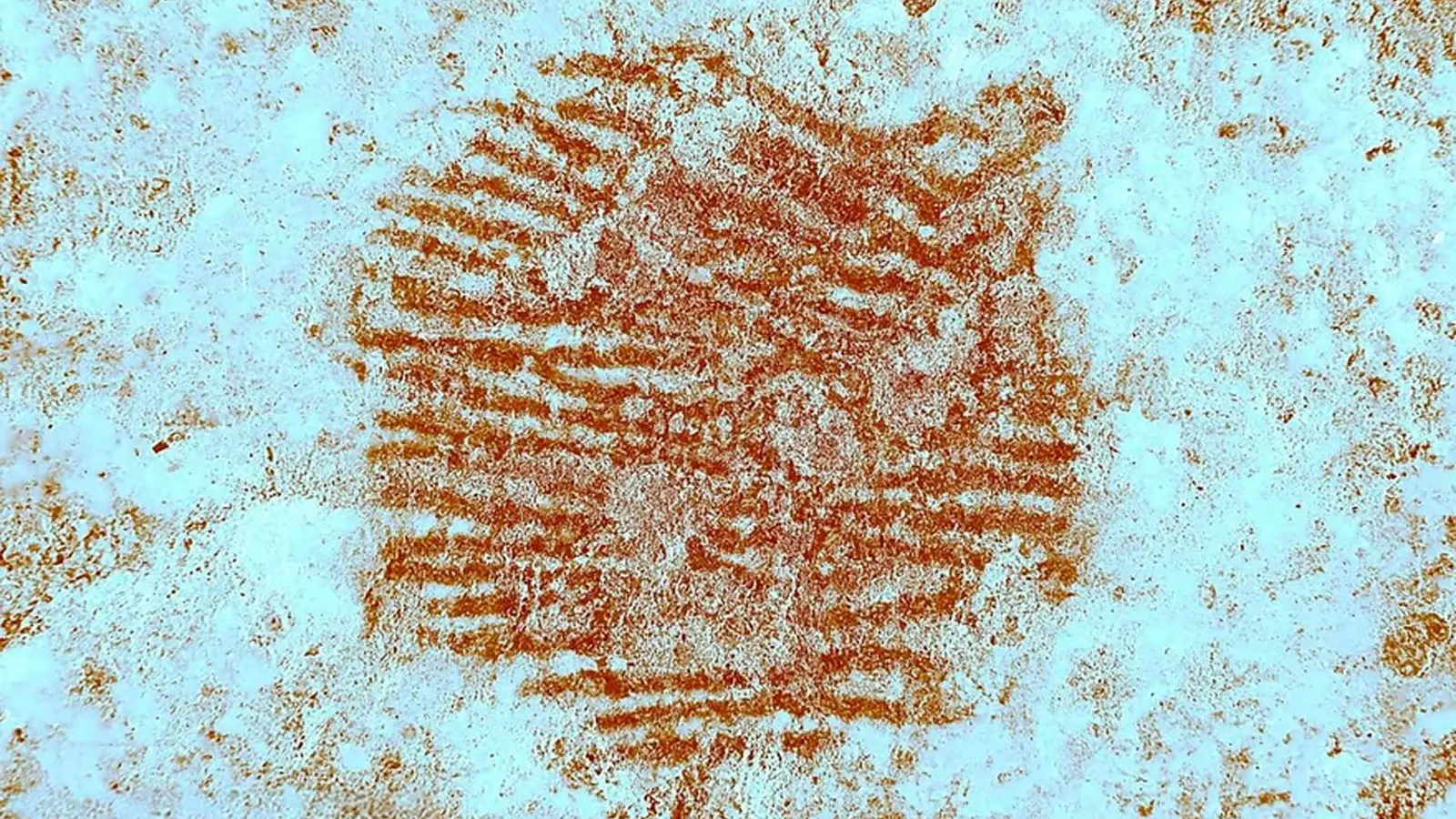
For much of the 20th century, Neandertals were portrayed as primitive hominins lacking the cognitive capacity for symbolic thought and complex cultural expression. That picture has shifted dramatically over the past two decades as archaeologists and paleoanthropologists have uncovered growing evidence that Neandertals made and used ornaments, pigments and abstract marks. Discoveries include painted seashells and pendants, geometric motifs and hand stencils in caves of southern Iberia, and other simple but deliberate marks on rock surfaces.
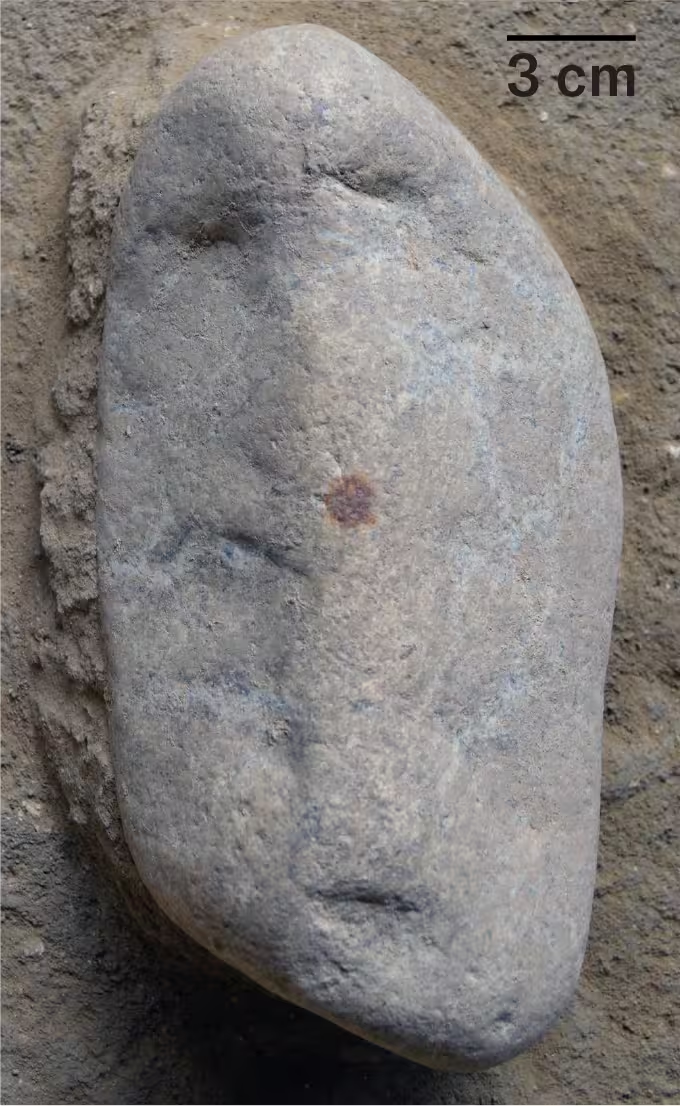
A recent study adds an intriguing new element to this emerging portrait: researchers have identified a tactile trace on a rock protuberance that may represent a Neandertal touch, or deliberate contact, on a facial feature of an ancient rock face. Interpreted as a purposeful action rather than random wear, this tactile interaction strengthens the argument that Neandertals engaged in symbolic or socially meaningful practices.
Scientific background and context
Neandertals lived across Eurasia from roughly 400,000 to 40,000 years ago. For decades, debate about their cognitive abilities focused on tool technologies and subsistence behaviors. Over the last twenty years, several lines of evidence have challenged outdated assumptions. Modified shells and pendants with traces of pigment indicate personal ornamentation. Cave sites in southern Spain and elsewhere have yielded geometric patterns and hand stencils that predate or are contemporaneous with early modern human art in some regions.
These finds matter because symbolic behavior is a key marker of modern cognition. Symbolic acts can include producing images, marking objects with abstract patterns, using pigments intentionally, and creating ornaments that signal social identity. Simple motifs such as dots, lines and smudges may appear modest compared with later figurative art, but they are structurally similar to the earliest expressions of symbolic activity around the world.
Methods and how researchers interpret the evidence
Archaeologists combine multiple methods to assess whether a mark or object is intentional and whether it was produced by Neandertals. Common approaches include microscopic analysis to document tool marks and pigment residues, stratigraphic study to associate artifacts with dated layers, and direct dating techniques. Uranium-series dating of mineral deposits overlying paintings, radiocarbon on associated organic materials where available, and contextual stratigraphy are frequently used to establish minimum or maximum ages.
For tactile traces and subtle surface modifications, high-resolution 3D scanning and digital microscopy can reveal consistent patterns that distinguish intentional gestures from natural abrasion. Experimental archaeology — reproducing marks with hands, tools, and pigments under controlled conditions — helps interpret the behaviors that could have produced the archaeological signatures.
Key discoveries and implications
The growing corpus of Neandertal-associated art and symbolic artifacts implies several important conclusions. First, Neandertals were capable of producing and recognizing abstract visual motifs. Second, they used pigments and ornaments in ways that likely communicated social information. Third, simple marks in caves and on portable objects should not be dismissed as accidental; instead they may represent the earliest stages of symbolic communication.
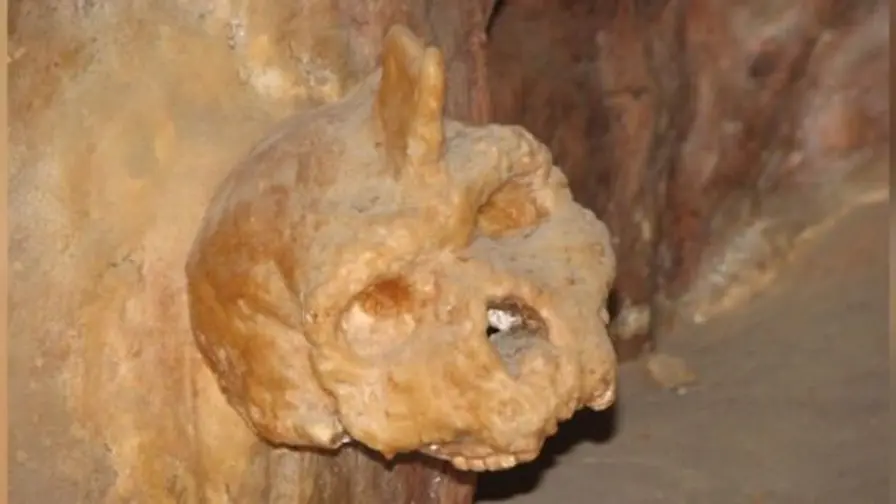
The tactile trace on a rock protuberance provides a complementary type of evidence. Rather than relying only on pigment or visible marks, contact traces suggest embodied interaction with a rock surface. Whether the action was playful, ritualized or communicative, it indicates an awareness of surface features and intentional engagement with the environment in a way that could carry social meaning.
Broader impact on human evolution studies
Reassessing Neandertal cognition affects how researchers model the evolution of modern human behavior. If Neandertals independently developed symbolic practices, then symbolic cognition may have deeper roots in the hominin lineage than previously thought. Additionally, exchanges between Neandertals and Homo sapiens could have involved cultural as well as genetic interaction, shaping technologies, ornaments and possibly symbolic conventions.
Related technologies and future research directions
Advances in imaging, portable elemental analysis and dating are accelerating the study of prehistoric art. Portable X-ray fluorescence helps identify pigment composition in situ without sampling. 3D photogrammetry and laser scanning document subtle surface features for quantitative analysis. Improvements in uranium-series and other dating methods increase confidence in the chronological framework.
Future research will focus on expanding the database of Neandertal-associated marks and ornaments across regions and time. Comparative studies that analyze motif frequency, placement and production techniques can help determine whether similar cognitive processes produced parallel results in Neandertals and early modern humans.
Expert Insight
Dr. Elena Marquez, a paleoanthropologist specializing in Pleistocene art, notes that simple marks can be highly informative in the study of cognitive evolution. She explains that dots, lines and smudges should be viewed as intentional units of visual language, not as lesser forms of art. She adds that integrating high-resolution imaging with experimental replication will be essential to distinguish deliberate human actions from natural processes.
Dr. Michael Thorne, a cognitive archaeologist, emphasizes methodological caution. He recommends multiple independent lines of evidence before attributing symbolic intent: consistent patterning, repeatable production techniques, pigment use, and clear stratigraphic association with hominin occupations. When these criteria converge, the case for symbolic behavior becomes robust.
Conclusion
Recent finds of painted shells, pendants and cave motifs, together with tactile traces on rock surfaces, are reshaping our understanding of Neandertal cognitive and cultural capacities. Rather than viewing Neandertals as cognitively inferior, researchers now see them as agents capable of simple but meaningful symbolic acts. Continued application of advanced imaging, dating and analytical methods will refine this picture further, revealing the depth and diversity of cultural expression in our evolutionary cousins.


Leave a Comment
Comments
No comments yet. Be the first.