

4 Minutes
Startling, simple, and stubborn: eat less for many years, and the wiring in your brain may age more slowly. That is the striking suggestion from a long-running experiment that tracked subjects over their full lifespans and looked at brain tissue at the cellular level.
A decades-long study suggests that sustained calorie restriction may influence how the brain ages at the cellular level. By analyzing individual brain cells, researchers found that reduced caloric intake was associated with key factors in preserving white matter integrity.
Long-term calorie restriction and brain resilience
As humans age, neurons don’t just lose functionality; the support systems around them fray. Myelin—the fatty sheath that insulates axons and allows rapid signal transmission—gradually degrades. Microglia, the brain’s immune sentinels, can flip from helpful janitors to chronically activated instigators of inflammation. The result: slower communication between cells, fragile white matter, and heightened vulnerability to neurodegenerative disease.
Boston University Chobanian & Avedisian School of Medicine has reported evidence that a 30% cut in calorie intake, sustained for more than two decades in an experimental primate model, was linked to molecular signs of preserved brain health. The research team followed two groups across their natural lifespans—one fed a balanced diet at typical caloric levels, the other on a consistent calorie-restricted regimen—and performed detailed postmortem analyses to read the cellular record written over years.
What the researchers examined and found
To peer inside individual cells, the team used single-nuclei RNA sequencing, a method that measures gene activity one nucleus at a time. That allowed them to compare expression patterns across cell types: neurons, oligodendrocytes (the cells that generate myelin), microglia, and other supporting cells. The differences were not subtle. Cells from the calorie-restricted group showed higher expression of genes tied to myelin production and stronger activity in core metabolic pathways—specifically glycolysis and fatty acid biosynthesis—pathways that fuel and maintain myelin structure.
Why does that matter? Because myelin is not a passive wrap. It’s metabolically expensive to build and repair. If the machinery that supplies substrates and energy falters, myelin integrity declines, signaling slows, and cognitive processes that depend on rapid neural coordination become less efficient.

The study also observed changes in microglial profiles. Rather than showing the markers of chronic activation seen in typical aging, microglia from calorie-restricted subjects retained a gene-expression pattern suggestive of more balanced immune surveillance. In short: less relentless inflammation, and a cellular milieu more conducive to maintenance than to damage.
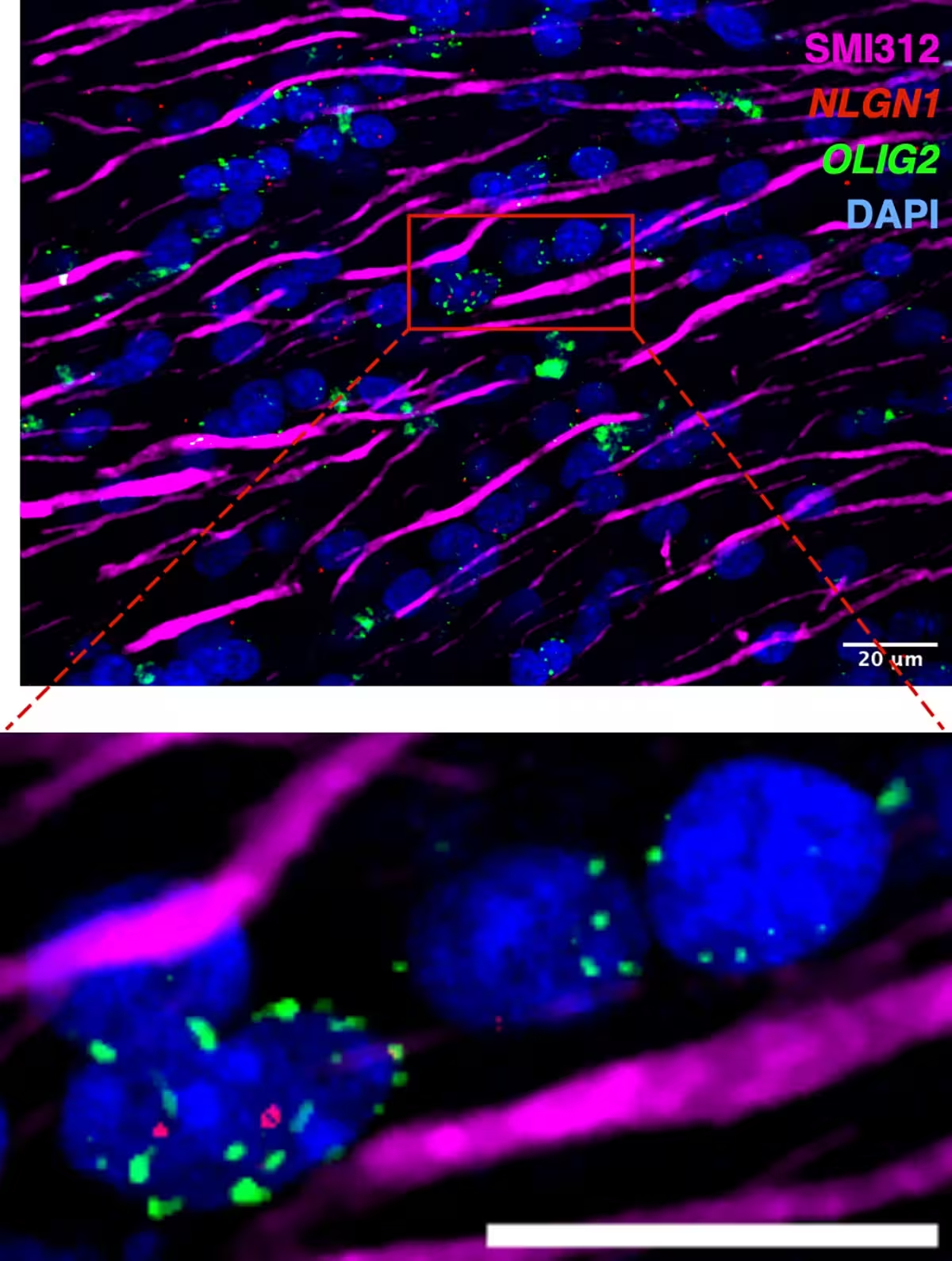
Axonal nerve fibers (magenta) surrounded by supporting brain cells, whose nuclei are stained blue. Green puncta show OLIG2 mRNA, which identifies oligodendrocytes the brain cells that form the protective myelin sheath around nerves. Red puncta show NLGN1, a molecule that helps these oligodendrocytes connect to nerve fibers. Normally, aging reduces NLGN1 levels, disrupting myelin formation. However, researchers found that long-term calorie restriction helps maintain NLGN1 expression, potentially preserving healthy nerve insulation and communication.
Lead contributors highlighted the broader significance. Ana Vitantonio, a corresponding author and doctoral candidate, noted that while calorie restriction has long shown lifespan and metabolic effects in shorter-lived species, this work offers rare, sustained evidence that similar protective molecular signatures appear in brain tissue of a longer-lived, complex model. Tara L. Moore, PhD, a co-author, emphasized the cognitive implications: if myelin production and metabolic support systems remain more robust, the cellular groundwork for learning and memory may be better preserved.
There are caveats. This is an experimental model, not a randomized human trial. Calorie restriction in humans raises practical questions about nutrition, compliance, and unintended side effects. Yet the cellular signals—higher myelin-related gene expression, preserved metabolic pathways, and dampened microglial overactivation—offer a plausible mechanistic link between diet and how the brain weathers time.
Expert Insight
"Seeing metabolic pathways tied to myelin maintenance respond to long-term dietary change is compelling," says Dr. Lena Carter, a fictional but realistically framed neuroscience researcher and science communicator. "It gives us a mechanistic foothold: interventions that sustain energy supply and lipid biosynthesis in glial cells could translate into better white matter health. Diet is one lever among many—exercise, sleep, and vascular health matter too—but this study reminds us that what we eat over decades can rewrite cellular trajectories."
The next steps are clear: test whether similar molecular patterns appear in humans practicing measured, nutritionally supervised calorie reduction; explore less extreme or intermittent dietary strategies that yield comparable benefits; and hunt for pharmacological or lifestyle interventions that mimic the protective signatures without requiring severe long-term restriction.

For now, the message is nuanced. Cutting calories by about thirty percent for years appears, in this long-term experimental record, to slow some molecular aspects of brain aging—chiefly by supporting the cells and pathways that build and maintain myelin and by keeping immune cells from tipping into harmful chronic activation. It’s a reminder that aging is not solely a calendar effect; it’s shaped by decades of metabolic choices and cellular conversations that those choices provoke.

Leave a Comment
Comments (2)
Wow that myelin angle is wild. Gives hope, but who can cut calories 30% for 20+ yrs? nutrition worries, lifestyle tradeoffs..
Wait, 30% fewer calories for decades? sounds extreme. Animal model is neat, but is that really human applicable? skeptical, curious