
3 Minutes
Can a spoonful of fiber change the way an aging brain remembers? It sounds like a health hack, but a string of recent studies has nudged otherwise skeptical scientists to pay attention.
In 2024, researchers at King’s College London published a twin study that stunned a few corners of geriatric research: daily doses of inexpensive prebiotic fibers — taken with protein powder — nudged memory test scores upward in people over 60. The study focused on two plant-derived supplements, inulin and fructooligosaccharide (FOS), both widely sold over the counter. The twist was not only improved cognitive scores but measurable shifts in the gut microbiome among the twins who received the fibers.
The microbes that bloom in response to these fibers included more Bifidobacterium, a genus that animal studies link to clearer cognitive performance and calmer gut-brain communication. Those microbial ripples, small though they were, are feeding an idea that has long tempted scientists: maybe the gut truly is an engine for brain health.

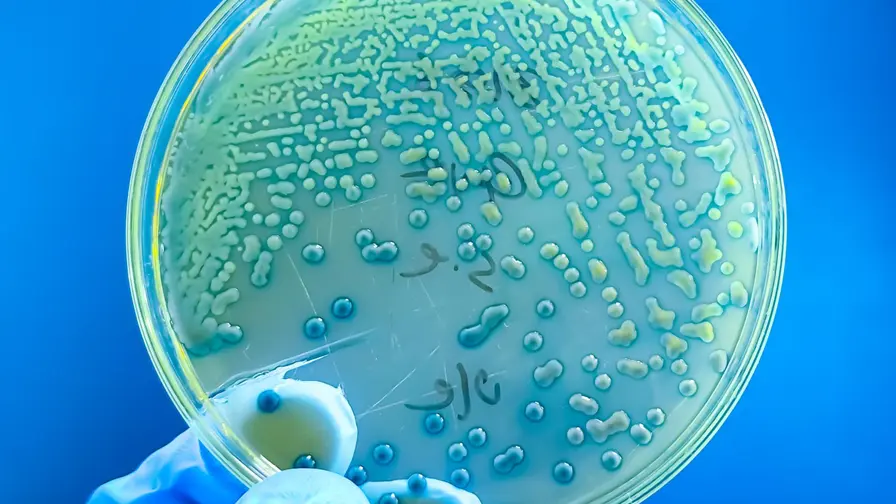
The microbes in each person's gut make up their individual microbiome.
That idea has given rise to PRECODE, a clinical trial unfolding in the Netherlands. Researchers at Wageningen University enrolled older adults with suspected cognitive decline and asked them to take one of three fibers — chicory inulin, resistant dextrin, or a seaweed-derived polysaccharide — twice daily for 26 weeks, compared with a maltodextrin placebo. Participants sip the powders in water, tea, or coffee. They undergo cognitive testing and brain scans along the way. Results are due in 2027, and the trial aims to map not just whether memory changes, but how the microbiome and the brain change together.
Why does this matter beyond clinical curiosity? Because these are cheap, familiar compounds that require no new technology. They are already on pharmacy shelves. If supplements like inulin and FOS reliably nudge cognition, they could become a low-cost public-health tool for an aging population — a way to shift risk for cognitive decline without high price tags or invasive treatments.
Not everyone is ready to call it a breakthrough. Twin studies are powerful because they control for genetics, but the 2024 trial involved relatively small numbers. And while animal experiments repeatedly show that boosting 'good' gut bacteria can change behavior and brain chemistry, translating that biology to humans is messy. A 2025 study that linked an altered Bifidobacterium-to-Akkermansia ratio with worse multiple sclerosis symptoms, for example, highlights how microbial balances matter — but also how complex the relationships can be across different diseases.
Still, clinicians involved in the research emphasize the appeal: safety, scalability, and acceptance. Geriatricians point out that an inexpensive fiber supplement taken daily is far easier to roll out at population scale than a new drug. The obvious next questions are whether effects persist long-term, who benefits most, and whether combinations of fibers or pairing them with dietary or lifestyle changes amplifies results.
We may be on the edge of an ordinary intervention with extraordinary reach: a modest dietary tweak that reshapes gut microbes and, in time, how older people think and remember.
For now, the message is one of cautious optimism. Ongoing trials like PRECODE will tell us whether those early, promising nudges grow into reliable strategies — and whether a scoop of fiber in your morning drink might someday be prescribed as an act of preventive brain care.




Leave a Comment
Comments
No comments yet. Be the first.