
3 Minutes
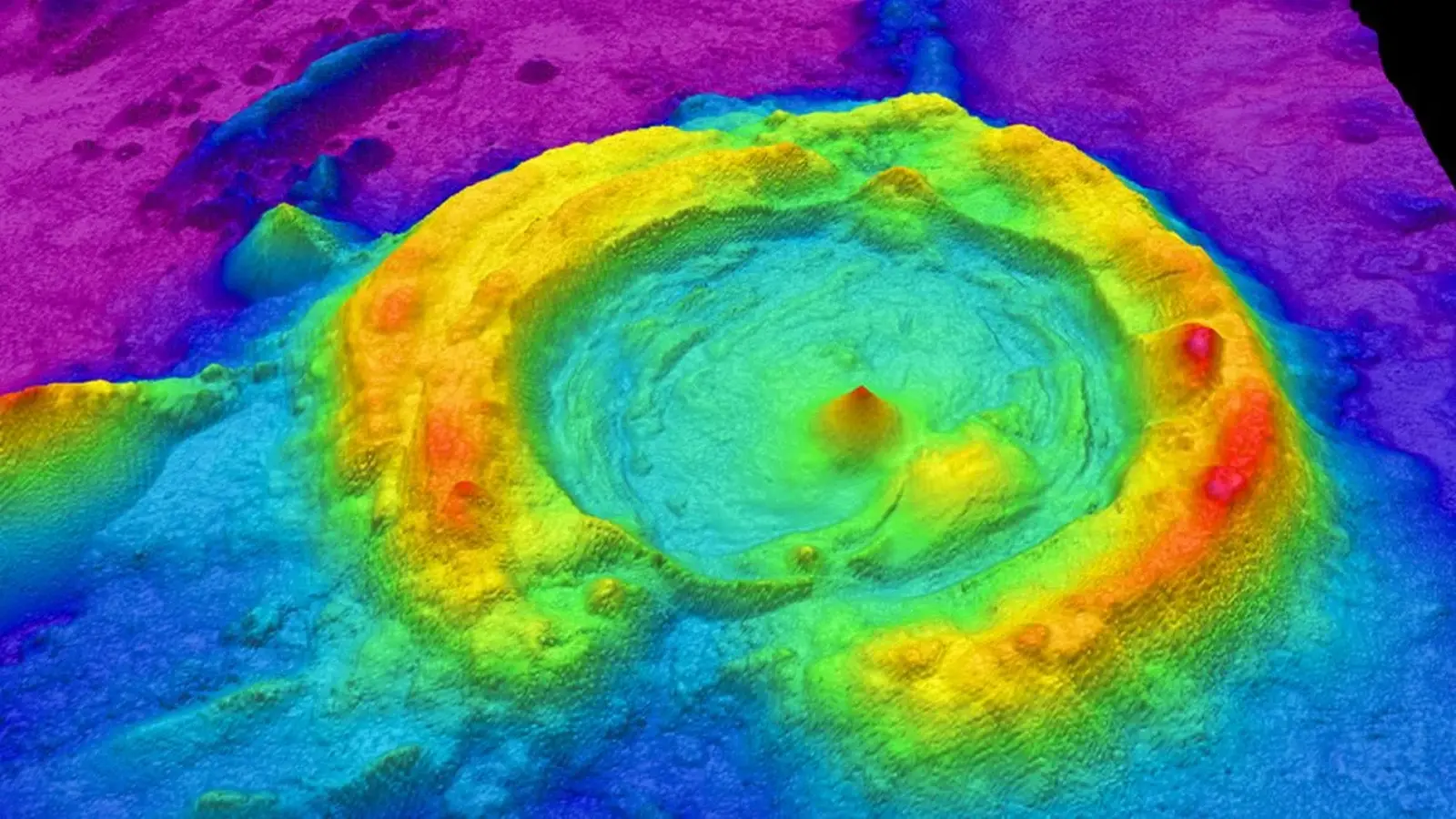
Imagine a landscape of collapsed craters, not on some distant planet, but hidden beneath miles of dark, pressurized water. Strange. Vast. Dangerous. And until recently, largely invisible.
Volcanologist Andrea Verolino and a team at Paris-Saclay University set out to change that. They repurposed a crater-detection algorithm—originally trained on Martian terrain—and trained it on global bathymetry, the topographic maps of the seafloor. The machine initially flagged 87,435 candidates. Most were noise. Persistence and careful human scrutiny pared that enormous pile down to 78 likely submarine calderas. Five of those were already known, leaving 73 that are newly identified to science.
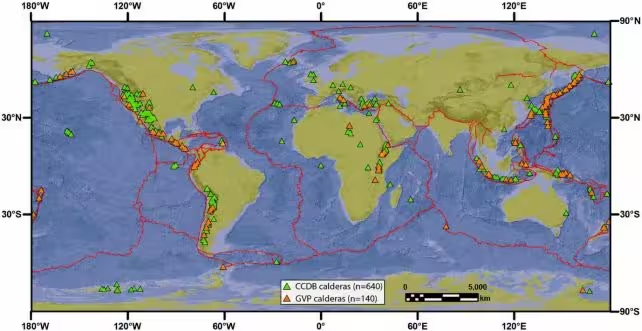
The global distribution of previously documented calderas.
Why should we care? Because calderas are the scars left when a volcano empties its magma chamber and the ground collapses. On land they can become dramatic national parks. Under the ocean they can trigger enormous, explosive events: tsunamis, shock waves, and ash plumes that interact with the atmosphere in ways we are only beginning to map. The 2022 Hunga Tonga–Hunga Ha'apai eruption was a stark reminder—an undersea blast that sent pressure waves into the upper atmosphere and caused damage far from its origin.
The newly reported features, detailed in Communications Earth & Environment (2026), are more than a simple tally. They reshape the map of submarine volcanism. Before this study, fewer than 30 submarine calderas had been cataloged. If the 73 candidates are confirmed, the recognized inventory will more than triple, offering a vastly expanded baseline for hazard assessment and geologic study.
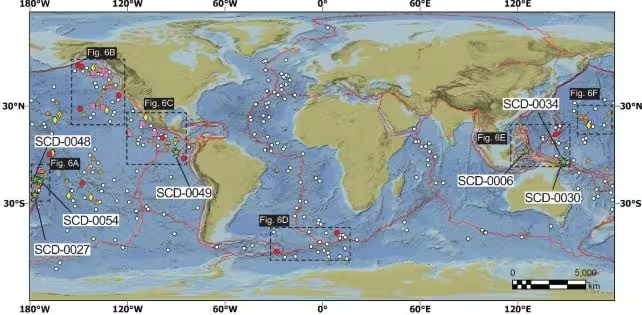
A map showing the new calderas.
The distribution of the finds is revealing. Eight lie along mid-ocean ridges where tectonic plates diverge; nine sit in volcanic arcs; and a surprising 61 occur in intraplate or interior settings such as seamount chains rather than neat plate boundaries. That pattern suggests submarine caldera formation is not confined to textbook plate-edge scenarios and that our assumptions about where explosive submarine volcanism can happen may need revision.
Verolino's group did not claim these features are currently eruptive. The study deliberately sets a conservative bar: a transparent, repeatable framework that can be refined as higher-resolution bathymetry becomes available. Still, the team flagged seven of the new calderas as priority targets because their depth, shape, and location make them especially relevant to hazard monitoring and future exploration.
This discovery triples the catalogue of known submarine calderas and provides an open, upgradeable method for finding more.
There are practical implications. We cannot monitor what we do not know exists. Identifying these submarine collapse structures helps scientists decide where to place sensors, target submersible surveys, and refine tsunami and eruption models. It also opens questions about volcanic systems previously thought dormant; recent research shows some 'extinct' seafloor volcanoes may be quietly refilling with magma.
The paper emphasizes process over perfection. The algorithm flagged tens of thousands of shapes, then humans—and geology—did the rest. That human-machine partnership matters; algorithms accelerate discovery, but expert eyes separate signal from noise. As bathymetric datasets improve and exploration technologies advance, the list will evolve. For now, the ocean floor has yielded a sizable surprise, and with it a sharper sense of where the next undersea volcanic shocks might originate.




Leave a Comment
Comments
No comments yet. Be the first.