
3 Minutes
Imagine a plastic that keeps heat at bay while staying light, flexible and tough. Sounds like science fiction? The team at the University of Massachusetts Amherst thinks otherwise.
Most insulation tricks rely on trapped air. Bubble-filled foams and porous foils slow heat because air is a poor conductor. But add air to a plastic and you often wreck its strength or complicate how it’s made. The UMass researchers took a different route: they attacked heat at its source—atomic vibrations inside the solid.
In crystalline solids and polymers, heat travels as tiny vibrations that hop from atom to atom. Think of those vibrations as a well-drilled bucket brigade passing energy along. When the chain is orderly, heat moves fast.
The researchers wanted chaos. But not total chaos—“slow chaos.” They engineered the polymer so that vibrational pathways become sparse and disorganized. Instead of coordinated firefighters handing off big buckets, the material behaves like a scatter of toddlers, each carrying a small cup in a different direction. The result: heat leaks through far less efficiently.

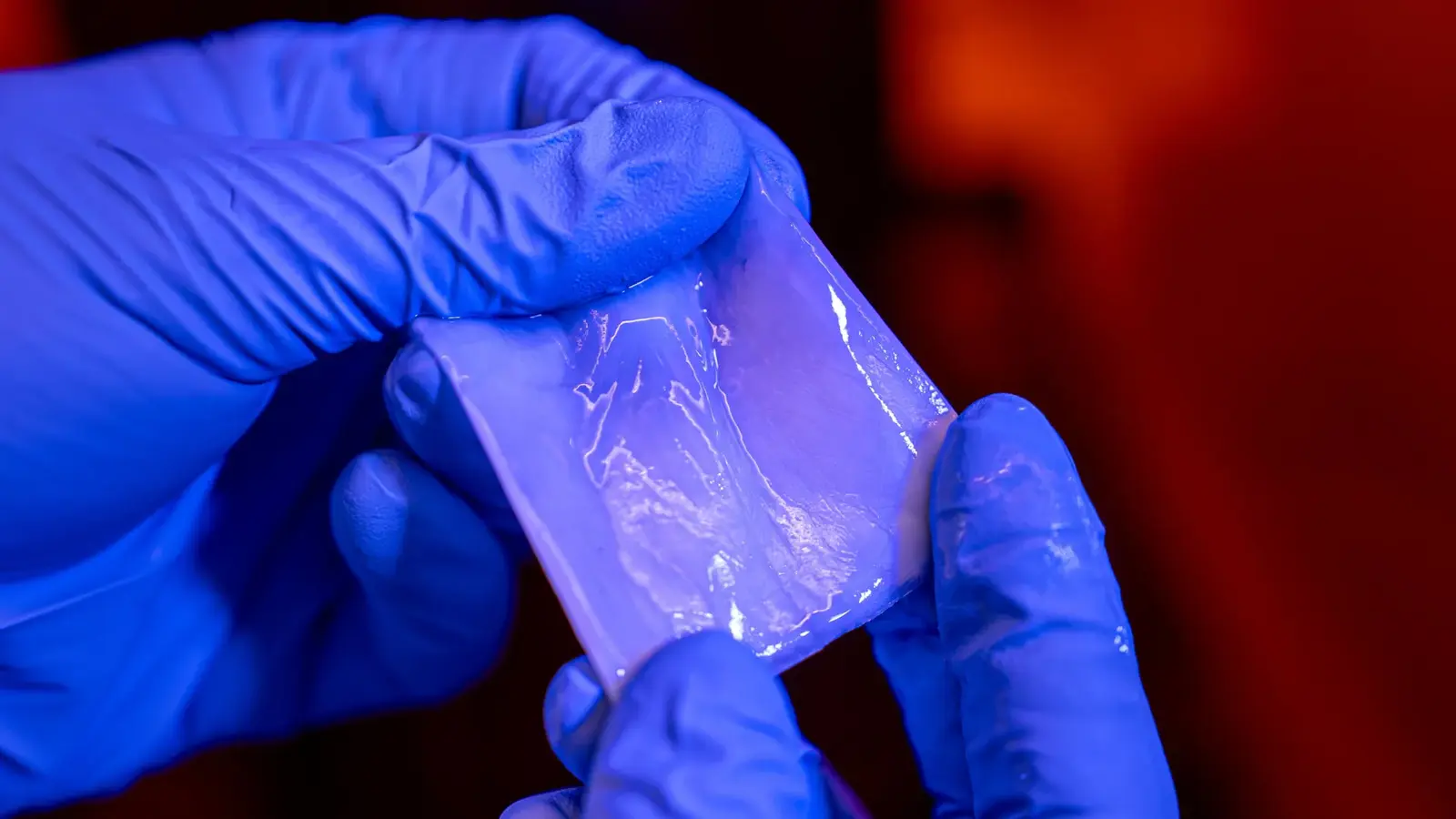
To do this, the team blended polyurethane with a molecular filler called tetrahydroxy deoxybenzoin triazole (THDBT). At the nanoscale, THDBT aggregates interrupt the usual vibrational channels, cutting the number of thermally accessible pathways. In early tests the hybrid polymer showed a roughly 17% drop in thermal conductivity and also demonstrated flame-retardant behavior—without becoming brittle or bulky.
That last bit matters. The hybrid remains dense and mechanically compliant, meaning it can flex and bear loads like conventional plastics while offering improved thermal protection. For engineers, that’s a rare combination: insulation that doesn’t force trade-offs in strength or manufacturability.
Practical uses are obvious and broad. Imagine suit layers for astronauts that limit heat transfer without adding weight, spacecraft skins that resist both heat and flame, electronics housings that tame hotspots without bulky metal fins, or building materials that improve energy efficiency while staying structurally sound.
The reduction in thermal conductivity seen so far is modest, but the concept opens a new design space. By tuning molecular fillers and how they disrupt vibrational networks, scientists could push the effect further. "There is a lot of potential," says Yanfei Xu, the study’s corresponding author and an assistant professor at UMass Amherst, noting that vibrational engineering may be a general tool for thermal management in polymers.
What began as a rethink of heat transport at the atomic level may grow into a practical way to make everyday plastics more heat-aware—lighter, safer, and better suited to the thermal challenges of modern technology.














Leave a Comment
Comments
No comments yet. Be the first.