
4 Minutes
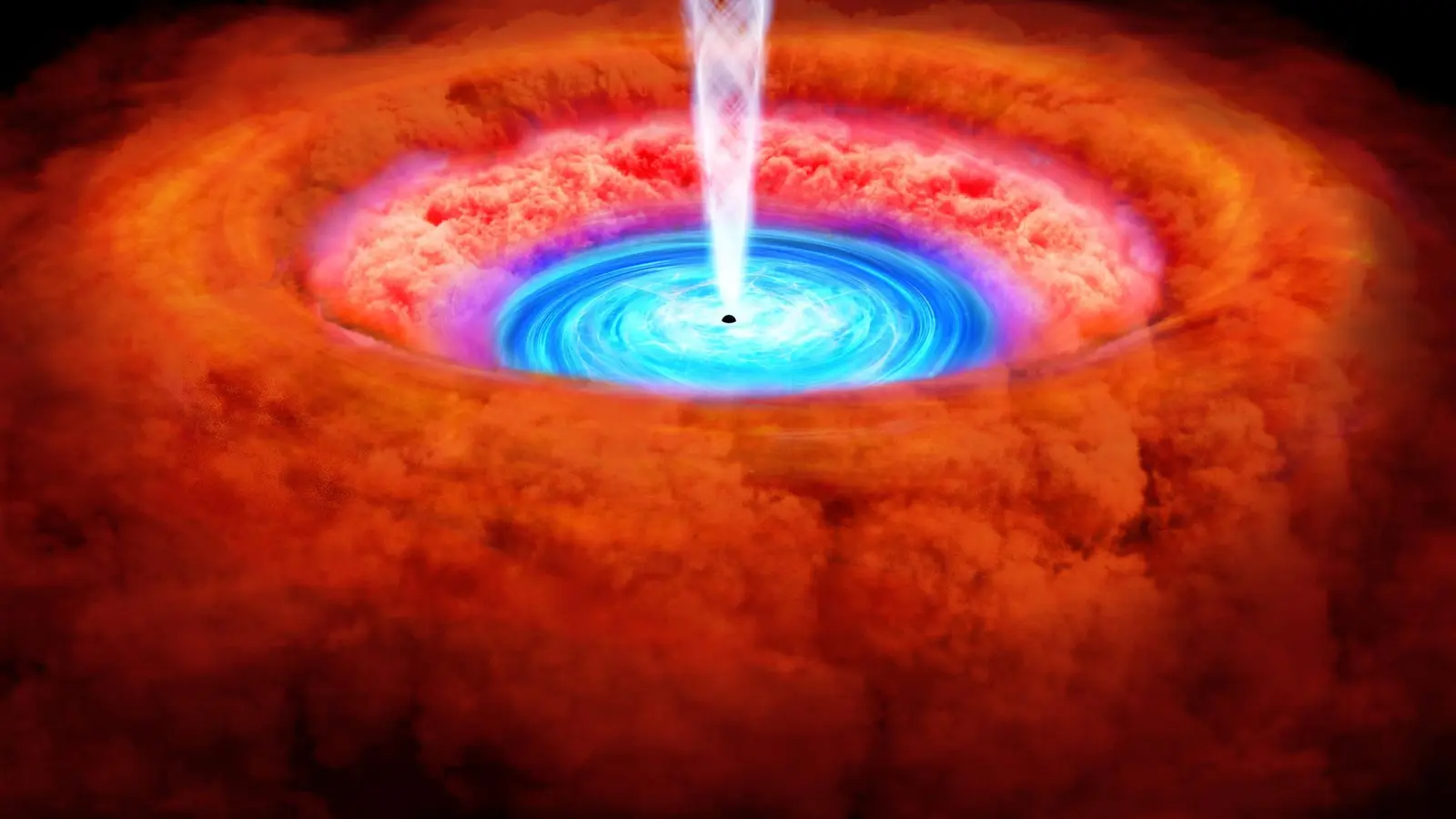
In the quiet heart of a nearby galaxy, a furious gale is sweeping away the ingredients for future stars. It does not howl through dusty lanes or burst from supernovae. It streams from the accretion disk around a supermassive black hole, and XRISM has finally given astronomers the resolution to watch that wind take shape.
NGC 4151 sits around 50 million light-years away and has long been a favorite target for those curious about active galactic nuclei. Its central black hole is feeding voraciously, and the emission from the surrounding disk lights up the galaxy in X-rays. But light is only part of the story. The disk can also launch powerful outflows that shove gas out of the galaxy, starving the regions that would otherwise collapse into new stars.
Until recently, those outflows were seen only as broad strokes — hints in blurred spectra that something energetic was scouring the galactic reservoir. XRISM, with X-ray energy resolution roughly ten times better than its predecessors, turns that blur into texture. Using data from the mission, researchers at the University of Michigan probed the winds in unprecedented detail and found not just speed, but timing and geometry.
They tracked how the X-ray emission changed over many days and, crucially, how the spectrum changed after bright flares. What emerged was a rhythm. Fast, galaxy-reshaping winds tended to show up not during the brightest flares but a few hours later. The delay is about 10,000 seconds, just under three hours. That interval is small on cosmic scales. It is enormous for linking the inner disk physics to gas motions on far larger scales.

The XRISM (X-ray Imaging and Spectroscopy Mission) spacecraft investigates the X-ray universe in this artist’s concept.
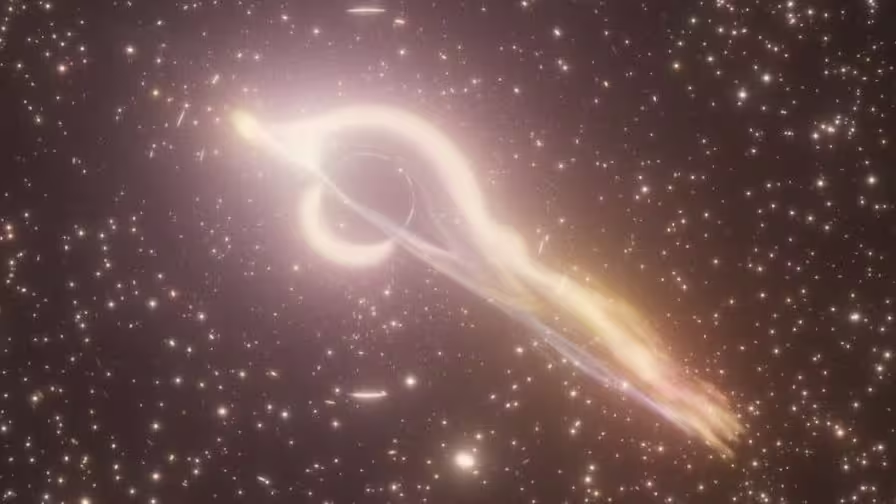
Why the lag? The team argues that the winds are magnetocentrifugal in origin — think of magnetic field lines acting like a rotating lawn sprinkler, flinging plasma outward. Conditions inside the disk evolve during a flare, and the magnetic geometry that launches the strongest, fastest winds may only assemble once the initial burst has passed. In other words, the flare rearranges the engine; the outflow arrives after the gears have meshed.
Xin 'Cindy' Xiang, who led the analysis, introduced a practical tool while teasing out this behavior. By combining X-ray brightness and spectral hardness into a single metric, she created a quick diagnostic that predicts the chance of seeing these fast outflows in an active nucleus. Her colleague suggested a playful shorthand for the index, which helps observers pick the moments when a galaxy is most likely to hurl gas into intergalactic space.
The clearest takeaway: the fastest winds are strongest when the X-rays are hard but relatively faint, and they typically appear about 10,000 seconds after a flare.
The implications reach beyond NGC 4151. Large elliptical galaxies in the local universe contain less stellar mass than simple models predict. Something must shut down their star formation. These black hole-driven winds offer a compelling mechanism: remove the cold gas, and you remove the next generation of stars. It is a cosmic diet, administered by an engine only a few light-days across yet capable of influencing an entire galaxy.
There is also a practical benefit for astronomers. If outflows follow a predictable pattern after flares, telescopes can time follow-up observations to catch the winds in the act. That will multiply the sample of well-characterized systems and refine our models of how accretion disks couple to galactic gas.
XRISM opened a new window into the intimate dance between black holes and their host galaxies. The mission shows that the smallest scales can govern the largest outcomes, and that timing matters as much as energy. Watch a flare, wait three hours, and you may witness a galaxy losing its appetite for star-making — a quiet catastrophe with profound consequences for cosmic evolution.










Leave a Comment
Comments (2)
Is the 10,000s delay solid tho? Could other mechanisms mimic that timing, or is this just a neat model fit? quick thought, need more obs.
Whoa, so a tiny accretion disk can starve a whole galaxy? Mind blown! That 3 hour lag is wild, gotta rewatch the plots… makes me wanna follow XRISM updates 24/7 haha