
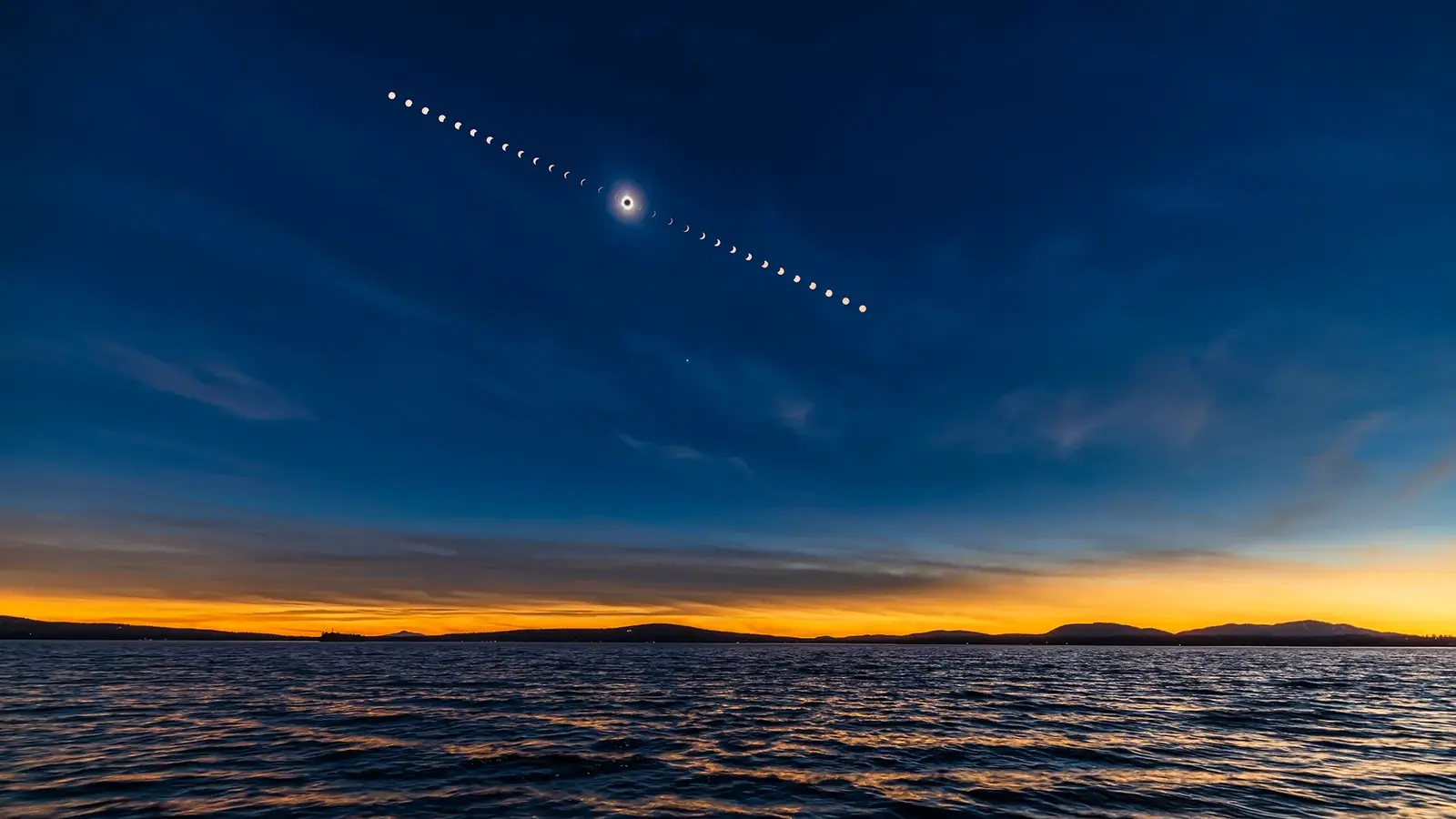
Imagine a single day that stitches a daytime eclipse to a sky full of meteors and finishes with the Milky Way pouring over the horizon. That is exactly what skywatchers could see on Aug. 12 — a rare stacking of events that promises to make it one of the most memorable 24-hour windows for stargazing in years.
The show begins in daylight. Across much of North America, Europe and North Africa millions will witness the moon nibble away at the sun. For a lucky few, the spectacle turns dramatic: a narrow path of totality sweeps over eastern Greenland, western Iceland and northern Spain. Elsewhere viewers will get a partial eclipse — from deep coverage in parts of northern Canada to more modest fractions in major cities.
Northern Nunavut could see the sun nearly vanish, with coverage approaching 90% in places. In big eastern Canadian cities like Toronto, Ottawa and Quebec, expect single-digit to low-double-digit coverage. Alaska gets some of the best U.S. partial views: Fairbanks could see roughly a third of the sun obscured, while Boston sits near the mid-teens. Across the Atlantic, London and Paris will be treated to dramatic, high-percent partial eclipses.
There is a simple rule you must follow. Never look at the sun without ISO 12312-2 certified eclipse glasses, and never use binoculars, telescopes or cameras for solar viewing unless they are fitted with proper solar filters. It sounds basic, but it cannot be overstressed. One careless glance ruins eyesight forever.

As daylight fades the lineup keeps coming. Venus reaches dichotomy that evening, a technical term with a striking visual payoff: the planet will appear half-illuminated, like a tiny crescent turned square. Through modest binoculars or a small telescope, Venus will look oddly familiar — a half-lit disk that feels more moonlike than planet-like.
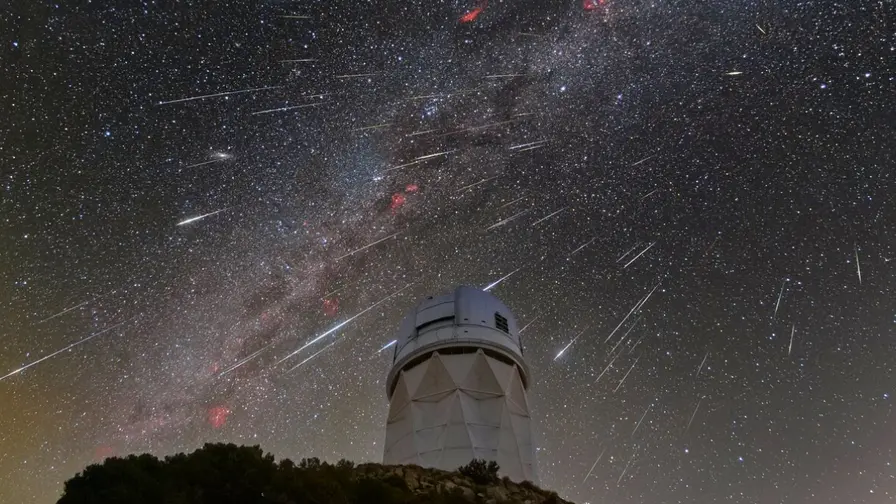
Then the night takes center stage. The Perseid meteor shower peaks on the overnight hours of Aug. 12-13, and this year the timing is almost perfect: a new moon means the sky will be as dark as it gets. Under true rural darkness observers could glimpse 50 to 75 meteors an hour. Even in light-polluted suburbs, frequent shooting stars are likely to steal your attention.
Timing matters. The best window for Perseids is typically from midnight to about 2 a.m. local time, when the constellation Perseus climbs high and Earth is plowing most directly into the stream of cometary debris that spawns the shower. Watch a patch of sky off the radiant and you will see longer, faster streaks and occasional fireballs.
And then there is the quiet, slow reward for staying up: the Milky Way. In a rural sky, with moonlight absent and the Perseid sparks tracing brief lines across the heavens, the galactic band will arch from horizon to horizon. Dust lanes will cut dramatic grooves through the glow. It is a view that compels perspective; it humbles, in the best way.
Will every observer experience all of these wonders? No. Weather decides much. Urban light pollution will blunt the Perseids and hide the Milky Way. But even where cloud or city lights intrude, the day offers highlights for anyone willing to step outside: a partial eclipse in daylight, a distinct half‑Venus at dusk, and a meteor shower that benefits hugely from the new moon.
If you plan to watch, bring the right gear. Certified eclipse glasses for the sun. Binoculars for meteors and Venus when the optics are safe to use. A reclining chair and warm layers for the long, patient hours of the night. And if the sky clears, set aside arrogance and grab a moment to simply look up — because moments like Aug. 12 arrive rarely, and when they do they remind us how small and alive the sky makes us feel.

Leave a Comment
Comments
No comments yet. Be the first.