
Close your eyes and picture a hallway lit by a gray morning. For many people with advanced retinal disease, that gray never reads as light—it's just another shade. A new line of molecules may change that. Tiny, light-sensitive drugs applied like ordinary eye drops have been shown to switch surviving retinal circuits back on in animal models, restoring the ability to detect everyday illumination without implants or gene surgery.
The approach borrows a simple idea from nature: replace the missing signal rather than the missing cell. In conditions such as age-related macular degeneration and retinitis pigmentosa, photoreceptors—the retina’s light-sensing cells—gradually vanish. What often remains is the downstream wiring: bipolar cells, ganglion cells and the neural pathways that carry visual information to the brain. Those circuits are quiet, not dead. The challenge has been how to make them listen again to ordinary light.
.avif)
Researchers at the Institute for Bioengineering of Catalonia and collaborators across Spain have answered that question with a family of photopharmacological compounds named prosthe6. These molecules act like molecular prostheses: when light hits them they change shape and trigger activity in ON bipolar neurons, effectively mimicking the first electrical whisper that healthy photoreceptors would have sent into the retinal network.
The experiments were simple in concept and elegant in execution. The team tested prosthe6 variants in both zebrafish larvae—an established model for visual behavior—and multiple mouse models of retinal degeneration. Treated animals began behaving like sighted ones. Blind mice, which previously showed no preference between lit and dark compartments, suddenly avoided bright areas and favored dim spaces. No training required. No clunky headgear, no specialized light rigs. The restored responses appeared under light levels comparable to an overcast day or typical indoor lighting.
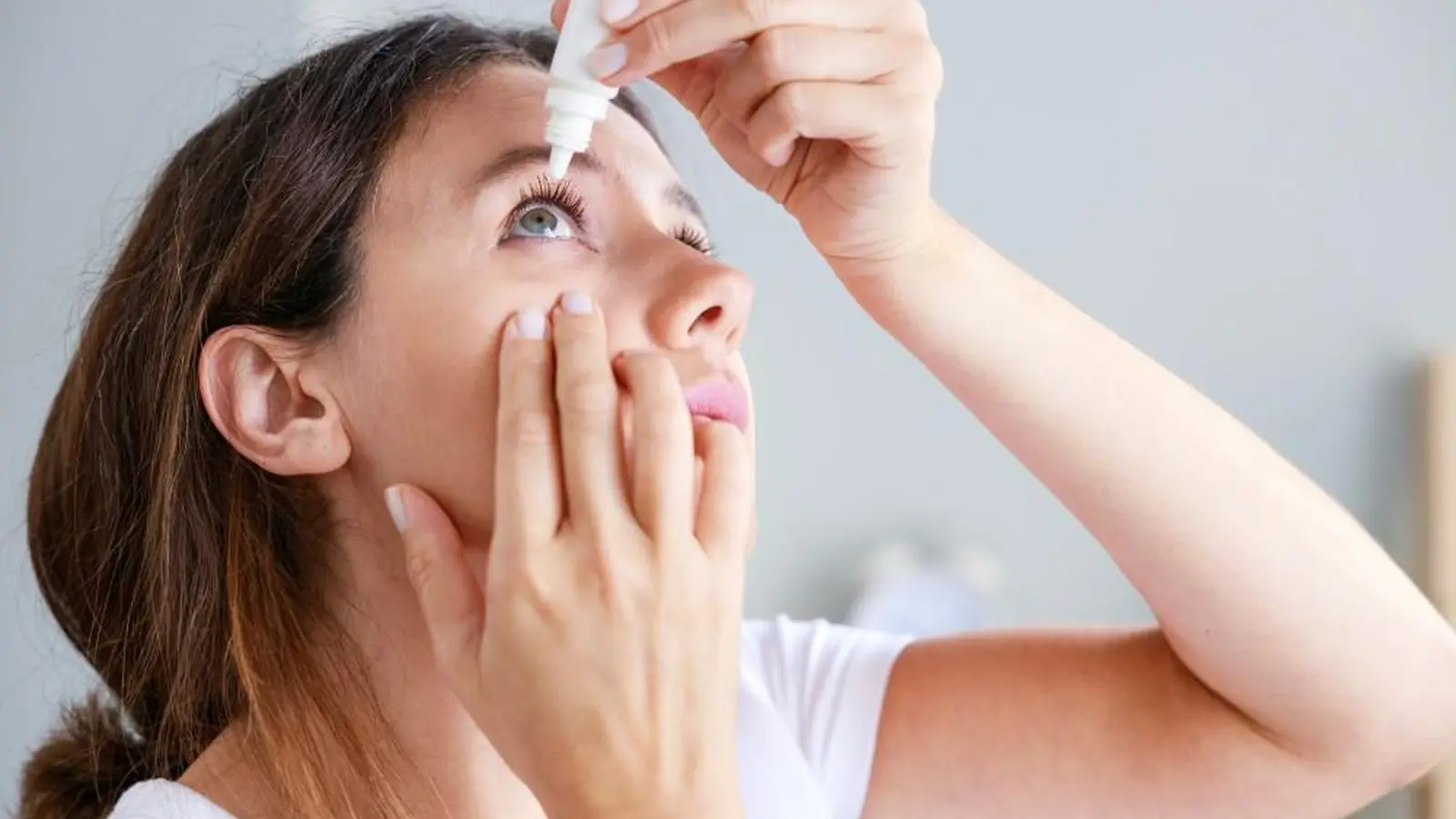
Two candidates, prosthe6-12 and prosthe6-15, stood out. They produced measurable eye reflexes and natural behaviors when delivered either by intraocular injection or topically as eye drops. The latter is particularly compelling: an application route patients already accept for common retinal therapies.

How do these drugs work at the molecular level? The compounds target mGlu6, a receptor found on ON bipolar cells. In a healthy retina, photoreceptors modulate neurotransmitter release in response to light, and ON bipolar cells detect those changes through mGlu6 and pass information forward. When photoreceptors are gone, that chain is broken. Prosthe6 binds and switches conformation under visible light, producing a signal the ON bipolar cells can interpret as if it came from a missing photoreceptor. Light becomes useful again.
Photopharmacology—using light to toggle a drug’s activity—offers an advantage over several other strategies. Gene therapies can be powerful but typically help only patients with specific mutations. Electronic retinal implants can restore rudimentary vision but require surgery and intensive training. Optogenetics and some light-based drugs need specialized, high-intensity illumination to activate engineered proteins. Prosthe6, by contrast, works with ordinary white light because the molecules are small, water-soluble and designed to respond within the visible spectrum.
Safety and longevity remain the central questions. Early lab results suggest a promising tolerability profile, but human testing has not yet begun. The technology is patent-protected and the team is developing formulations to extend the duration of effect between doses. A spin-off, Eyelumina, is being formed to shepherd the project toward clinical trials and outside investment.
“These molecules do not cure the underlying disease,” the lead researchers note. “They substitute the missing light signal, restoring function to intact downstream circuits.” That distinction matters. This method is mutation-agnostic: it could, in principle, serve people regardless of the genetic cause of photoreceptor loss, a feature that would dramatically broaden its potential reach.
There is a cautious optimism in the lab. This work builds on more than a decade of research across chemistry, neuroscience and ophthalmology, and it arrives at a moment when the first photopharmacological agents are already sailing toward human trials for unrelated targets. Still, translating a behavioral recovery in mice into reliable, high-quality vision in humans is a steep climb. Rodent retinas and human retinas are not identical; light perception is not the same thing as reading or recognizing faces.
Even so, the possibility is thrilling: a noninvasive, reversible drug treatment that restores light sensitivity under normal lighting could be more accessible and affordable than implants or bespoke gene therapies. For people with advanced retinal degeneration and few options left, an eye drop that simply turns light back on would be a profound change.
The next steps are clear—longer safety studies, optimized formulations, and carefully designed clinical trials. If they succeed, prosthe6 could open a new chapter in vision restoration where chemistry and light combine to hand back the most basic gift of sight.

Leave a Comment
Comments
No comments yet. Be the first.