
3 Minutes
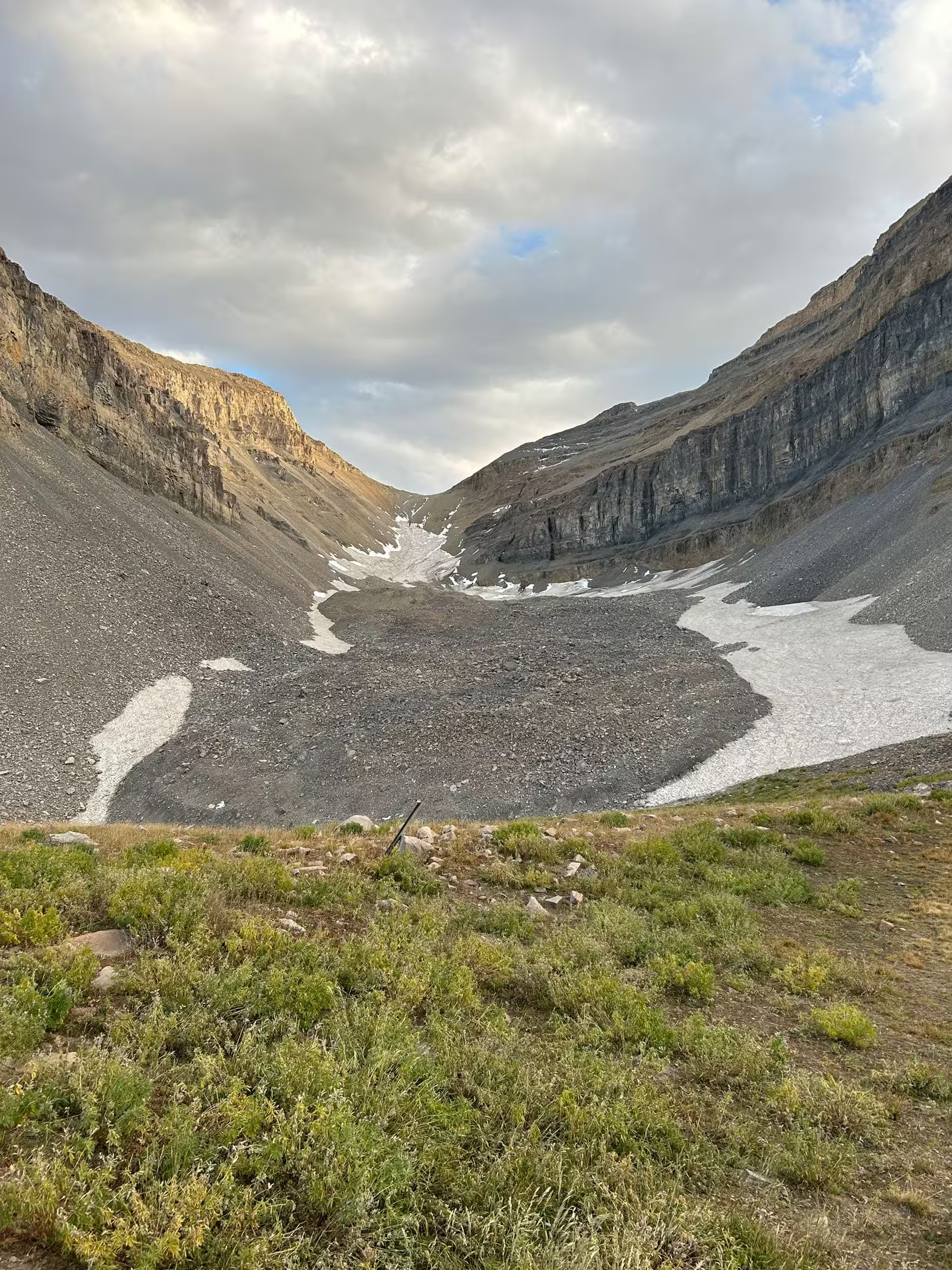
You could walk across a rubble-strewn slope and not suspect anything more than broken stone underfoot. But beneath that chaos, Mount Timpanogos hides a body of ice big enough to fill roughly 600 Olympic swimming pools.
The formation looks nothing like the broad blue sheets most people imagine when they hear the word glacier. It is a rock glacier: a slowly creeping mound of talus and rubble that blankets a surprisingly thick ice core. Researchers at the University of Utah found that the Timpanogos rock glacier is about 83% ice, with the remaining 17% made up of loose rock and debris — a ratio that yields roughly 1.5 million cubic meters (about 53 million cubic feet) of water.
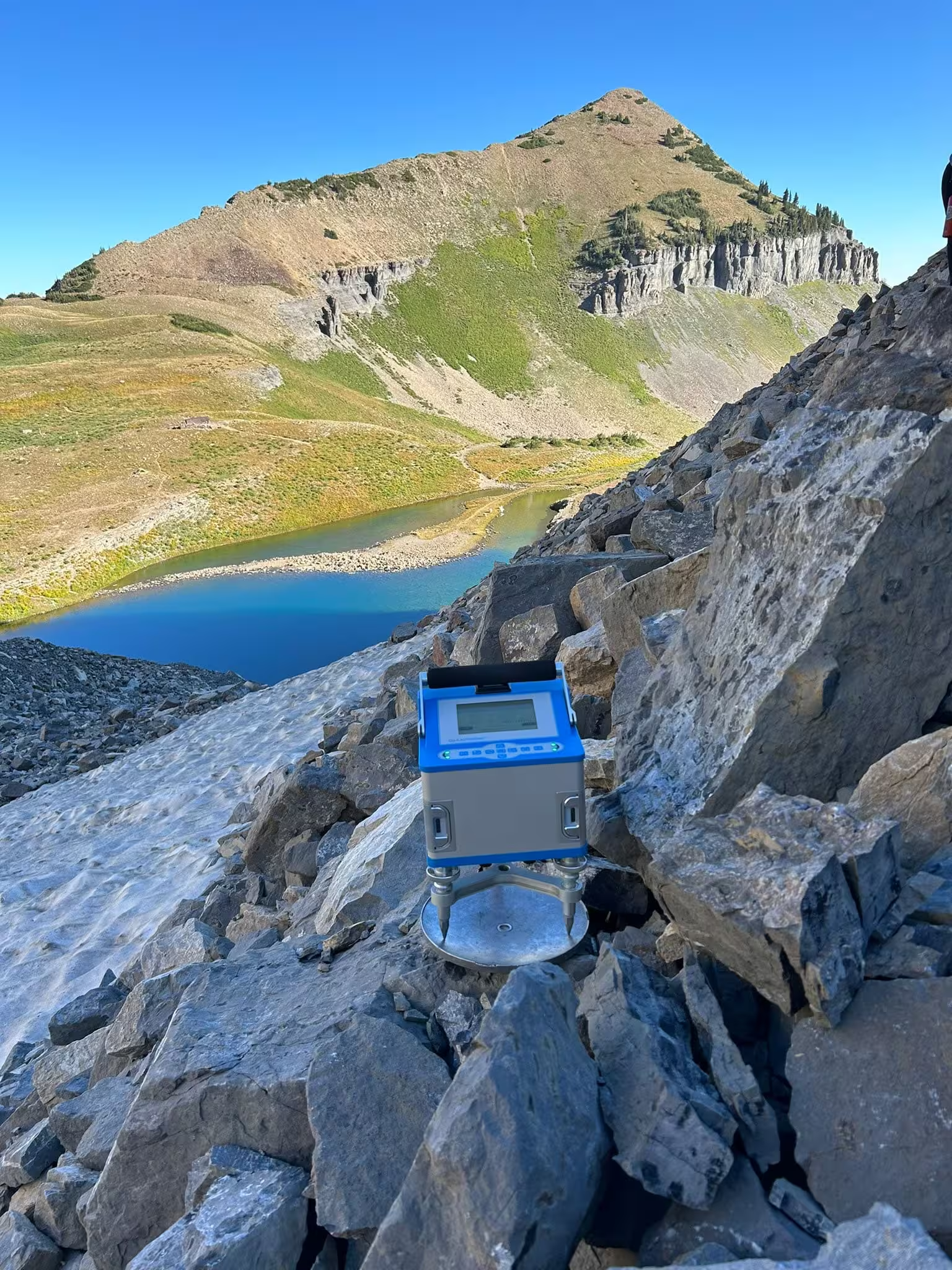
How do you measure what you cannot see? By listening to gravity itself. Graduate student Bronson Cvijanovich carried a CG-6 gravimeter across the cirque above Emerald Lake in 2024, taking 232 measurements on a 25-meter grid. Ice is less dense than rock, so places with thicker buried ice exert a slightly smaller gravitational pull. After correcting for elevation, latitude, terrain and even tidal forces, the team used Bayesian inversion to stitch those tiny differences into a three-dimensional map. Think of it as a CT scan of a mountain, but the contrast is in mass, not X-rays.
That imaging revealed hidden architecture: ice bodies hundreds of feet thick tucked beneath an insulating cap of rock. “When we’re tromping across loose rubble up high, you might be walking over 120 feet of ice and never know,” said glaciologist Leif Anderson. The technique offers a practical alternative to drilling in unstable or remote terrain, letting scientists estimate volume without tearing the mountain apart.
Why do these rock glaciers exist? The short answer: erosion and timing. In steep cirques and valleys, repeated rockfalls bury persistent snowfields. The debris shields the buried snow from summer warmth and compresses it into ice. The University of Utah team modeled this process and found that many of the region’s rock glaciers grew in the millennia after the last big ice sheets retreated — they are younger, active water reservoirs rather than relics left over from the Ice Age.

Utah is riddled with them. Satellite and field surveys have identified 836 rock glaciers in the state, and by scaling the Timpanogos relationship between surface area and ice volume, researchers estimate Utah’s formations may hold about 1 gigaton of water (roughly 815,000 acre-feet). Extrapolate farther: about 50,000 rock glaciers are known globally, and together they might contain on the order of 48 gigatons of frozen freshwater — a nontrivial, often-overlooked component of mountain hydrology.
Hidden rock glaciers store substantial mountain water supplies that conventional glacier counts routinely miss.

That buried supply matters for more than curiosity. In arid regions and headwater catchments, these ice-rich bodies can buffer streamflow through dry seasons, change the timing of meltwater delivery, and influence slope stability. They are also sensitive to warming: if insulation thins or climate shifts, a stealthy water reserve could become a rapid source of runoff or a newly unstable slope.
Mount Timpanogos is a reminder that mountains keep secrets in layers. The next time you scan a talus slope or squint at a cirque, consider what lies beneath: a frozen archive of climate, rock, and time, quietly moving and storing water where you least expect it.


Leave a Comment
Comments
No comments yet. Be the first.