

3 Minutes
Imagine a tiny molecular brake that, when missing, lets breast cancer cells slip away and set up camp in lungs and bones. That missing brake may now have a name: miR-342. Researchers in Adelaide have traced how low levels of this small RNA appear to unlock a cancer-promoting program, and—crucially—shown that an existing drug can exploit that weakness in lab models.
The team, led by scientists at Adelaide University and the Olivia Newton-John Cancer Research Institute, published their findings on 21 August 2026 in EMBO Molecular Medicine. They found that patients whose tumors carried low miR-342 together with high activity in the E2F pathway faced a greater risk of developing metastases. In animal and cell models, restoring miR-342 or blocking the downstream pathway dramatically curtailed the formation of distant tumors.
Why does this matter? Triple-negative breast cancer lacks the usual therapeutic handles—estrogen and progesterone receptors, and HER2—so it often outsmarts targeted therapies. Metastasis is the real killer: primary tumors can often be managed, but once cancer seeds grow at other sites the prognosis worsens. The Adelaide group homed in on a subgroup of triple-negative cases that seem to depend on the E2F-driven program once miR-342 levels fall.

Senior author, Associate Professor Philip Gregory from the Centre for Cancer Biology at Adelaide University.
One of the most striking results involved palbociclib, a CDK4/6 inhibitor already approved for other breast cancer types. When given in models that mimicked patients with low miR-342, palbociclib reduced the growth of metastatic lesions—especially when administered after cancer cells had already disseminated. In other words, the drug may not always shrink the primary mass, but it can stop microscopic metastatic deposits from ballooning into life-threatening tumors.
Associate Professor Philip Gregory, a co-senior author from the Centre for Cancer Biology, described miR-342 as a kind of molecular conductor: when it drops, the orchestra of genes that E2F controls plays unchecked, and dormant rogue cells wake up. Co-senior author Professor Robin Anderson added that dissecting the routes by which cancer escapes the primary site is essential to reducing deaths from the disease.
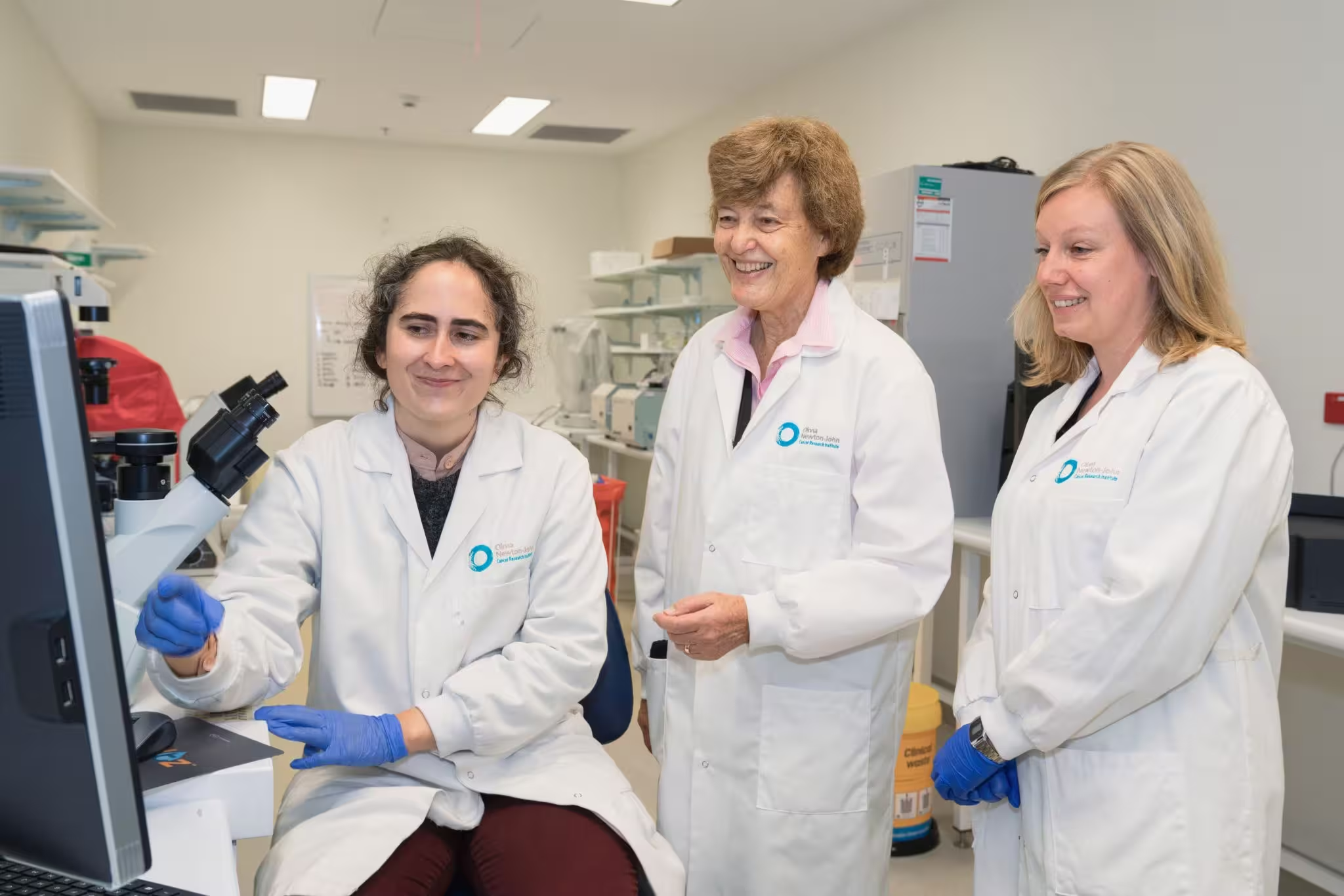
Co-senior author, Professor Robin Anderson (centre), from the Olivia Newton-John Cancer Research Institute, pictured with colleagues Caroline Bell and Dr Charlotte Roelofs.
The implications are twofold. First, miR-342 could serve as a biomarker to identify patients with triple-negative tumors who are likely to benefit from CDK4/6 inhibitors. Second, an approved drug could be repurposed faster than inventing a new agent from scratch. The investigators are cautious: next steps include confirming the signal in patient-derived preclinical models and then designing clinical trials to test whether selecting patients by miR-342 status improves outcomes.
Triple-negative breast cancer accounts for roughly 10 to 15 percent of the approximately 21,000 breast cancer diagnoses in Australia each year, yet it contributes a disproportionate share of deaths because of its aggressive nature. The Adelaide study offers a rare, tangible lead: a testable weakness and an actionable strategy to exploit it.
There is still a road ahead—validation, trial design, regulatory hurdles—but this research reframes a grim reality with a practical idea: sometimes the best new therapies begin by listening for what the tumor has already lost.


Leave a Comment
Comments
No comments yet. Be the first.