
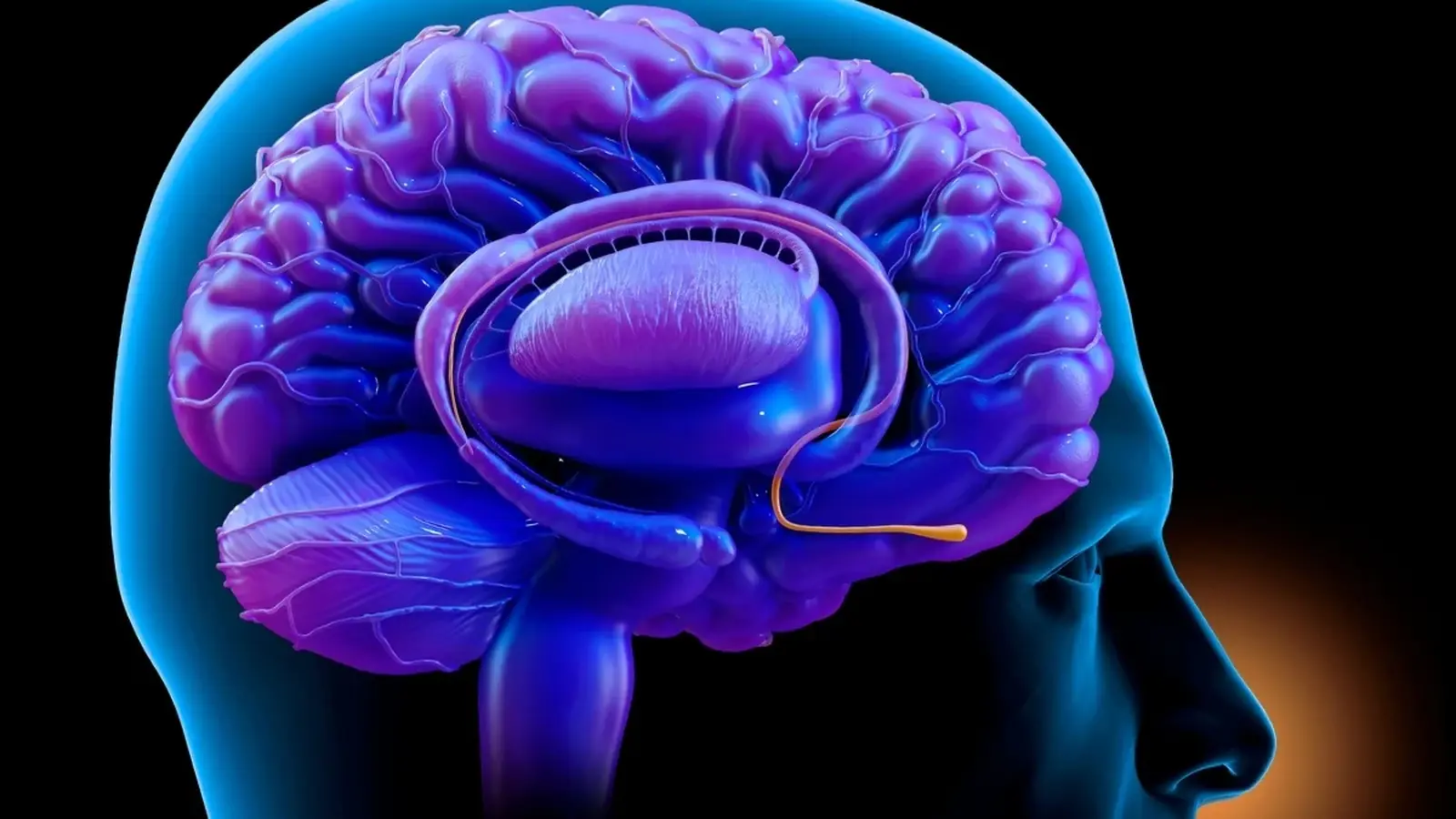
Take a slow breath. Feel it move through your nose, down your throat, into your chest. It seems ordinary. But new work in mice suggests that each nasal inhalation sets off a tiny electrical ripple that can travel all the way to the emotional centers of the brain.
Researchers publishing in PNAS mapped a precise sensory pathway that begins with olfactory sensory neurons lining the nose and ends in a pocket of the amygdala known for gating fear and anxiety. These olfactory neurons do more than smell; they respond to the mechanics of airflow. That mechanosensitivity makes them natural transducers of breathing rhythm into neural signals.
From there the signal moves to mitral cells in the olfactory bulb, jumps to long-projecting interneurons in the perirhinal cortex, and lands on a class of glutamatergic neurons in the posterior basolateral amygdala. In plain terms: nasal airflow talks to the limbic system through a dedicated nose-to-brain highway, and the frequency of that airflow matters.

A group practices nadi shodhana pranayama (alternate nostril breathing) on the International Day of Yoga in Kolkata, India, in 2017.
Why does that matter? Because the team found the circuit is frequency dependent. Slow nasal inhalations dampened anxiety-like behavior in mice; faster nasal rhythms amplified it. The effect is bidirectional. Slow breathing calmed the animals. Speeding the nasal signal nudged anxiety higher. Could the tempo of our breaths be tuning emotional tone? The data say yes, at least in rodents.
To tease this apart the investigators used a rigorous toolkit: optogenetic stimulation of olfactory sensory neurons, precise airflow control through implanted cannulas, chemogenetic silencing, electrophysiology, fiber photometry, behavioral assays, and viral tracing. Blocking the link between the olfactory bulb and perirhinal cortex erased the breathing-to-anxiety relationship. Activating the circuit produced anti-anxiety effects; inhibiting it had the opposite result. And a two-week program of controlled slow nasal airflow restored neural patterns and reduced anxious behavior in the mice subjected to stress paradigms.
These findings help explain long-observed human practices. Slow, nasal-centered breathing techniques have been used for millennia in pranayama, meditation, and other contemplative traditions. Modern studies already hinted that nasal respiration can entrain brain oscillations and shape mood. This new work provides a cellular and circuit-level mechanism connecting nasal rhythm with limbic regulation.

Nasal airflow regulates anxiety-like behavior in rodents.
Important caveats remain. The experiments were performed in male mice with highly controlled stimulation and airflow, so translating the exact effects to human anxiety disorders will require careful clinical work. The researchers also acknowledge that conscious, top-down control of breathing — the cortical pathways that let us hold or alter breaths intentionally — interacts with these bottom-up nasal signals. In other words, voluntary breathing practices and involuntary nasal mechanics likely converge on overlapping circuits.
Still, the practical implication is tantalizing: a simple, noninvasive manipulation of nasal respiration, roughly at half the animals' normal breathing rate, produced measurable reductions in anxiety-like behavior. If similar mechanisms operate in people, deliberately slowing nasal inhalations could be an inexpensive adjunct to therapies for anxiety.
For now the message is modest and provocative. Breathing is not merely background physiology. It is a rhythmic conversation between body and emotion, and the nose appears to be a critical microphone. The next step is to ask whether that conversation can be tuned in humans to ease anxiety, one breath at a time.

Leave a Comment
Comments
No comments yet. Be the first.