
3 Minutes
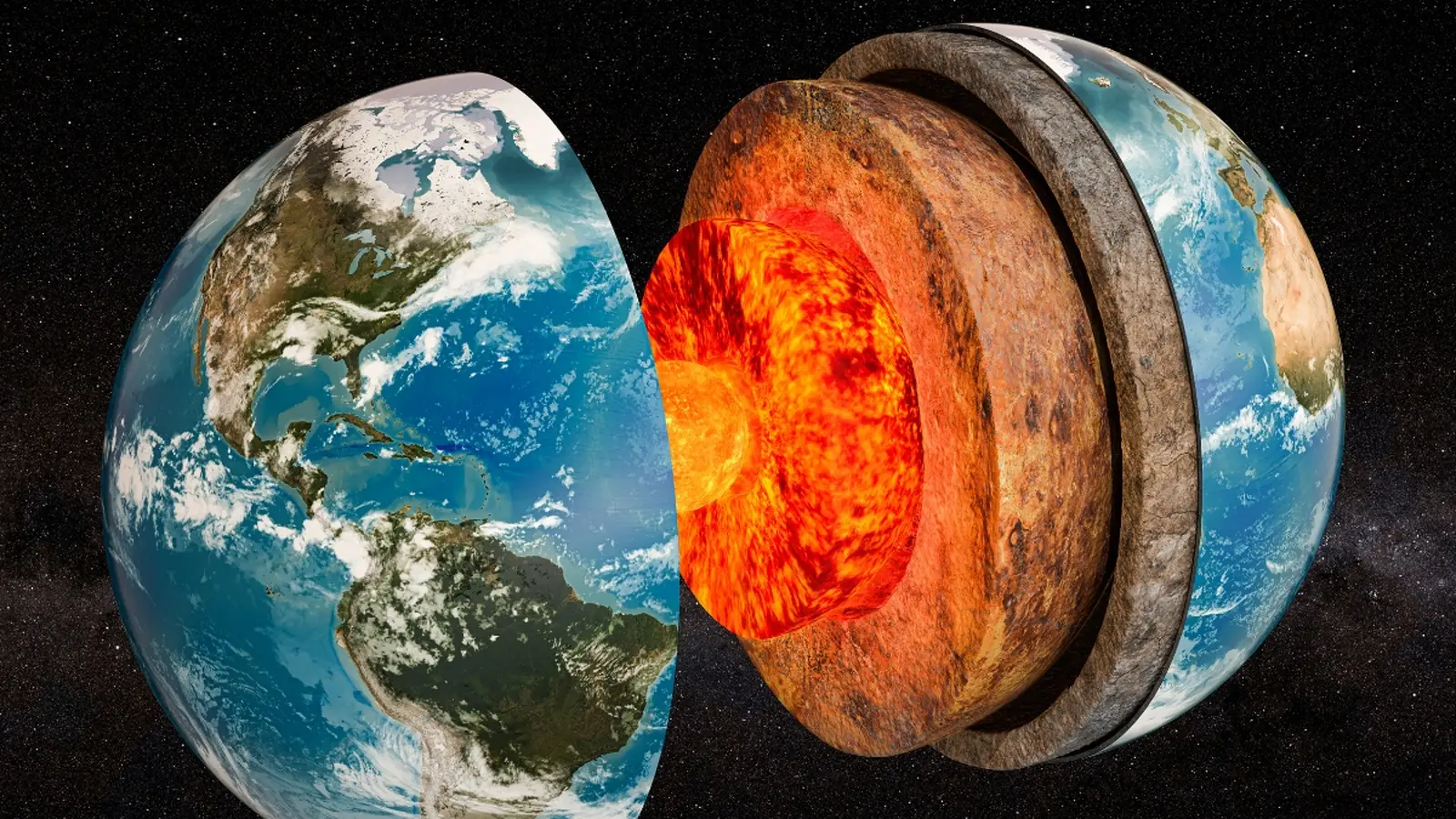
Imagine a reservoir of water beneath your feet—not a lake or ocean, but water locked inside mineral crystals nearly two thousand kilometers down. Small amounts of hydrogen tucked into dense iron-bearing minerals could be holding a planetary stash we never suspected.
Water is not just surface rivers and clouds. It softens rock, lubricates slow mantle flow, and helps the planet recycle heat and volatile elements over geological time. That makes deep water a silent regulator of tectonics and climate. How that water got there—during planet formation or later, delivered by asteroids—has long been debated. But until now, we’ve lacked plausible carriers that survive the blistering heat and crushing pressures at the base of the mantle.
Seismologists have mapped puzzling ultralow velocity zones at the core-mantle boundary (the lowermost mantle sits between about 660 and 2,900 kilometers beneath the surface). Those anomalies suggested something unusual was happening down there. To test what might hide in that extreme environment, researchers recreated core-mantle conditions using laser-heated diamond anvil cells: tiny samples squeezed between diamond tips and blasted with lasers to reach the same pressures and temperatures found thousands of kilometers below Earth’s crust.
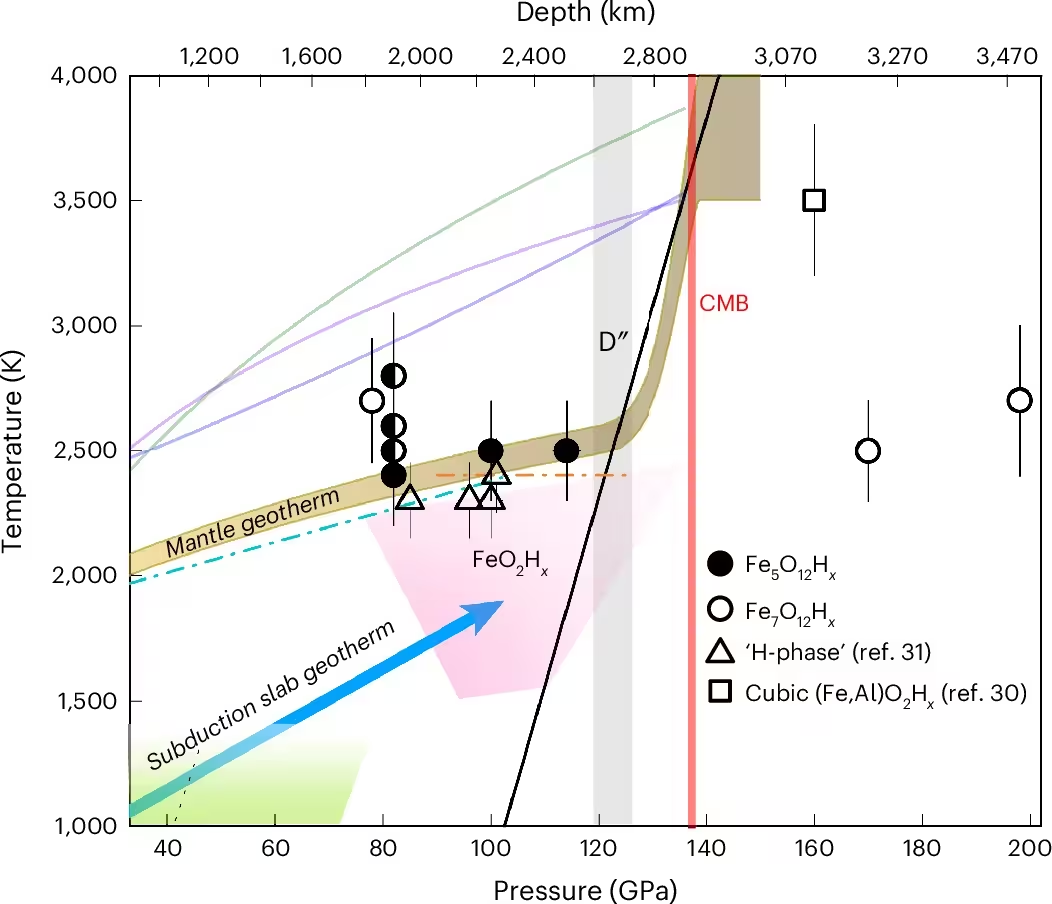
Pressure–temperature conditions for the formation of iron oxyhydroxides.
Under those conditions the team discovered two previously unknown iron oxyhydroxides—Fe5O12Hx and Fe7O12Hx—that form and remain stable where many other hydrated phases fall apart. These minerals can trap hydrogen even when starting materials have less than 0.1 percent water, making them excellent candidates for storing water in an otherwise dry deep mantle. They’re also denser than surrounding rock, meaning they could have crystallized early in Earth’s history and sunk toward the core-mantle boundary during the cooling of a primordial basal magma ocean.
Could that water stay buried forever? Not necessarily. Mantle circulation can carry material upward, and decreasing pressure can destabilize hydrated minerals, releasing hydrogen to be incorporated into other phases or carried toward the surface by plumes and volcanoes. That offers a pathway—slow but real—for deep water to rejoin the near-surface cycle over millions to billions of years.
The work also helps explain an earlier lab mystery known as the H-phase: what had been treated as a strange, dry high-pressure phase may instead have been an oxyhydroxide formed by tiny amounts of hydrogen during experiments. Mineral physicist Leonid Dubrovinsky and others pointed out that trace moisture is enough to stabilize these compounds, which resolves a long-standing inconsistency between experiments and theory.
Questions remain. How much water can these iron oxyhydroxides actually store? What happens to them at the exact core-mantle interface? And on what timescales can buried water return to the surface? Even so, the discovery nudges Earth’s water story deeper and stranger: the deep mantle may act less like a barren rock layer and more like a slow-moving archive of the planet’s volatile history.

Leave a Comment
Comments
No comments yet. Be the first.