
3 Minutes
Could the metal in a replaced hip be turning up in your brain? It sounds like the premise of a sci‑fi cautionary tale, but a new study from Rush University Medical Center argues the phenomenon is real — tiny particles shed from artificial joints can hitch a ride into brain tissue.
The team examined donated brains from 701 people, 229 of whom had undergone total joint replacement. Using chemical assays across four brain regions and electron microscopy on selected samples, researchers identified metal particles whose alloy signatures matched those used in implants. In plain terms: the metals inside some implants showed up together in single particles within the brain, and their composition left little doubt about their origin.
Cobalt stood out. People with hip replacements had, on average, about 8.9 percent higher cobalt concentrations across the sampled brain regions than those without such procedures. Titanium levels were also higher in brains from people who had implants, although titanium can enter the body from other sources like diet or medications, complicating interpretation.
So how do particles cross into the central nervous system? The study did not directly trace the route, but offers plausible paths: the blood–brain barrier may become more permeable with age or chronic inflammation, or peripheral immune cells might transport tiny debris from joint tissues into the brain. Whatever the mechanism, the particle analysis implies at least some implant‑derived wear debris is capable of crossing biological barriers once considered largely impermeable.
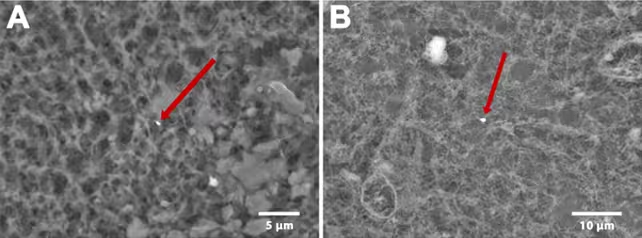
Evidence of metal particles in the brains of people with joint replacements.
That said, detection is not the same as demonstrated harm. The researchers scanned for amyloid‑beta and tau — the protein hallmarks of Alzheimer’s disease — and compared those findings with cognitive testing done while participants were alive. Brains with higher cobalt concentrations showed more signs of Alzheimer’s pathology in the inferior‑temporal cortex, even after adjusting for other known risk factors. However, overall there was no clear link between having a joint replacement and measurable cognitive decline in this cohort.
Limitations matter here. The metal and neuropathology measurements are a single, postmortem snapshot. They cannot prove cause and effect, and other variables could explain the associations. Longitudinal tracking of metal exposure, immune activity, and detailed clinical outcomes will be necessary to untangle correlation from causation.
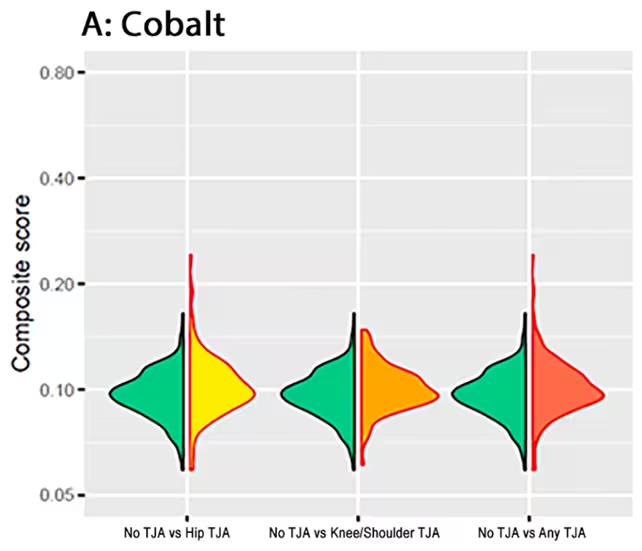
The clearest link was between cobalt levels in the brain and hip replacements.
And yet the finding is hard to ignore because joint replacement surgery is otherwise one of modern medicine’s great success stories — it relieves pain, restores mobility, and often enables people to stay socially active, which itself lowers dementia risk. The potential trade‑offs are subtle and complex: relief of chronic pain versus very small, detectable deposits of implant metals in the brain. Which matters more for long‑term brain health has not been decided.
Tiny implant particles can reach the brain, but whether they damage cognition remains an open question.
Researchers say the data merit closer surveillance of metal implant debris and more targeted studies to track how particles move, accumulate, and interact with brain tissue over time. After all, if replacements meant to restore motion are leaving microscopic traces in the organs that make us who we are, that’s a thread worth pulling.


Leave a Comment
Comments
No comments yet. Be the first.