
4 Minutes
Imagine biting into a cookie that started life as a soda bottle and corn stalks. It sounds absurd. It also sounds like the future.
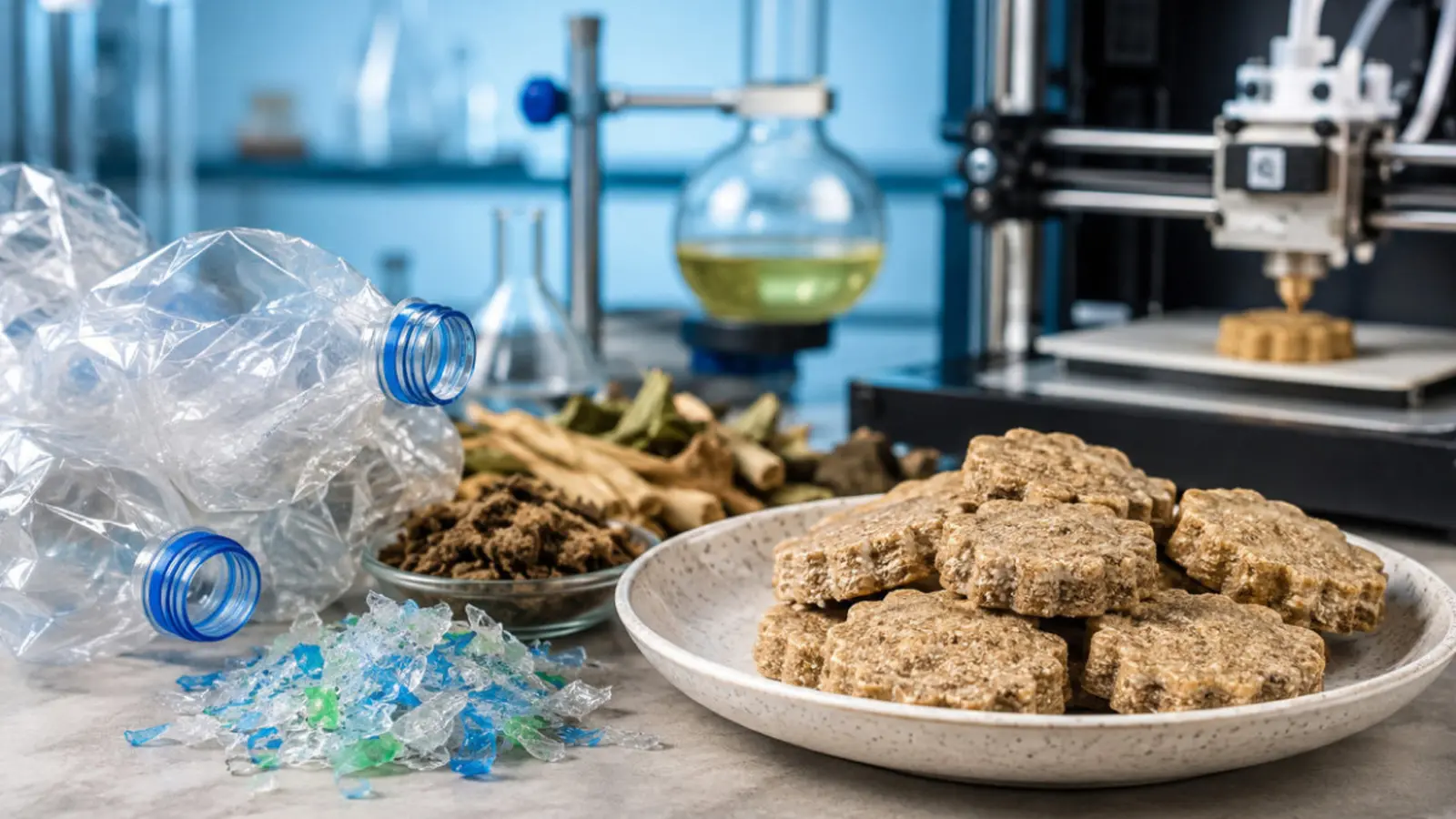
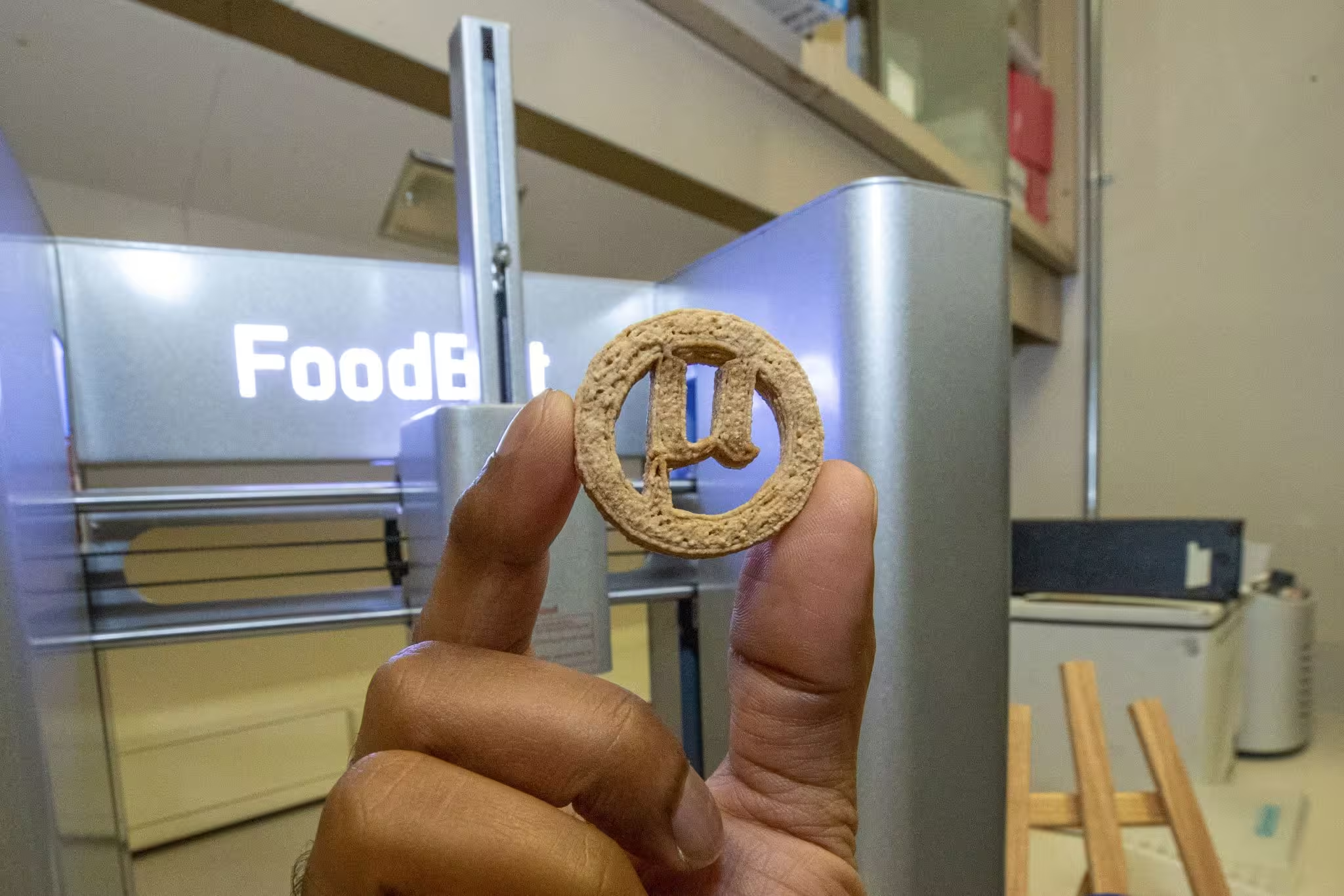
At Southern Illinois University Carbondale, a team of biotechnologists and geologists has turned that thought experiment into a working prototype. Their product, nicknamed µBites, is a protein-rich cookie made from the chemical building blocks of plastic and agricultural residue. The trick is not magic. It is microbes: engineered yeasts that can take broken-down waste and stitch it back together as proteins, fats, vitamins, and even flavor compounds.
Why pursue edible snacks from trash? Two reasons: mounting plastic pollution and looming food insecurity. Fold in the logistical puzzles of long-term space travel and you get a research brief that reads part recycling plan, part survival cookbook. Funded in part by NASA's Deep Space Food Challenge and supported by a CAREER grant, the project aims to show how a closed-loop food system might work in places where supply chains end — think submarines, lunar habitats, or disaster zones.
But first you must turn stubborn material into something a microbe can eat. PET, the polymer behind countless bottles, and tough plant fibers do not surrender easily. SIU Carbondale geology professor Ken Anderson developed a method called oxidative hydrothermal dissolution to do the heavy lifting. Water, oxygen, heat, and pressure break plastics and biomass into smaller molecules. Those fragments become feedstock for tailored yeast strains that act like miniature food factories.
These are not ordinary baker's yeast. The researchers engineered several strains — including variants of Saccharomyces and a carotenoid-producing yeast called Rhodosporidium toruloides — so each one specializes in reconstructing specific ingredients. One strain converts plastic-derived ethylene glycol into beta-carotene, a vitamin A precursor. Another produces vanillin from plant-derived ferulic acid, giving the cookies a familiar, vanilla aroma. Proteins and lipids come from yeast biomass itself, grown on the dissolved waste stream.
The team mixes those microbially derived components with fiber, starch, and sweetener, and then uses a 3D food printer to shape µBites. The result is a compact, nutrient-dense snack that the researchers say is safe based on preliminary data and institutional review steps, though formal taste tests are pending. Volunteers have sniffed and sampled aroma profiles. Many said they'd eat the cookie when options are limited. Hunger changes the definition of appetite.
Flavor will be decisive if such food ever steps out of survival mode and into kitchens. That is why the group is engineering flavor and color alongside nutrition. Adaptive evolution helped a yeast strain better metabolize ethylene glycol so it produces more beta-carotene. Another strain now makes natural vanilla notes from waste biomass. The goal is to reduce the number of externally added ingredients until microbes supply starch, fiber, and sweetness too.
There is an elegance to turning what we throw away into what we put in our mouths. This is circular economy thinking in biochemical form. It also raises obvious questions: will consumers accept food with an origin story that includes plastic? How will regulators treat food derived from synthetic waste streams? And what scale is required before the approach becomes meaningful for global food systems?
The researchers frame µBites as a proof of concept rather than a supermarket launch. They presented the work at a biochemical symposium during the ACS Fall meeting in 2026, and their paper outlines engineered yeast consortia that convert plastic- and biomass-derived substrates into edible ingredients. On Earth, the most immediate use cases are likely to be places where conventional food supply is impossible or impractical. In space, every kilogram saved is a victory. On a flooded coastline or a stranded vessel, the ability to produce calories from local waste could be lifesaving.
Microbes have long been our hidden partners in food and medicine. From cheese to insulin, they transform feedstocks into value. Here, they are being asked to do something more unusual: rewrite the fate of plastic. If the experiments scale and the flavors improve, the familiar line between waste and resource might blur into something far more useful than a landfill.
Whether µBites becomes a dietary staple or a niche survival ration, it forces a simple reexamination: what if trash is only raw material waiting for a patient, biological craftsman?

Leave a Comment
Comments
No comments yet. Be the first.