
3 Minutes
Toyota announced plans to deploy 400,000 robots across its global operations, a program the company says will cost about $6.4 billion per year beginning in 2028 and is intended to have machines work alongside human employees rather than replace them.
ELEY robot, training method and shared learning
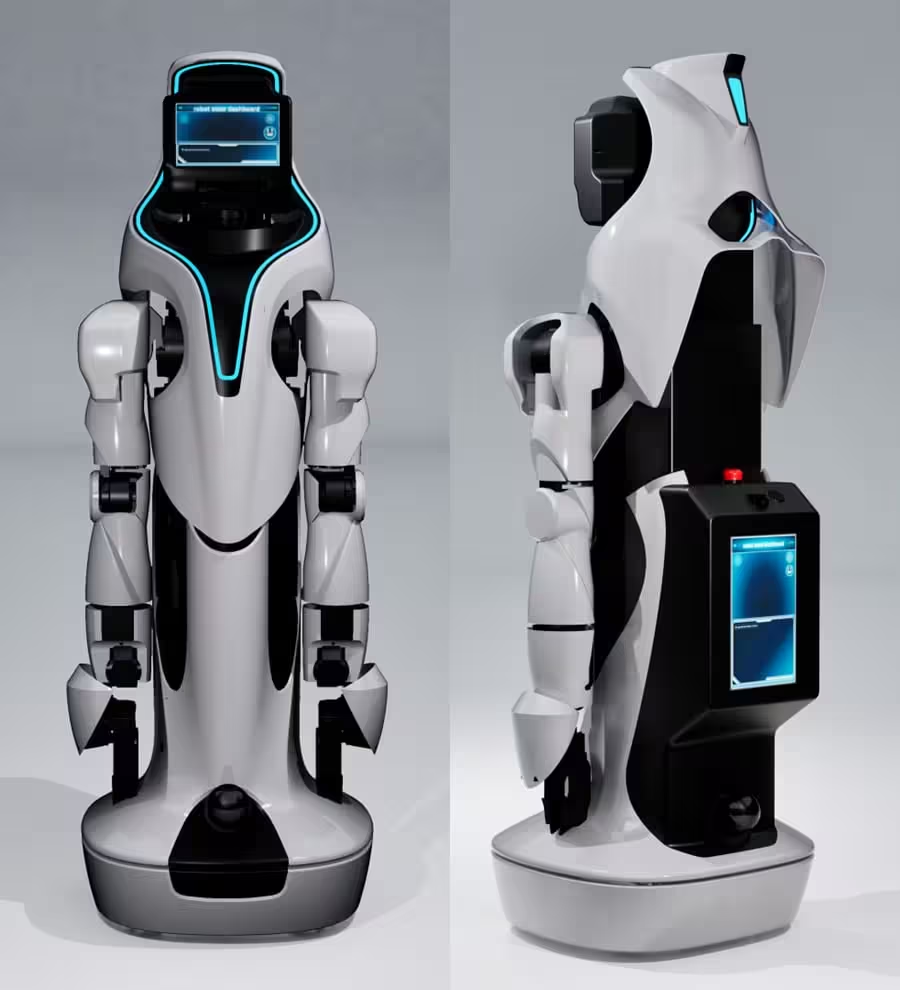
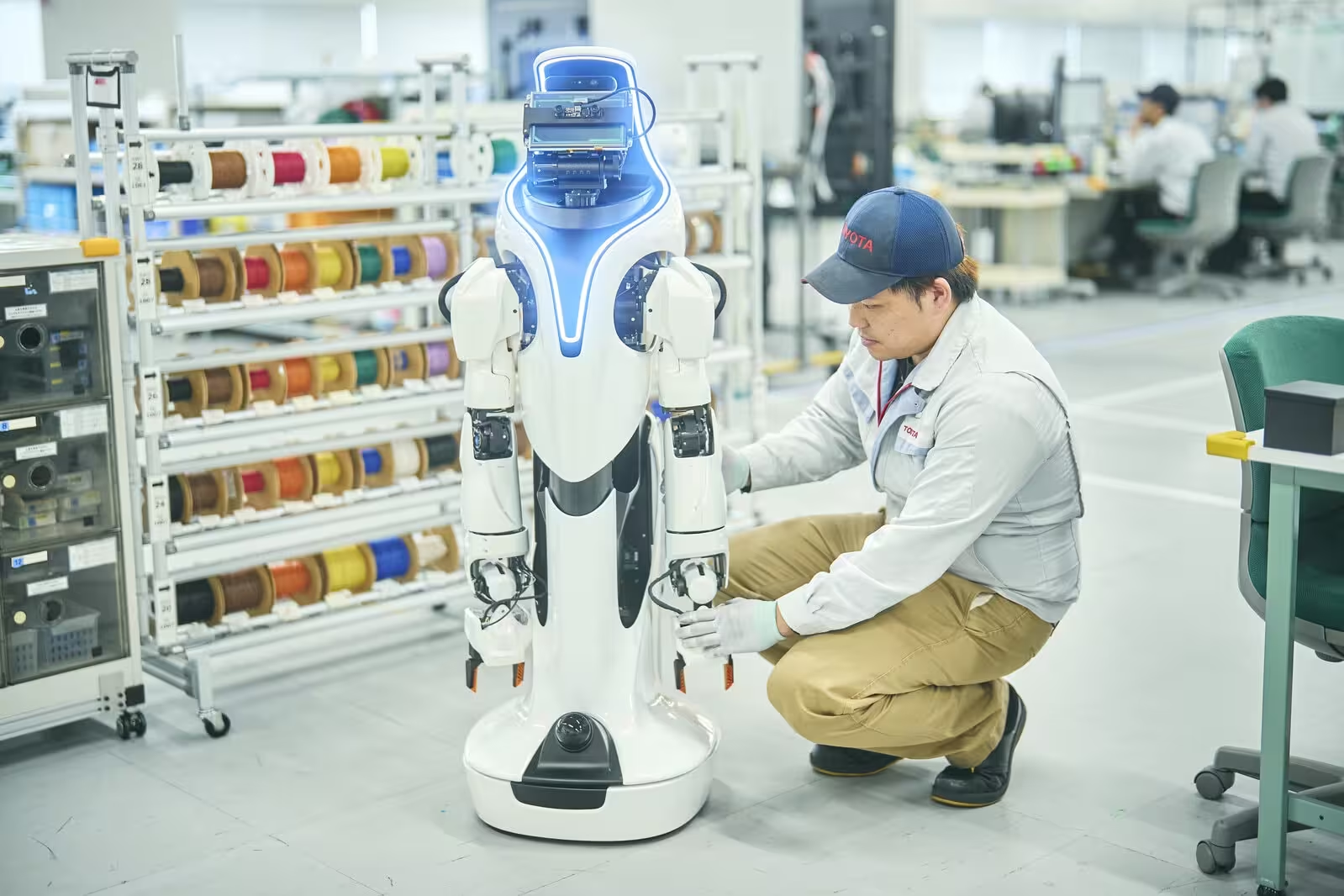
Toyota described a family of in-house robots including ELEY, the Embodied Learning Robot for Enhanced Yield, developed by the Toyota Research Institute. ELEY is a 110-pound (50-kilogram) wheeled robot with two-fingered hands, powered by batteries or by an external power connection, and it relies on diffusion-based regenerative AI and Large Behavior Models to learn physical skills from minutes of human observation.
To teach tasks, veteran employees including Toyota’s roughly 18,000 "takumi" masters wear finger-shaped jigs modeled on the robot’s hands while performing routine duties such as manipulating cloth protective covers, trunk liners and interior fabrics, removing protective film from adhesive components, or smoothing leather and fabric over interior panels without causing air bubbles. At a technology briefing at Toyota’s European headquarters in Brussels, a robot folded T-shirts with near-perfect accuracy after 1,500 practice sessions carried out over two weeks.
Toyota said that once a robot masters a task, the learned data will be transmitted centrally so robots worldwide can acquire the same skill set without repeating local training. The company also envisions highly trained robots assisting in the training of new human employees.
Scale, costs and workforce implications
The planned rollout covers Toyota’s own factories, group companies and major suppliers across about 60 global facilities. The company intends to deploy 150,000 robots at its own plants and another 250,000 units across group facilities and partner warehouses; Toyota noted the rollout will include operations at its 10 manufacturing plants in the United States. Installations will combine humanoid and non-humanoid robots and will comprise both brand-new equipment and replacements for existing machinery.
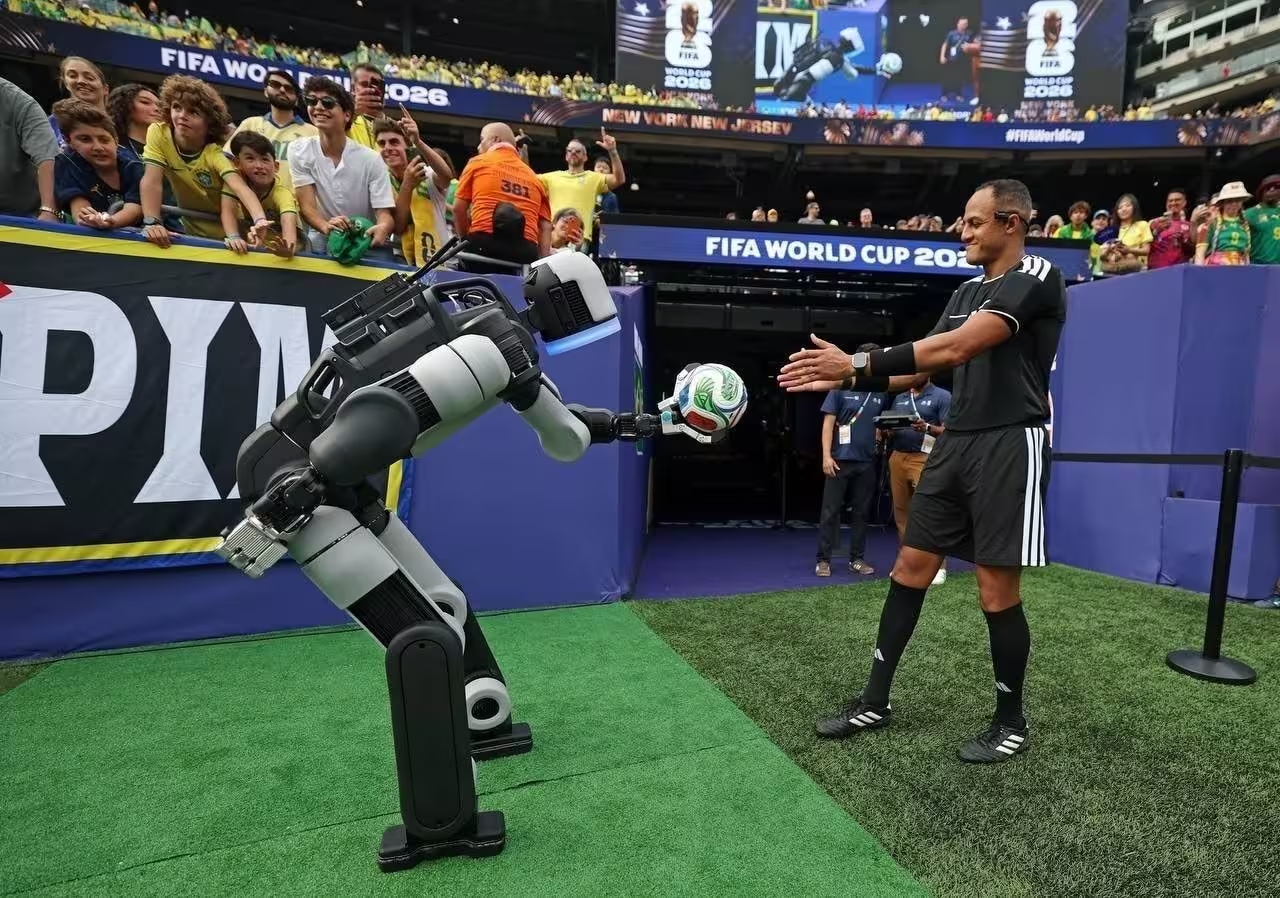
Toyota frames the change as a partnership between machines and people, saying the robots will take over highly repetitive and physically demanding tasks while the larger transition will require retraining workers to manage and collaborate with robotic coworkers. Executive Vice President Hiroki Nakajima said, "We aim for a world where robots coexist with humans, rather than replacing them."
Other manufacturers deploying humanoid and material-handling robots
Several other automakers are already using or trialing humanoid and logistics robots. Examples cited by Toyota include:
- BMW trialed the Figure 02 humanoid robot at its Spartanburg, South Carolina plant, running a 20-hour multi-shift test inserting sheet-metal parts into welding fixtures.
- Tesla is using early-generation Optimus robots in battery manufacturing to sort and load heavy cell packs and reallocated floor space in California to scale Optimus production.
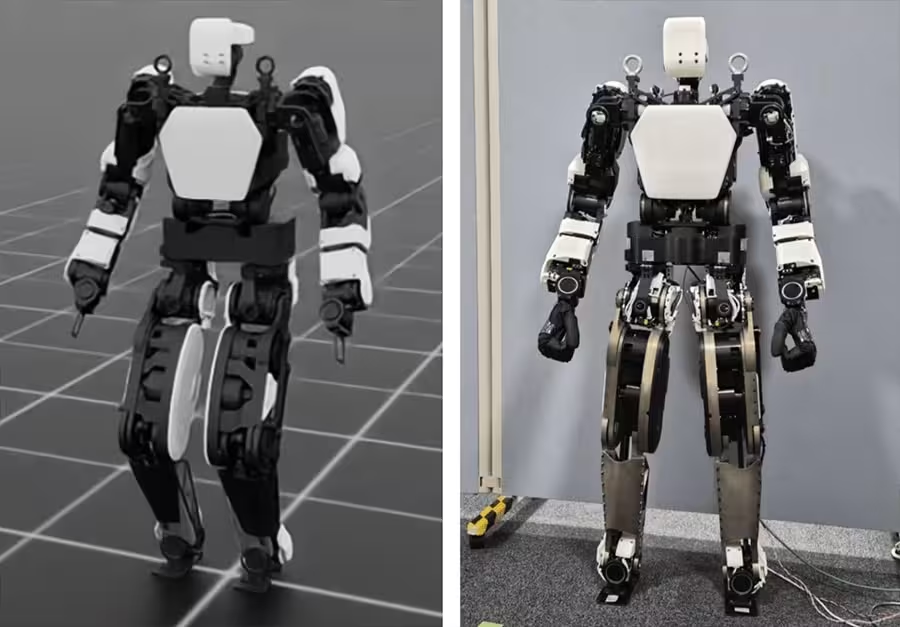
- Hyundai, after acquiring a majority stake in Boston Dynamics, announced plans to deploy over 25,000 all-electric Atlas humanoid robots across Hyundai and Kia manufacturing networks, starting at a Robot Metaplant Application Center in Georgia, USA.
- Mercedes-Benz has partnered with robotics startup Apptronik to deploy Apollo humanoid units for kitting logistics, where the robots identify, lift, sort and deliver part totes to assembly staging areas.

Leave a Comment
Comments
No comments yet. Be the first.