
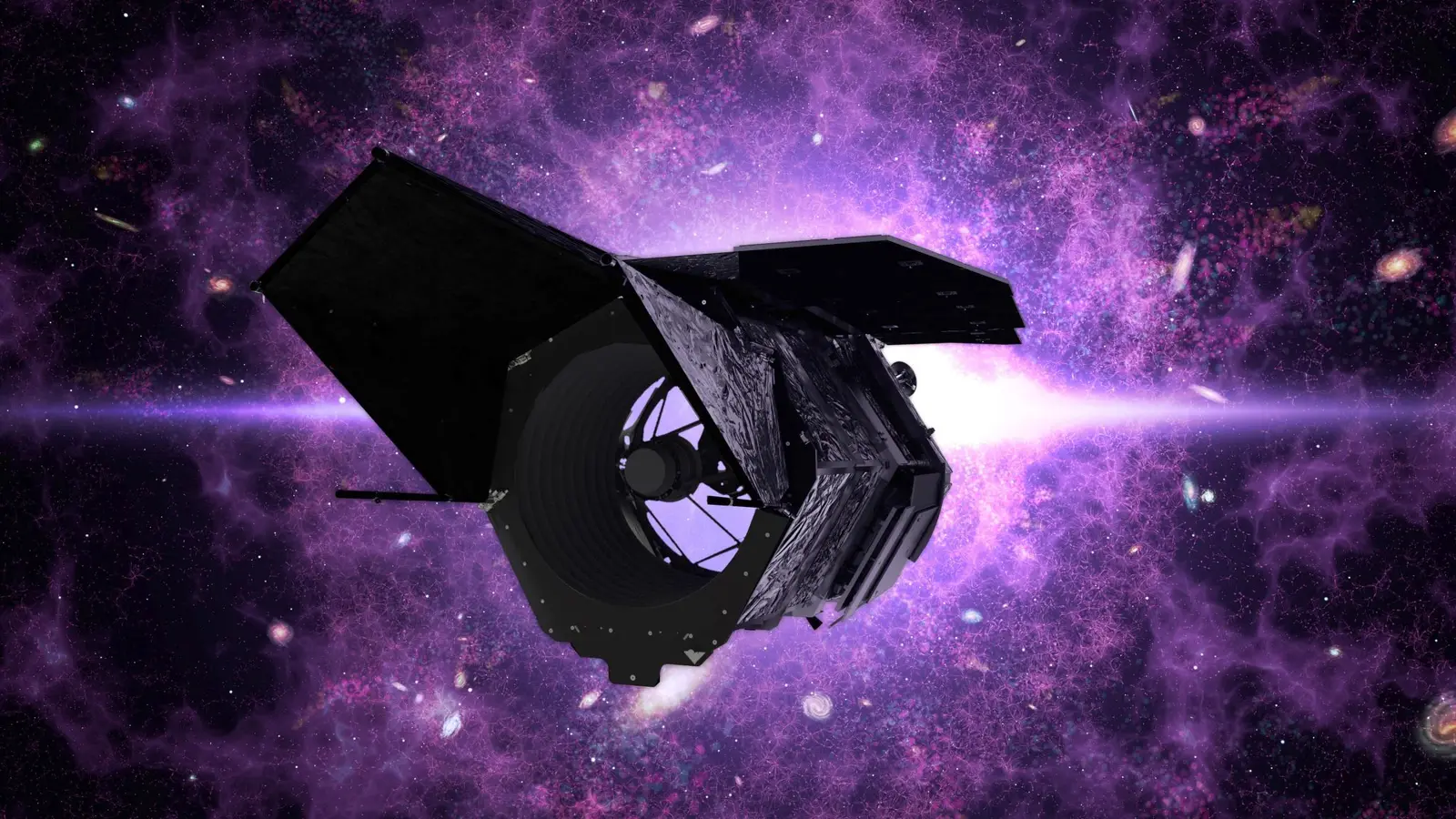
Imagine trying to spot a firefly perched next to a lighthouse from a thousand miles away. That is the problem astronomers face when hunting planets around other stars: the star outshines its planet by orders of magnitude. NASA’s Nancy Grace Roman Space Telescope is now in space and taking aim at that glare with a radical piece of optical engineering called the Coronagraph Instrument, or CGI.
CGI doesn’t simply block starlight; it reshapes it. The instrument pairs traditional coronagraph masks with active wavefront control — two deformable mirrors, each steered by more than 1,600 tiny actuators, that bend and trim the incoming light to cancel out stray starlight and reveal what lies beside it. Think of it as fine-tuning the telescope’s eyesight to subtract the star’s glare and leave the faint planetary glow behind.
The goal is audacious. Roman aims to see planets sitting next to stars a billion times brighter than they are — roughly the contrast between Jupiter and our Sun — which would be up to a thousand times better than current direct-imaging capabilities. An integrated spectrograph will then dissect that faint light, letting scientists read the chemical fingerprints of atmospheres and search for clouds, hazes, and molecules.
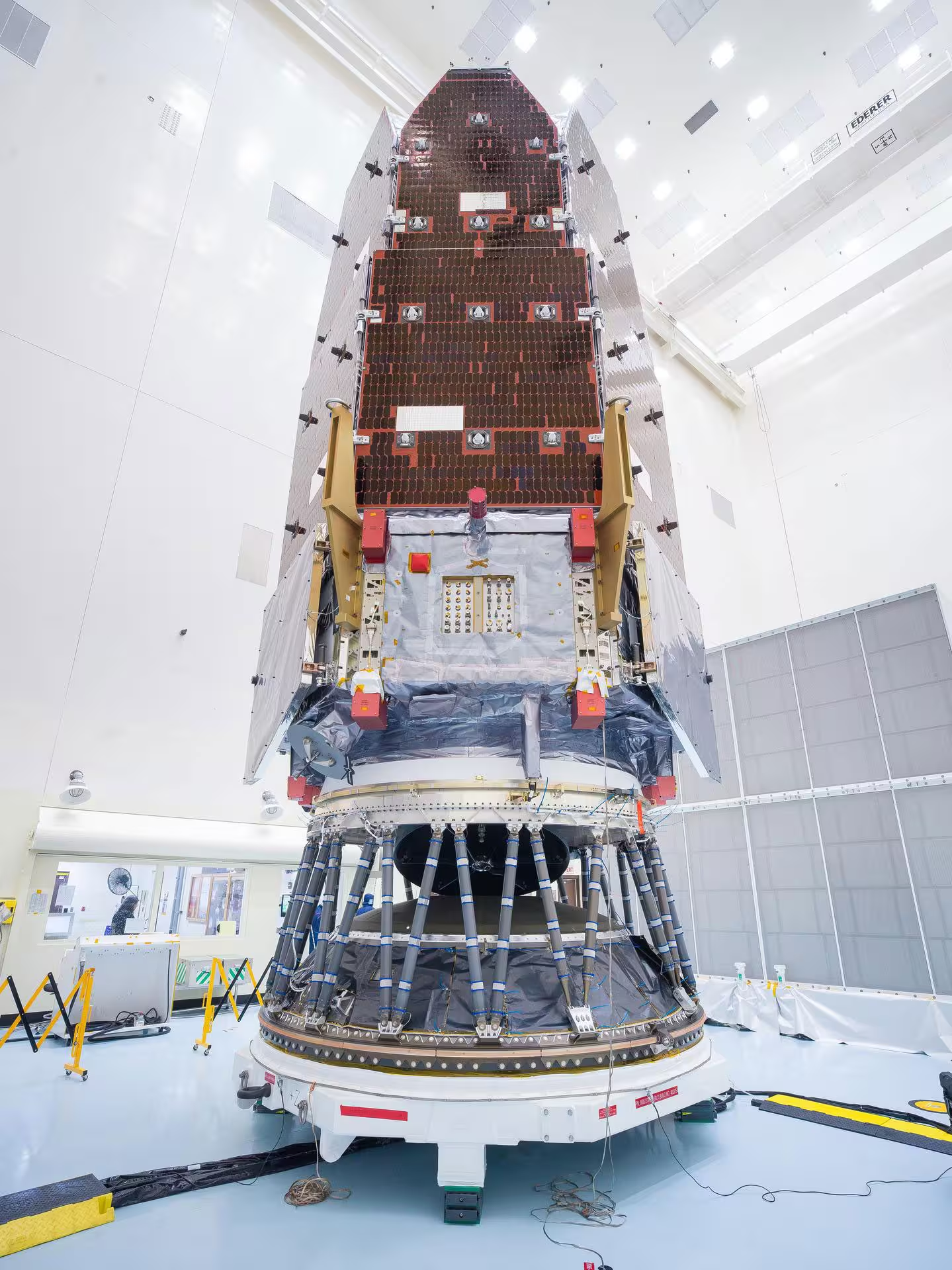
Photograph of the Nancy Grace Roman Space Telescope taken on 7 August 2026 at NASA’s Kennedy Space Center in Florida, US. In preparation for launch aboard a Falcon Heavy rocket on 30 August 2026, it was carefully integrated with its payload adapter inside the Payload Hazardous Servicing Facility. This specialized mount provides stability within the rocket and is designed for large, heavy loads.
That capability could change the kinds of worlds we can study. Until now, direct imaging has mostly found hot, young gas giants parked far from their stars, because those are easier to separate from starlight. CGI could push the technique inward and down the temperature scale, opening access to older, cooler gas giants that orbit nearer to their suns — planets that better represent the diversity of systems in our galaxy.
Precision matters. To hold the delicate optical alignment the coronagraph requires, engineers built Precision Alignment Mechanisms, known as PAMs, to position filters, masks, and mirrors with staggering steadiness. Over eight hours, the PAMs must not tilt more than 40 milliarcseconds — an angular tolerance equivalent to seeing a person in Los Angeles from halfway across Europe. That level of mechanical calm is what lets the deformable mirrors correct for the tiniest imperfections instead of chasing jitter.
.webp "NASA Confirms 6,000 Exoplanets: Mapping New Alien Worlds")
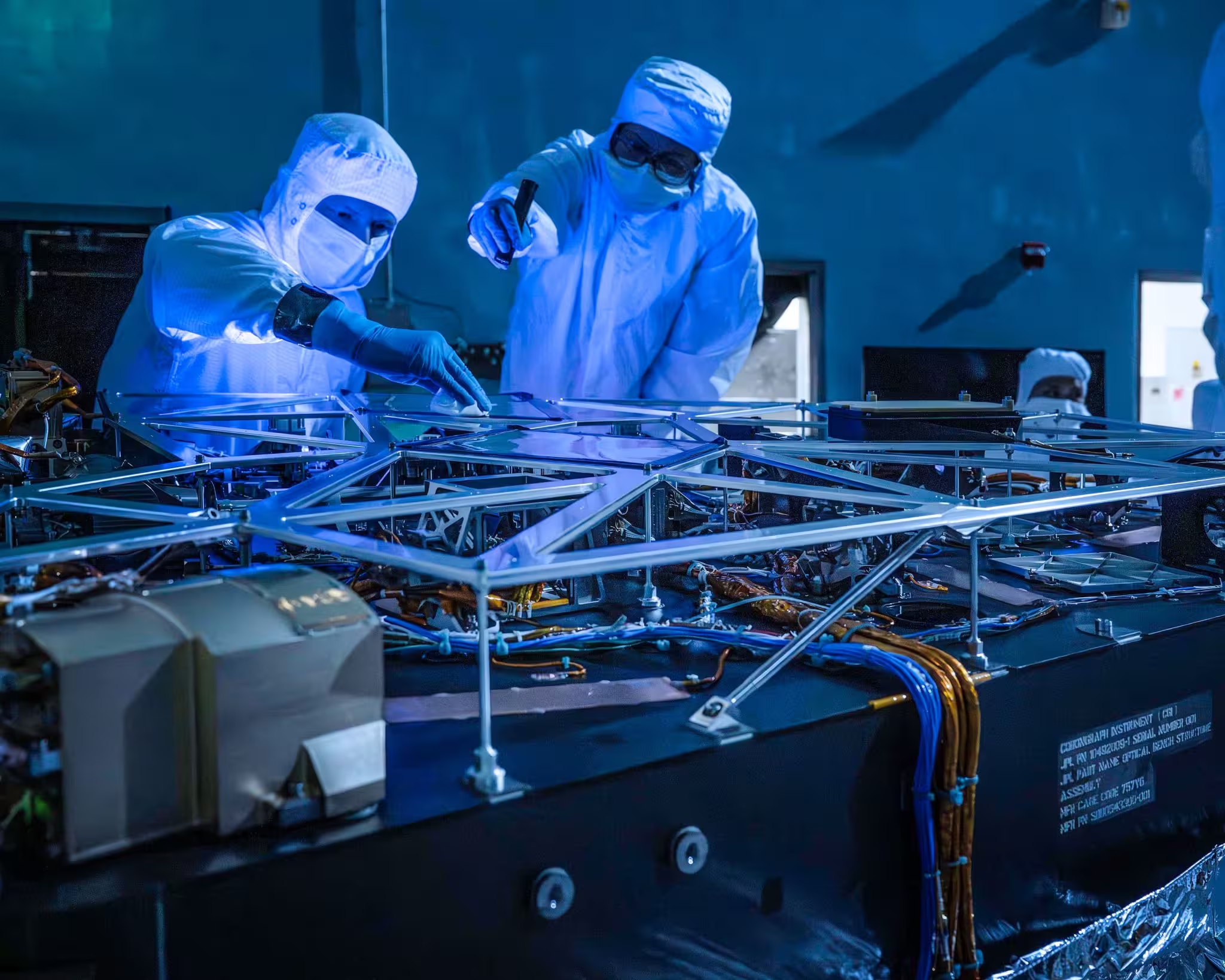
Fully populated optical bench of the CGI following delivery to NASA’s Goddard Space Flight Center. At its maximum dimension, the optical bench measures 1.7 meters × 1.7 meters.
European partners at the Max Planck Institute for Astronomy in Heidelberg played a central role in developing the PAMs and other hardware, while also contributing software and observation planning through NASA’s Community Participation Program. Oliver Krause, who led parts of that effort, describes CGI as the most technically sophisticated optical instrument ever flown for science. Wolfgang Brandner and colleagues coordinate the campaign to target gas giants in visible light and to process the incoming data.
Roman launched from Kennedy Space Center on August 30, 2026, aboard a SpaceX Falcon Heavy and is traveling to an orbit around the Sun-Earth L2 point about a million miles from Earth. Engineers have powered up CGI, run its initial software checks, and started months of meticulous calibration and testing while the observatory finishes commissioning. If all goes according to plan, NASA expects the first science images to be released in early 2027, with data streamed to the Roman Science Support Center for immediate public access.
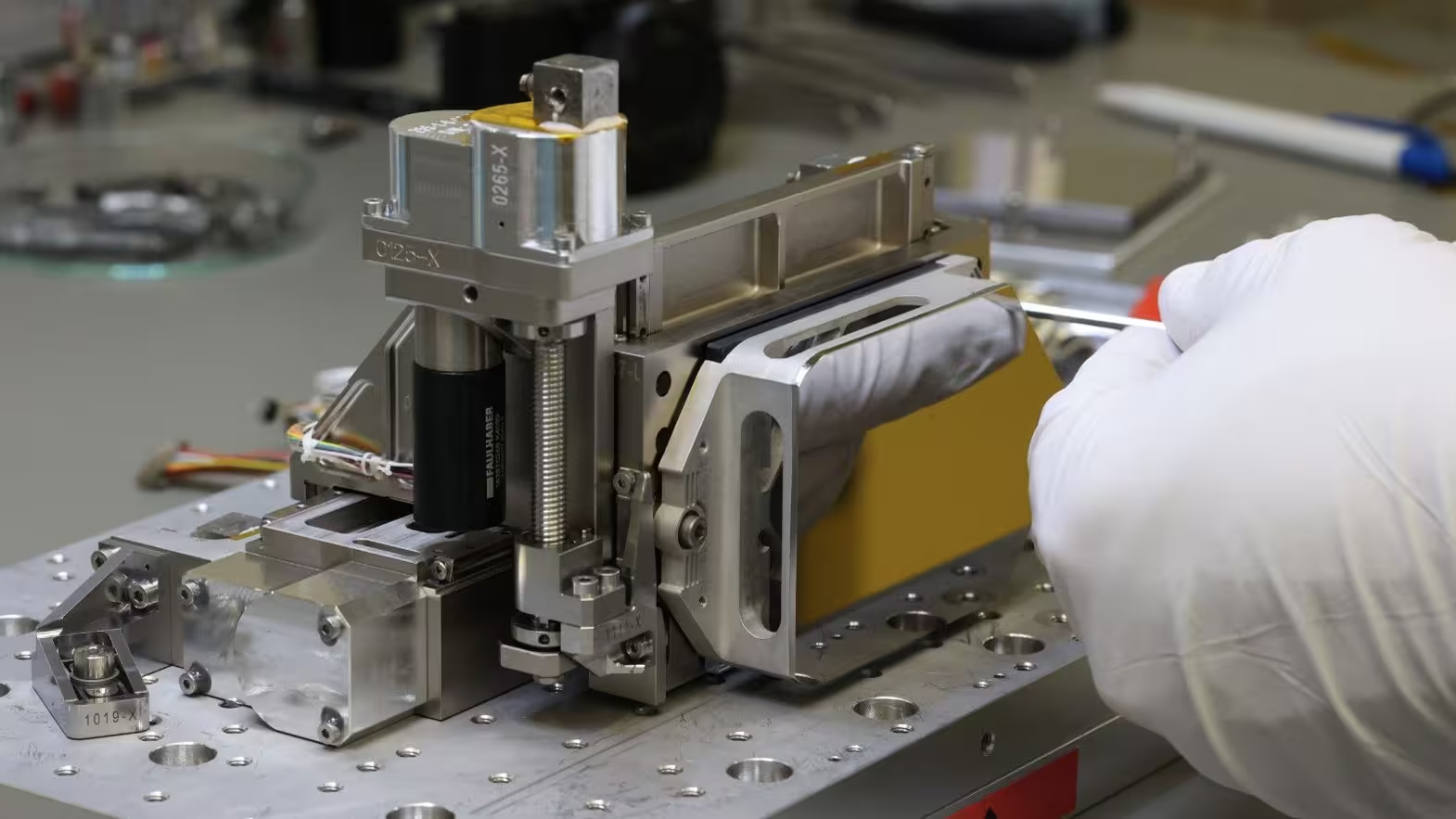
One of six flight models of the Precision Alignment Mechanisms (PAMs) for the Coronagraph Instrument (CGI), a camera aboard the Nancy Grace Roman Space Telescope. The PAMs position and stabilize the optical elements of the CGI during observations.
There are bigger implications beyond finding more Jupiters. The techniques CGI will validate — high-precision wavefront sensing, deformable mirrors in space, and extreme mechanical stability — are pathfinders for future missions that aim to image truly Earth-like worlds. Instruments like the proposed Habitable Worlds Observatory could inherit CGI's lessons and push direct imaging toward planets where liquid water might exist.
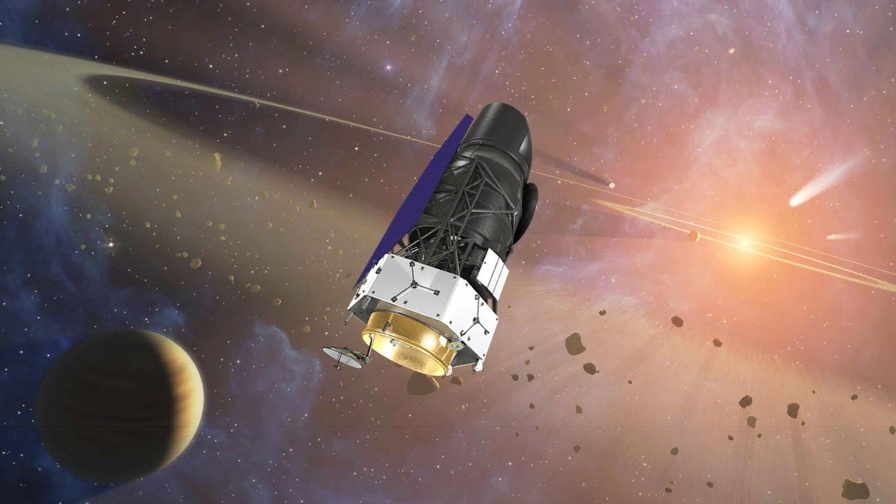
Roman was built for a five-year prime mission, with a possible extension. Savings from a very accurate launch and early trajectory corrections now suggest the observatory could support science operations for decades, perhaps more than 20 years, giving CGI plenty of runway to demonstrate its promise. The immediate task is detailed and painstaking: calibrate a system that must make the invisible visible. The potential payoff is enormous: a new way to read exoplanet atmospheres and, one day, to glimpse the faint blue signature of a world like our own.

Leave a Comment
Comments
No comments yet. Be the first.