
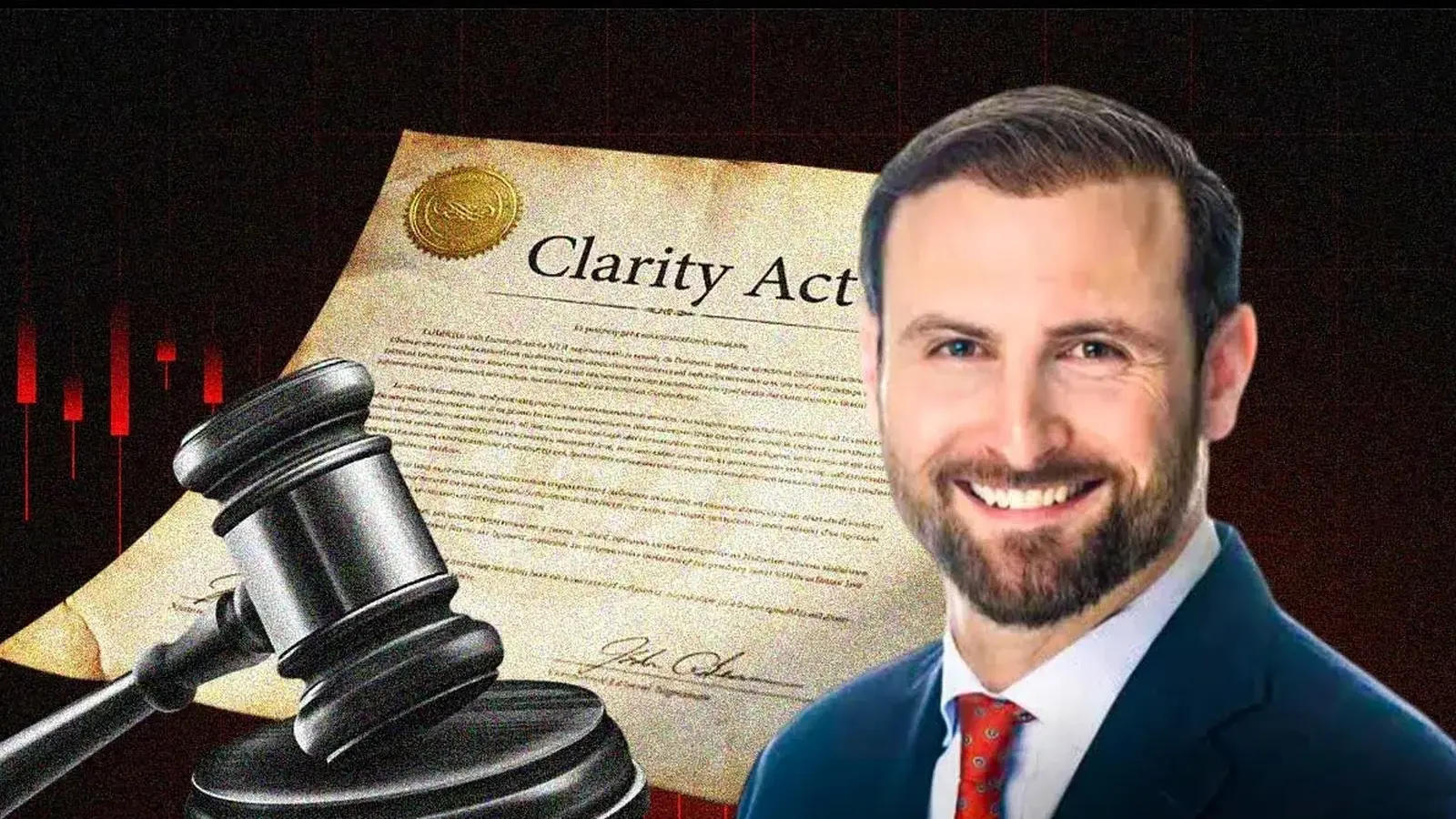
Patrick Witt has left his role as executive director of the White House Crypto Council after his temporary government detail expired on October 14, 2026. His departure creates another leadership gap at a critical moment for U.S. cryptocurrency policy, as lawmakers and regulators continue to grapple with the stalled Digital Asset Market CLARITY Act and broader questions about crypto regulation.
What happened: Witt’s assignment ends
A White House official confirmed that Patrick Witt’s temporary assignment to the President’s Council of Advisors for Digital Assets — commonly called the White House Crypto Council — has expired. Witt had been detailed from the Department of Defense to lead the council’s coordination on cryptocurrency legislation, market-structure discussions and interagency policy priorities. The administration did not announce an immediate successor or a formal succession plan.
Crypto reporter Eleanor Terrett first reported the end of Witt’s assignment after contacting White House officials several times. Terrett said a White House email confirmed that Witt’s “detail has expired.” Prior to joining the council, Witt served in a Defense Department role and had expected to return to his Georgia Army National Guard duties this year. He had previously postponed that training when his detail was extended; he is now expected to resume those commitments.
Context: a string of departures at the Crypto Council
Witt’s exit follows other notable departures from the White House cryptocurrency team earlier in 2026. David Sacks, who served as an adviser on artificial intelligence and cryptocurrency, left in March after his special government employee arrangement concluded. Harry Jung, the council’s deputy director, departed at the end of July. Those exits left Witt as the last publicly known member of the council’s senior staff.
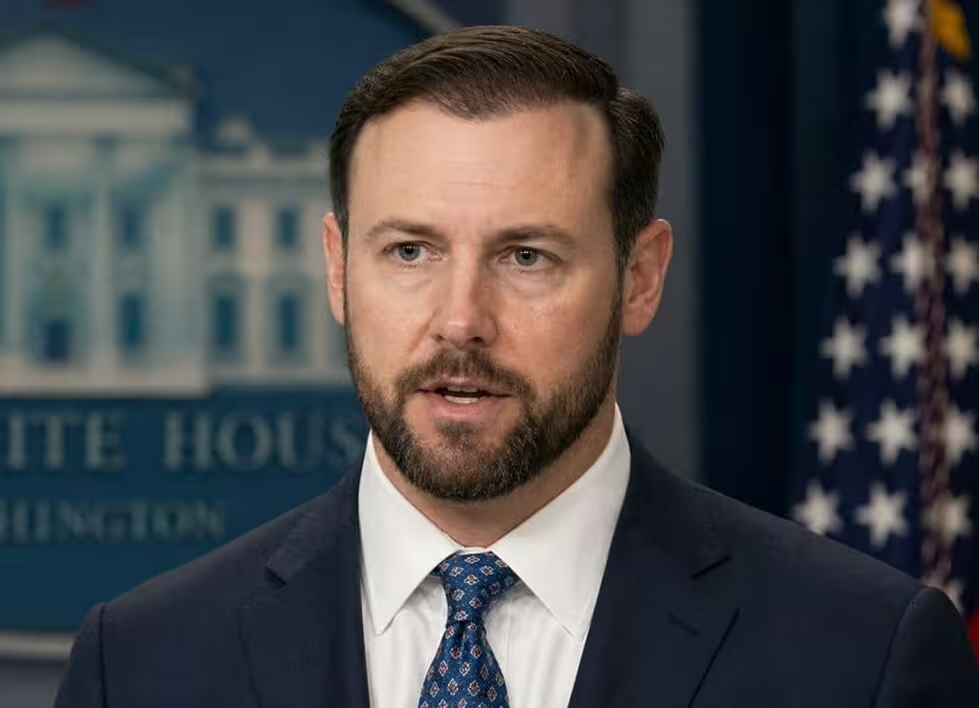

The cumulative effect has been to raise questions about the council’s capacity to shepherd complex legislation and to coordinate among federal agencies, industry stakeholders and lawmakers. The White House has not indicated that the council has been dissolved, and federal regulators such as the Securities and Exchange Commission (SEC) and the Commodity Futures Trading Commission (CFTC) continue to exercise statutory authority over digital-asset markets.
Why this matters: the CLARITY Act and stalled legislation
Witt’s departure comes after the U.S. Senate failed to advance the Digital Asset Market CLARITY Act in a key procedural vote on September 15. The CLARITY Act — one of the administration’s central crypto policy proposals — aims to create a clearer federal regulatory framework for digital assets by delineating responsibilities between the SEC and CFTC and defining rules for exchanges, brokers and dealers.
The Senate procedural motion fell short, receiving 49 votes in favor and 50 opposed, below the 60-vote threshold required to move forward under the chamber’s rules. That vote prevented the bill from reaching a full floor consideration at that time, though it was not a final rejection of the broader policy effort. A motion to reconsider left the door open to additional action, but no successful follow-up vote had been reported by October 14.
Key disagreements in the negotiations included the regulatory treatment of certain crypto market structures, rules around decentralized finance (DeFi), stablecoin yield mechanisms and proposed ethics restrictions for public officials holding digital-asset interests. Lawmakers and industry negotiators had proposed changes to address some concerns, including enforcement tools for state attorneys general, but differences remained over whether proposed ethics rules would be enforceable and whether the bill adequately addressed potential conflicts of interest.
Major policy disputes
- Stablecoins and yield: Lawmakers debated how stablecoin mechanisms and yields (including staking and rewards programs) should be regulated to protect consumers without stifling innovation.
- DeFi and intermediaries: There was disagreement over how to classify protocols and intermediaries within DeFi, and whether certain DeFi activities should fall under broker-dealer or exchange rules.
- Enforcement and ethics: Provisions aimed at restricting public officials’ crypto holdings prompted partisan debate, with Democrats arguing the bill did not sufficiently address conflicts involving the president and his family’s crypto interests, while Republicans argued the measure would improve clarity and customer protections.
Industry reaction: praise and concern
Industry groups publicly expressed appreciation for Witt’s efforts to facilitate difficult negotiations between lawmakers and crypto stakeholders. Lindsay Fraser, chief policy officer at the Blockchain Association, praised Witt for his role in bringing parties together and maintaining dialogue during challenging negotiations. Kristin Smith, president of the Solana Policy Institute, similarly acknowledged Witt’s work on market-structure discussions and thanked him for his service.
.avif "U.S. Lawmakers Set for Pivotal Re-Vote on Key Crypto Legislation After Initial Setback")
While industry leaders lauded Witt’s convening capacity, statements from associations did not signal any new breakthroughs on the CLARITY Act or identify a successor to lead future talks. With midterm elections approaching in November 2026, legislative time was limited, and the prospects for renewed action in the short term remained uncertain.
Regulatory landscape: SEC, CFTC and agency action
In the absence of a legislative framework from Congress, the SEC and CFTC continue to rely on existing statutory authority to regulate securities and commodities markets, respectively. That has left questions about how tokens will be classified, how exchanges should be regulated, and what protections investors should expect.
Regulators have signaled continued attention to enforcement, market structure oversight and investor protection across crypto exchanges, token listings and custody practices. The CLARITY Act — if enacted — would have tried to reduce ambiguity by formalizing which federal regulator oversees certain assets and activities. Without it, industry participants must continue navigating a patchwork of agency guidance and enforcement actions.
Potential near-term implications
- Market uncertainty: Continued ambiguity around federal rules can increase compliance costs for exchanges and token projects, and may dampen investment in new products.
- Regulatory enforcement: Agencies may pursue rulemaking and enforcement actions more aggressively to address perceived risks, particularly around investor protection, market manipulation and fraud.
- State-level action: With federal legislation stalled, states could pursue their own frameworks for stablecoins, custody and licensing, potentially creating a complex regulatory mosaic.
What the White House said — and didn’t say
The White House thanked Witt for his service and wished him well, but did not disclose who would take over day-to-day leadership of the Crypto Council or whether an immediate replacement had been designated. Officials also did not state that the council’s efforts on CLARITY or other digital-asset priorities were being paused.
The absence of a named successor does not mean federal work on digital-asset policy has stopped. Multiple agencies continue to pursue rulemaking, enforcement and coordination. Still, the departure of a senior coordinator makes legislative negotiations and interagency alignment more challenging at a delicate moment for U.S. crypto policy.
Timeline recap: how we got here
- July 2025: The U.S. House of Representatives passed its version of the CLARITY Act.
- March 2026: David Sacks left his advisory role at the White House after his term as a special government employee concluded.
- End of July 2026: Deputy director Harry Jung departed the Crypto Council.
- September 15, 2026: The Senate failed to advance the CLARITY Act in a procedural vote (49–50).
- October 14, 2026: Patrick Witt’s temporary detail from the Department of Defense to the White House Crypto Council expired.
Outlook: next steps for lawmakers, regulators and industry
With Witt’s departure and the CLARITY Act stalled, several potential paths lie ahead for U.S. crypto policy:
- Renewed legislative negotiation: Lawmakers could resume talks and attempt to build a broader consensus, potentially revising contentious ethics and enforcement provisions to attract more votes in the Senate.
- Agency-driven regulation: The SEC, CFTC and other federal agencies may intensify rulemaking and enforcement, filling some policy gaps left by Congress.
- State initiatives: States might pursue their own stablecoin and licensing regimes, prompting coordination challenges for national platforms and market actors.
- Industry self-regulation and compliance: Crypto firms may adopt stronger compliance programs and industry standards to mitigate regulatory risk and reassure investors.
For market participants and investors, the best short-term approach is heightened compliance vigilance and close monitoring of both congressional activity and regulatory announcements. Companies operating in the U.S. should review custody, listing, and consumer-protection practices to prepare for potential rule changes or enforcement actions.
Conclusion: leadership gap as crypto policy hangs in the balance
Patrick Witt’s exit marks another high-profile staffing change within the White House’s crypto advisory apparatus at a moment when the U.S. is wrestling with how to regulate and foster innovation in digital assets. The CLARITY Act’s stalled progress underscores persistent divisions in Congress over how best to define federal oversight, protect consumers and support market development.
While the White House and federal agencies continue to work on digital-asset issues, the loss of a central coordination figure like Witt adds friction to ongoing negotiations. Industry leaders expressed gratitude for his convening role, but also raised concerns about the uncertainty that follows. Whether Congress can revive the CLARITY Act or produce an alternative framework, or whether agencies will fill the regulatory void, remains to be seen.

As stakeholders await clarity, the interplay between legislation, agency action and industry practice will determine the future market structure, investor protections and the United States’ role in global crypto policy.

Leave a Comment
Comments (1)
Wow, another key staffer gone? This is worrying, who's coordinating the CLARITY talks now . Timing is terrible, honestly!