
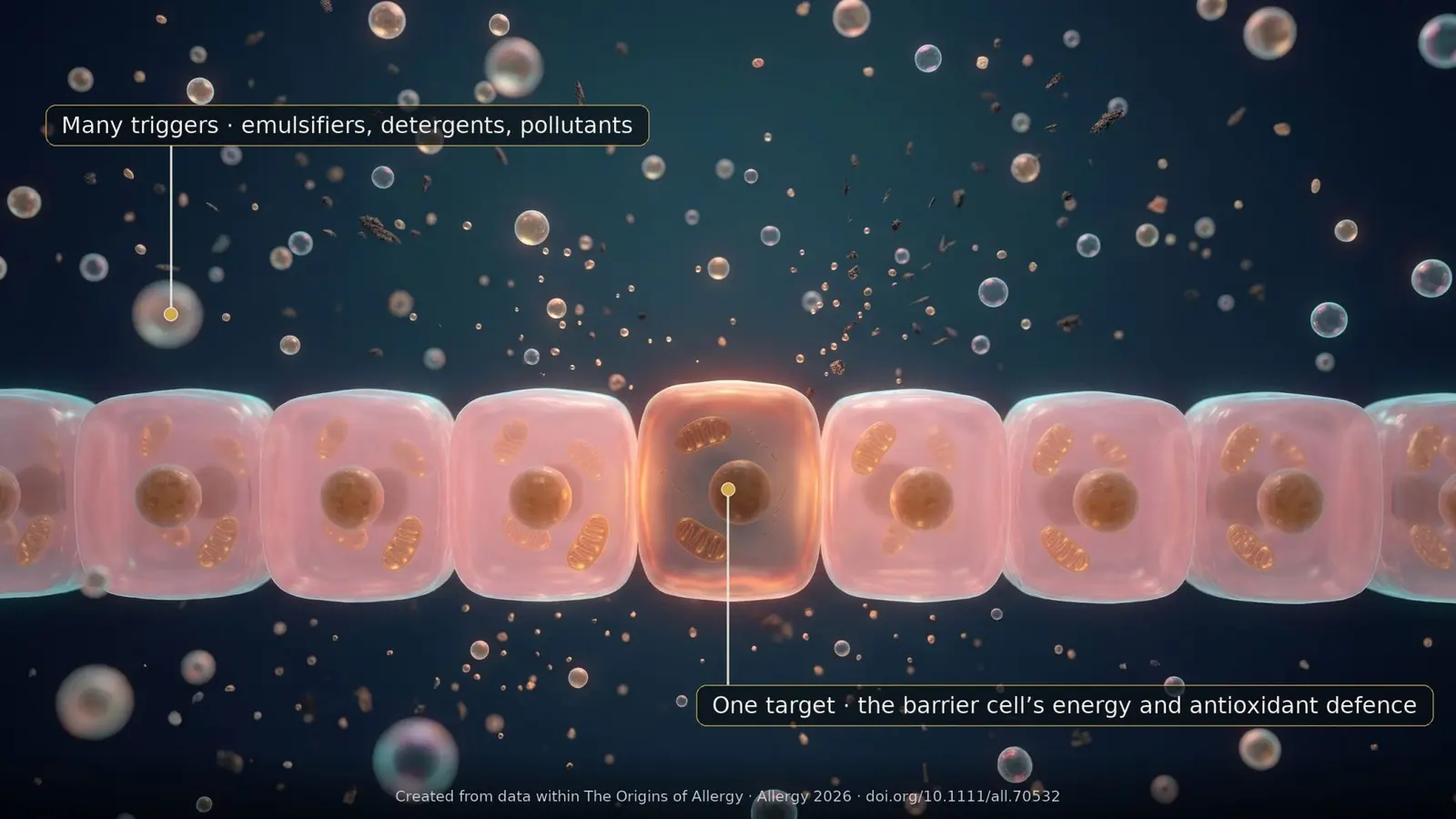
Imagine the skin, gut and airways running low on fuel. Tiny generators inside the cells — mitochondria — sputter, and suddenly a neighborhood of protective tissue is sending out distress flares. That frantic alarm, researchers now suggest, may be the opening move in a stepwise chain that ends with eczema, food allergy, hay fever or other allergic diseases.
Scientists at Griffith University tunneled into mountains of molecular data and came away with a provocative idea: the root of many allergies might not be a confused immune system at first contact, but an energy crisis in the epithelial cells that form our body’s first line of defense.
They didn’t reach this conclusion lightly. The team assembled what they describe as the largest multi-omic allergy dataset to date — 116 case-control cohorts comprising 3,776 patients — and looked for consistent signals in the molecules that control cell function. What kept recurring was a signature of mitochondrial dysfunction, especially in barrier tissues.
Short version: the barrier cells can’t keep up. Long version: environmental pressures — things like emulsifiers in processed foods, detergents, air pollution, microplastics, falling dietary fiber and early-life antibiotics — can all increase cellular stress. If mitochondria can’t meet energy needs or remove their own damaged parts efficiently, the cells send out alarm signals. The immune system answers. Inflammation follows.
“For decades we taught that allergies begin with immune misfiring and barrier breakdown was downstream. Our data point the finger the other way around,” said Professor Peter Smith, a clinical immunologist who led the study. The image is unnerving: not a faulty watchman, but a watchman who has run out of batteries and keeps crying wolf.
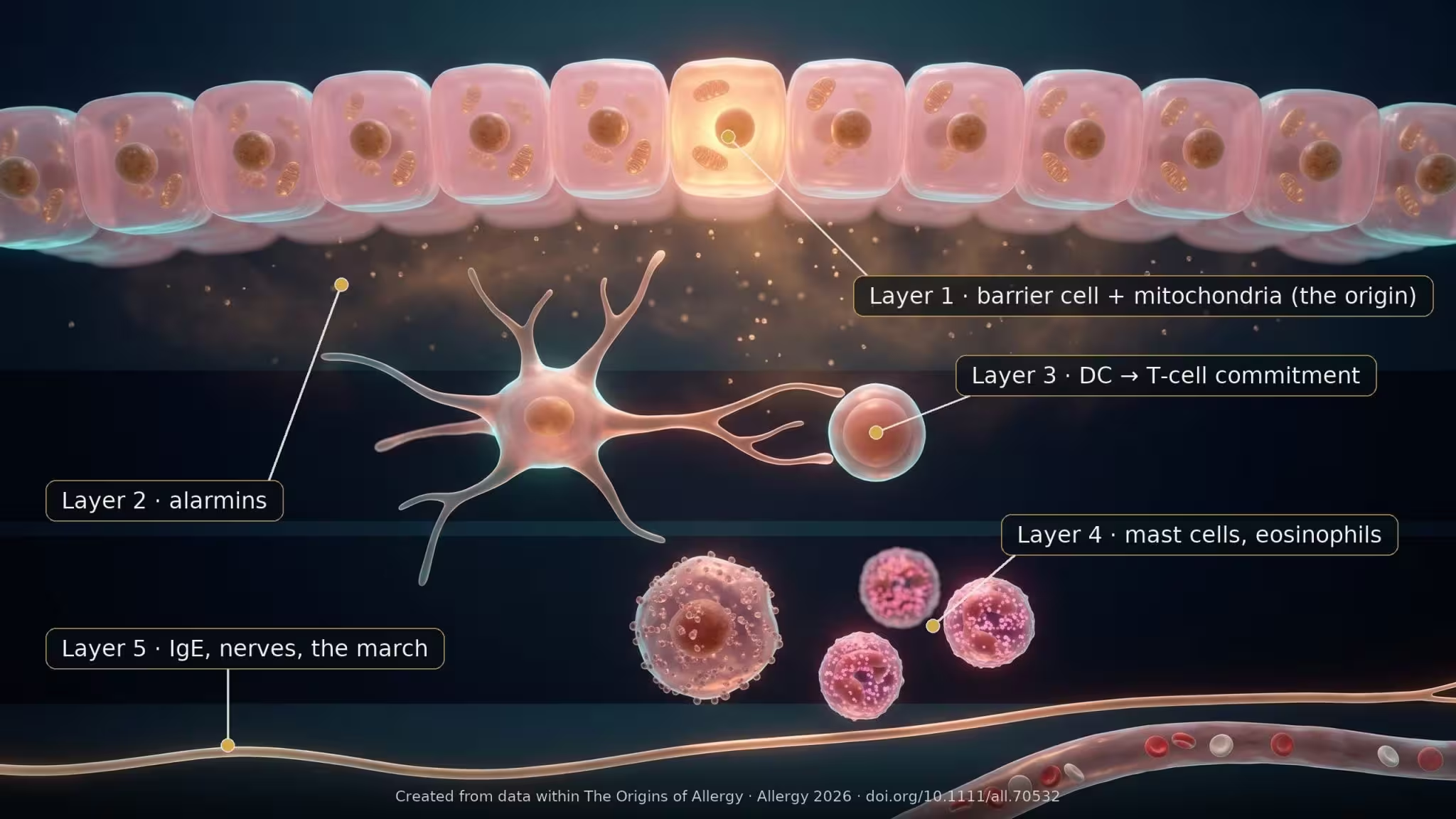
A proposed model of allergic disease in which mitochondrial dysfunction in epithelial barrier cells triggers the release of alarm signals, setting off a cascade of immune responses that ultimately produces allergic inflammation.
Evidence was strongest in eosinophilic esophagitis, an inflammatory disease of the esophagus. Across 13 independent patient cohorts, the research team found reduced activity in the cell’s quality-control pathway that clears damaged mitochondria — a process essential to keeping cellular engines running smoothly. In people with eczema, the same kinds of defects turned up even in skin that looked healthy, a finding consistent with cellular dysfunction preceding visible symptoms.
But this mitochondrial fingerprint was not universal. Some allergic conditions showed only partial traces of the pattern — hay fever, for example — while established asthma and nasal polyps lacked the signature altogether. That patchwork suggests a model in which mitochondrial failure may be a primary driver in some allergic pathways and merely a contributing factor in others.

How might modern life make this problem worse? Think of the epithelial barrier as a city’s infrastructure. Clean air and whole foods are like reliable power plants and maintenance crews. Replace them with processed diets, pollutants, chemical surfactants and disrupted microbiomes, and the demand rises while supply falters. Cells working overtime produce more oxidative stress and accumulate damaged mitochondria. Eventually, the system raises the alarm.
Associate Professor Nic West, a molecular immunologist on the team, points to the bewildering diversity of allergy risk factors and the difficulty of fitting them into a single coherent explanation. “If the barrier’s energy economy is the weak link, many different exposures could converge on the same biological failure,” he said.
There are clinical implications. Current allergy drugs mostly tamp down immune responses — they treat the flare, not the spark. That may explain why diseases often return once treatment stops: inflammation damages the barrier, worsening mitochondrial dysfunction and locking in a cycle of relapse. Targeting epithelial cell health and mitochondrial quality control could offer a very different therapeutic route.
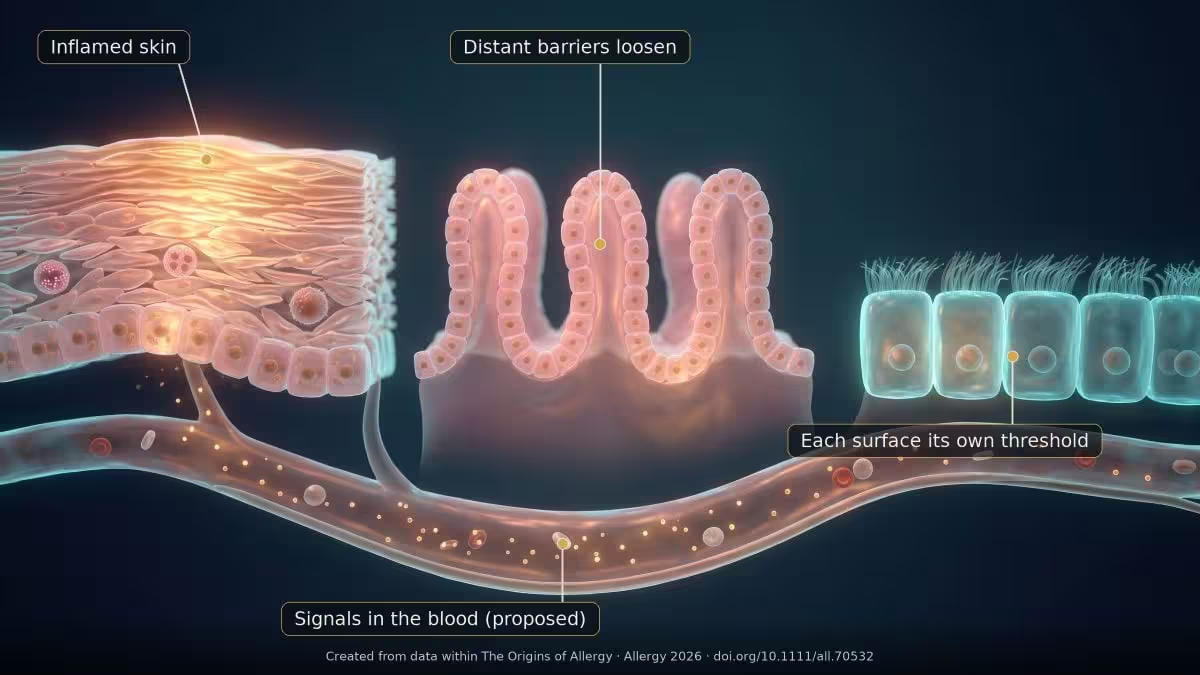
A proposed mechanism for the progression of allergic diseases in which inflammatory signals from damaged skin travel through the bloodstream, potentially weakening protective barriers in distant organs such as the gut and airways.
This research does not claim a proven cause, but it offers a new and testable origin story: allergies as the downstream result of epithelial energy failure.
Important caveats remain. The study’s multi-omic approach can reveal strong associations and pathways, but it cannot prove which event starts first. To move from hypothesis to proof, researchers say they need direct, longitudinal measurements of epithelial cell function taken before symptoms arise — ideally in infants who later develop allergies.
So where does this leave clinicians, parents and curious readers? For now, it reframes the question. Rather than asking only how the immune system misbehaves, scientists can now ask whether and when barrier cells lose their metabolic footing. That shift opens new avenues for early detection and prevention — from biomarkers that spot stressed epithelial cells to interventions that shore up cellular energy systems before the inflammatory cascade begins.
Will we be able to catch the power cut before the town crier starts shouting? Researchers are already planning the next steps: measure barrier cells directly in infants, chart the molecular signals over time, and test whether bolstering mitochondrial health changes the trajectory. The hypothesis is daring. The next few years could be decisive.


Leave a Comment
Comments
No comments yet. Be the first.