
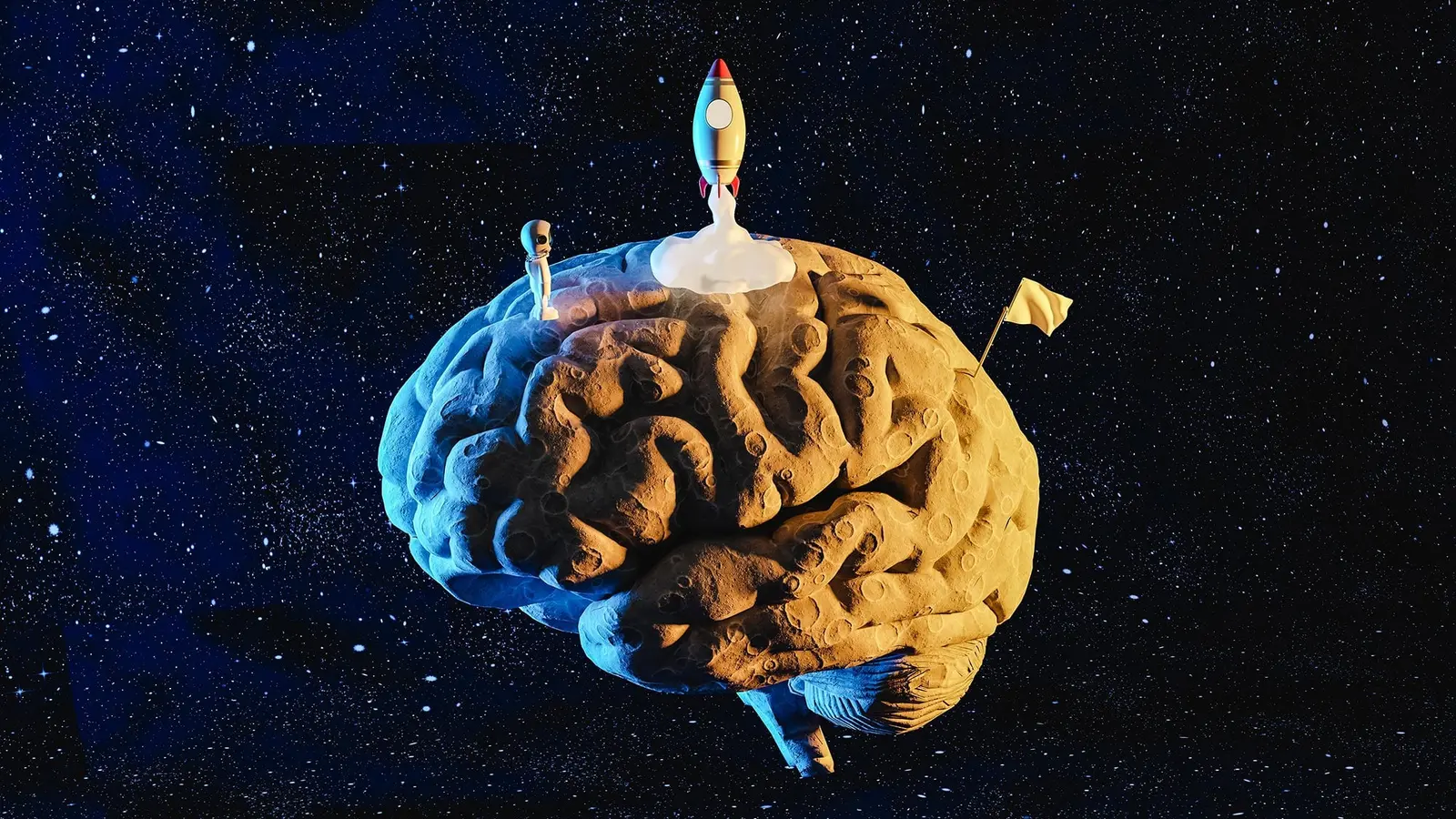
Step outside Earth's invisible shield and the rules change. The constant drizzle of galactic cosmic rays doesn't announce itself with headlines or immediate symptoms; it sneaks into cells and nudges molecular circuits in subtle, surprising ways.
Researchers funded by NASA have now mapped one such nudge in the brain's immune cells. Using particle beams at Brookhaven National Laboratory's NASA Space Radiation Laboratory, neuroscientists from the University of Rochester exposed male and female mice to simulated space radiation and then probed nearly 16,000 individual microglia with single-cell RNA sequencing. The result was not a single dramatic alarm bell, but a mosaic of sex-specific molecular responses that could matter for long missions to the Moon and Mars.
Male microglia shifted toward signatures tied to cellular stress handling and metabolic rewiring. Female microglia, by contrast, showed broader dampening across immune-signaling pathways. Neither group displayed widespread inflammatory activation, and behavioral tests taken at the study's checkpoint did not reveal obvious memory or learning deficits. Still, the cellular fingerprints were unmistakable: radiation left marks even when function appeared intact.
Microglia show sex-specific molecular shifts after simulated cosmic radiation, without immediate cognitive deficits.

One shared change stood out. Levels of FKBP5—a protein that helps modulate how cells respond to stress—increased in two brain regions tied to learning and memory, the cortex and the dentate gyrus, in both sexes. Is FKBP5 a first-line defender, rallying cells against damage? Or could its rise presage a maladaptive cascade that only becomes obvious months or years later? The answer will shape how we think about spaceflight risks.
These findings add to a growing chorus of studies showing the brain's reaction to cosmic rays is not uniform. Years of work from groups including University of Rochester Professor M. Kerry O'Banion have linked radiation exposure to changes that could speed neurodegenerative processes in animal models. What this new study does is reveal nuance: microglia—the brain's caretakers—respond differently depending on biological sex, even under identical radiation doses.
Why does that matter for astronauts? Long-duration missions are not single events. They're months, sometimes years, of continuous exposure layered over sleep disruption, isolation, altered gravity, and the stress of operating in hostile environments. A molecular nudge that looks harmless after a few weeks could interact with other stressors to produce downstream vulnerabilities. That makes early, sex-aware molecular mapping a practical priority, not an academic exercise.
The work also underscores the role of facilities and trainees in space-health science. Graduate researchers and postdocs, supported by NASA grants and collaborations with national labs, handled the intricate experiments and analyses—sorting individual cells, parsing gene-expression patterns, and piecing together what those patterns might mean for living brains.
There are open questions aplenty. Do these microglial changes persist, resolve, or evolve into inflammation over a longer timeline? Would different radiation mixes or doses produce other patterns? How do these cellular shifts interact with age, prior brain injury, or genetic susceptibility to neurodegeneration? Each question points to follow-up studies that will be necessary before we can translate cellular signals into astronaut-safe countermeasures.
For now, the take-home is crisp: space radiation leaves subtle, sex-dependent marks on the brain's immune landscape even when classical tests say 'all clear.' Understanding those marks—how they form, what they do, and whether they can be countered—will be essential if humans hope to explore farther without paying a delayed price in brain health.


Leave a Comment
Comments
No comments yet. Be the first.