
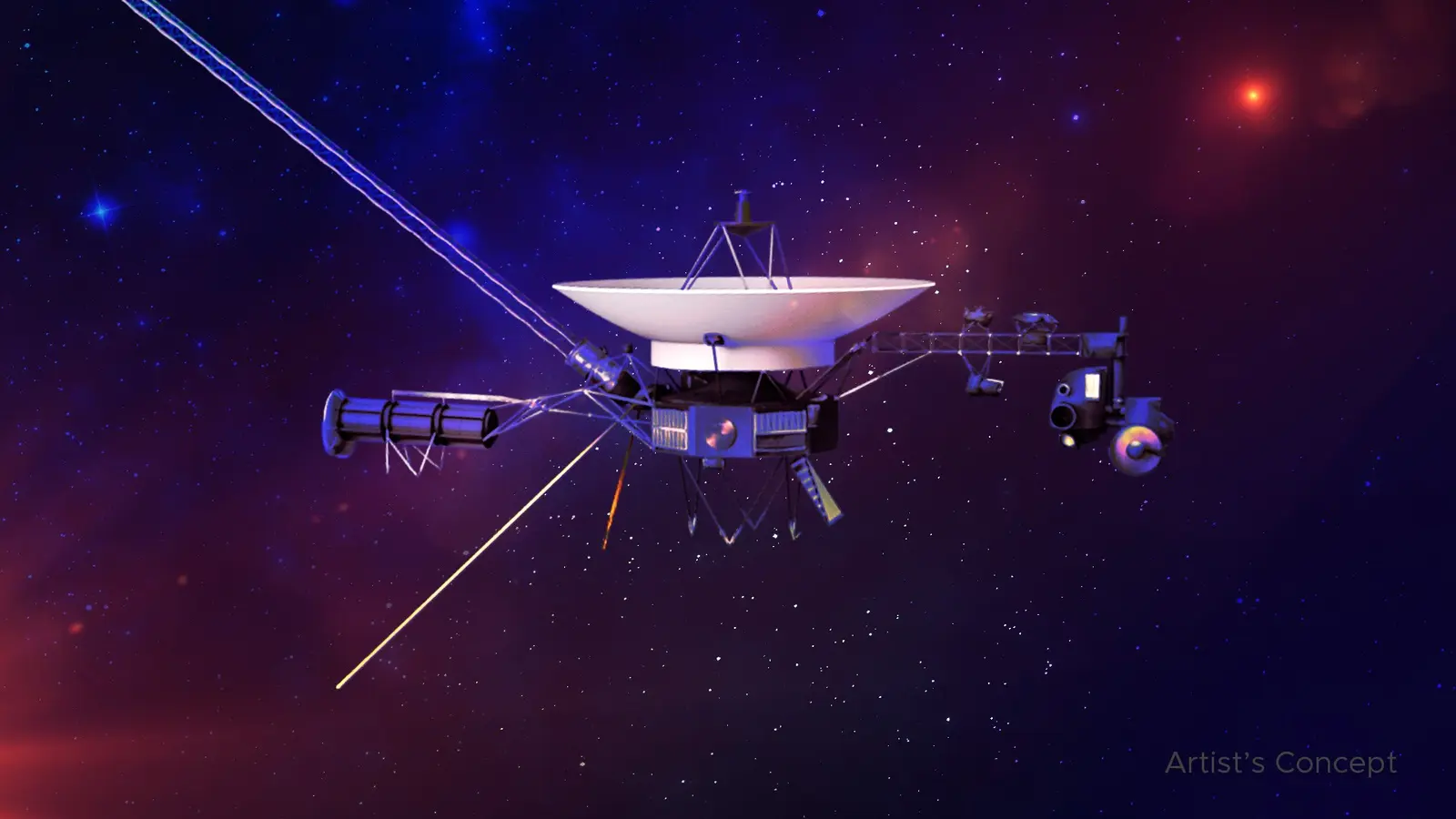
Imagine waiting a full day just to hear a single reply. That is the new reality for the team that still tends Voyager 1, the probe that left Earth in 1977 and, on November 18, 2026 at 2:16 a.m. PST (5:16 a.m. EST), crossed a threshold no human-made object had before: one light-day from home.
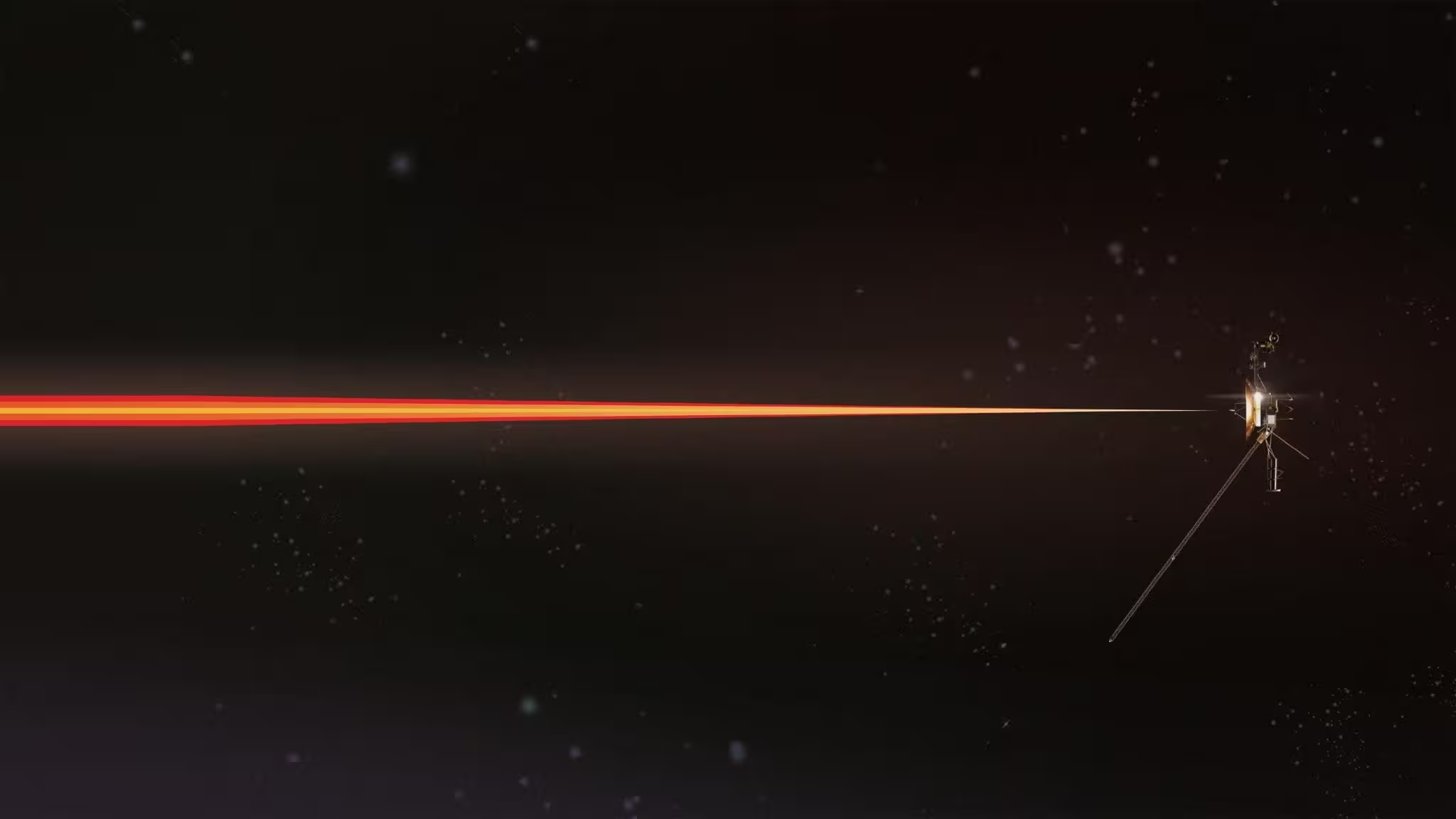
Voyager 1 is now about 16.1 billion miles (25.9 billion kilometers) away — the distance light travels in 24 hours. It sounds like poetry, but it is precise physics: a radio ping sent now takes a full day to reach the spacecraft, and another day for any answer to return. A simple question becomes a 48-hour conversation across interstellar space.
How do you measure distance at that scale? Astronomers often prefer time. Light covers roughly 186,000 miles per second. A beam of sunlight hits the Moon in roughly 1.3 seconds. It takes about four hours to reach Neptune. From Neptune, that same beam would need another 20 hours to find Voyager 1.
The milestone was confirmed by the Jet Propulsion Laboratory, where engineers detected Voyager's carrier signal — the continuous radio tone that keeps the link alive — at the expected time. But the celebration came with worry: mission teams report they have not received science or engineering telemetry since November 14, even though the carrier persists. The probe is transmitting, but the data packets are not arriving; engineers are hunting for the cause.
Voyager 1 is not merely a record-holder. It transformed our view of the outer solar system during the Grand Tour that followed its 1977 launch alongside Voyager 2. Those spacecraft gave humanity its first close-up looks at Jupiter and Saturn, and Voyager 2 later became the only craft to visit Uranus and Neptune up close. Today both travelers sail through interstellar space, past the Sun's heliosphere, probing a region scientists had only theorized about until Voyager 1 crossed that boundary in 2012 and Voyager 2 in 2018.
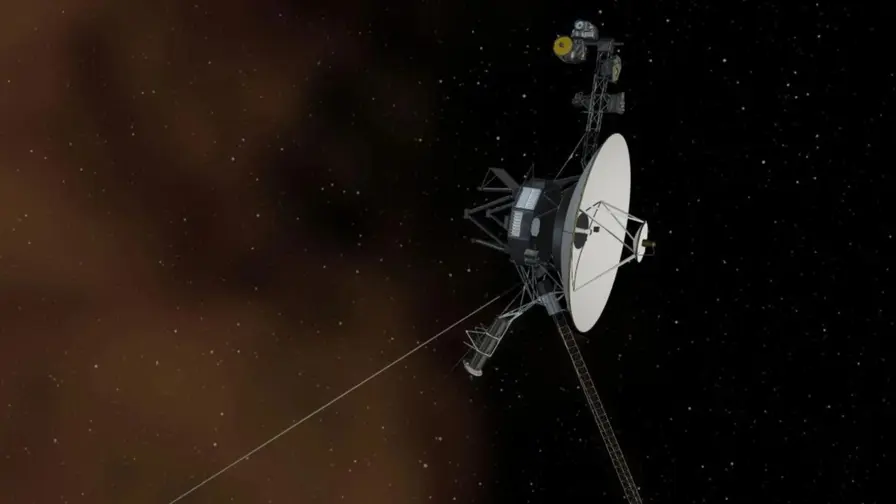
Speed helps paint a picture: Voyager 1 is hurtling outward at about 38,000 miles per hour (61,155 kph). And yet, even at that velocity, the distances involved dwarf any human intuition. Each measurement Voyager returns — magnetic fields, particle counts, the faint fingerprints of the Sun's influence far from home — rewrites expectations about how far our star reaches into the galaxy.
Keeping these ancient machines alive is a story of small, careful choices. Their power comes from radioisotope thermal generators, nuclear 'batteries' that convert heat from plutonium decay into electricity. The supply is finite and creeping downward; both Voyagers lose roughly 4 watts of power every year. Earlier in 2026, engineers took calculated risks: they switched off three instruments and reconfigured their tasks to lower-power alternatives to stretch the available energy.
Those conservation moves are intended to keep the scientific instruments online through at least the summer of 2027, when the Voyagers will mark their 50th anniversaries. Yet every shutdown is also a trade-off. Which sensors do you keep? Which ones go dark? Those are decisions born of careful engineering and a stubborn desire to squeeze more discovery from older hardware.
The spacecraft also carry a cultural payload: a Golden Record, a gold-plated copper disc with images and sounds of Earth, intended as a message in a bottle for any intelligence that might encounter the probes millennia from now. That small piece of human storytelling continues its silent voyage, even as mission teams manage a modern technical problem with radio telemetry.
Communications rely on NASA's Deep Space Network, a trio of antenna complexes spaced around the globe. Commands are uplinked weekly; listening happens daily. But now, every command takes roughly 24 hours to arrive and any reply takes another 24 to return. Patience has become part of mission operations.
Voyager 1's one-light-day milestone is more than a headline. It is a reminder of what decades of careful engineering, stubborn creativity and scientific curiosity can accomplish. It also poses new questions: how long will the craft remain a useful instrument of discovery, and what secrets of the Sun's distant reach will it yet reveal? For now, the probe keeps whispering across a day-long gulf, an enduring emblem of exploration that still has stories to tell.

Leave a Comment
Comments (1)
wait, a whole day each way? haunting and kinda beautiful... those probes feel like tiny time capsules. hope the team finds that missing data soon