
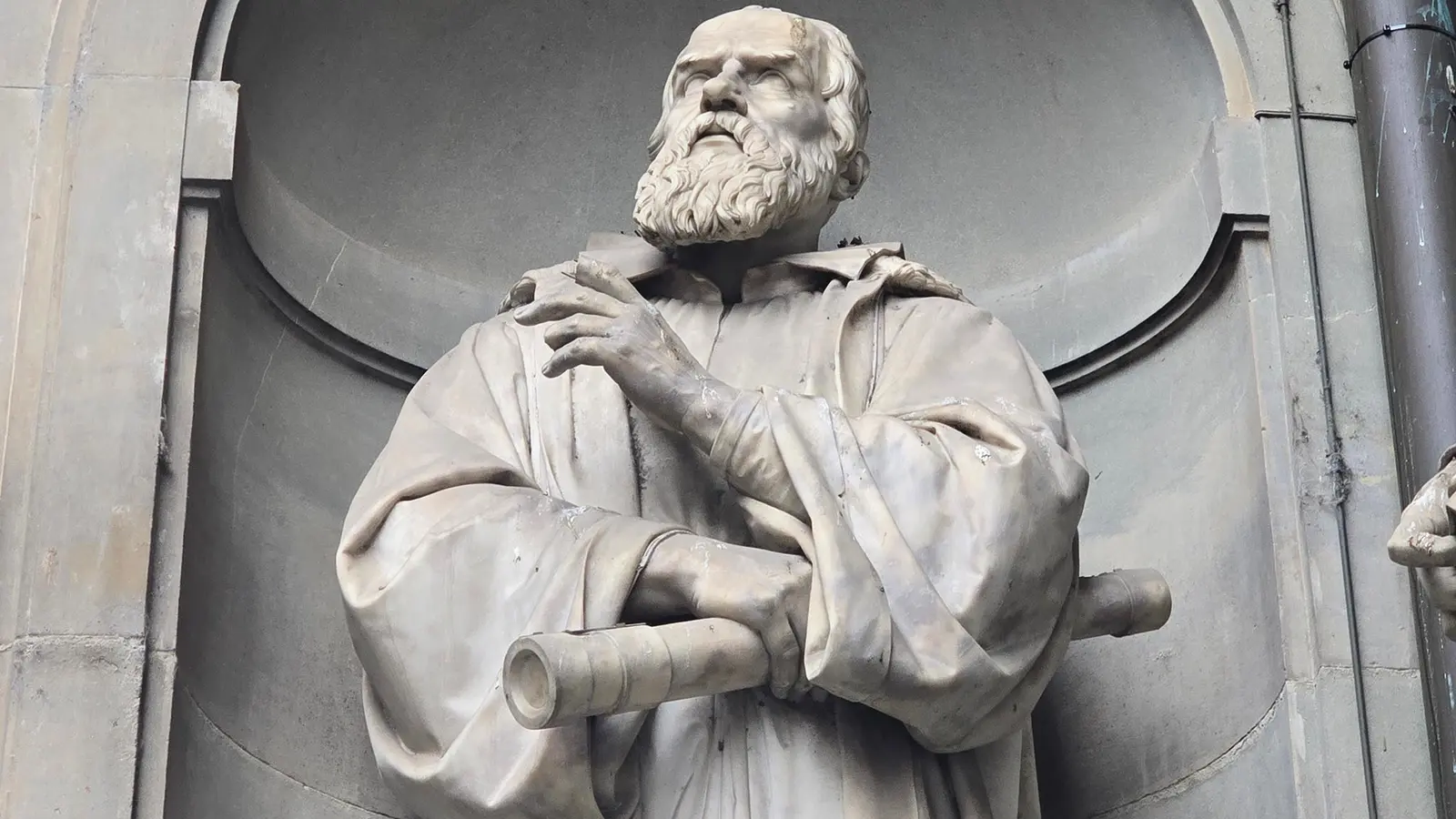
Imagine being handed a delicate telescope in a colonial governor’s office and asked to explain how it works. That is precisely the moment recorded in a 1666 manuscript resurfacing now — a document that may rewrite a chapter of early optics and push Galileo into an unexpected technical role.
Dominican friar Ignacio Muñoz wrote the account after an improbable test. Exiled to Asia and desperate to return to Spain, Muñoz sought royal favor. The viceroy of New Spain, skeptical of the friar’s claims, presented him with an unfamiliar instrument and demanded a full technical appraisal. Muñoz obliged. The paper he produced, De Tellescopiis Stellarum, survives with drawings and a meticulous description of a four-lens telescope that he explicitly labels fabricatum a Galilaeo — “manufactured by Galileo.”
The description is not a casual sketch. Muñoz details a reverse-tapered tube, an erecting eyepiece, and an unusual arrangement of four convex lenses spaced at twice their focal lengths. Drawings accompany the text, showing how the parts fit and how the optics yield an upright image — a configuration that differs from the classic Galilean design most people associate with the scientist.
Why should we care? Because movement in the historical timeline matters to historians of science. The earliest known widespread use of four-lens telescopes has generally been dated to the 1640s. If Muñoz’s instrument truly came from Galileo’s workshop, those origins would have to be pushed decades earlier — possibly as far back as 1630 — and attributed to one of the period’s most influential experimenters.
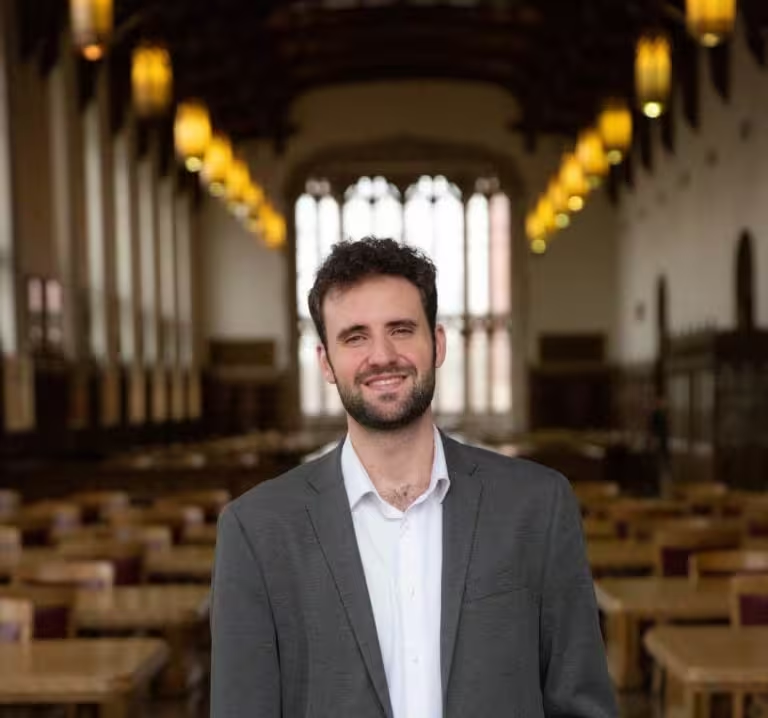
Dr. José María Moreno Madrid, the researcher at the University of Limerick who unearthed the manuscript, lays out the stakes clearly in a recent paper for Annals of Science. He points out that the document would become the most detailed technical account tied to a telescope plausibly linked to Galileo, albeit describing a four-lens architecture rather than the two-lens model carrying the Galilean name.
There is, naturally, a web of uncertainties. Galileo wrote little in the way of technical manuals for his instruments, and few telescopes from his lifetime survive with ironclad provenance. Contemporary records mention that Galileo presented three telescopes to the Spanish court — one large and two smaller instruments — but the optical designs of those gifts are not specified. Could one of those courtly presentations match Muñoz’s four-lens device? The chain of custody is plausible: instruments could have traveled from Madrid to court officials, eventually finding their way into colonial hands.

Still, documentary silence is stubborn. No other surviving correspondence from the viceroy, Antonio Sebastián de Toledo Molina y Salazar (the Marquis of Mancera), mentions this telescope. No certified inventory ties the object to Galileo beyond Muñoz’s note. Historians must treat the claim cautiously; provenance is the coin of credibility in material history, and right now that coin is thin.
Yet Muñoz was no dilettante. His background in mathematics and astronomy gives weight to his observations. The optical configuration he drew — erecting eyepiece plus four convex elements spaced at specific intervals — does not appear in other contemporary records connected to Galileo. Whether that means Galileo experimented with a wider range of designs than previously documented, or whether another skilled maker produced the instrument and it was later misattributed, remains open.
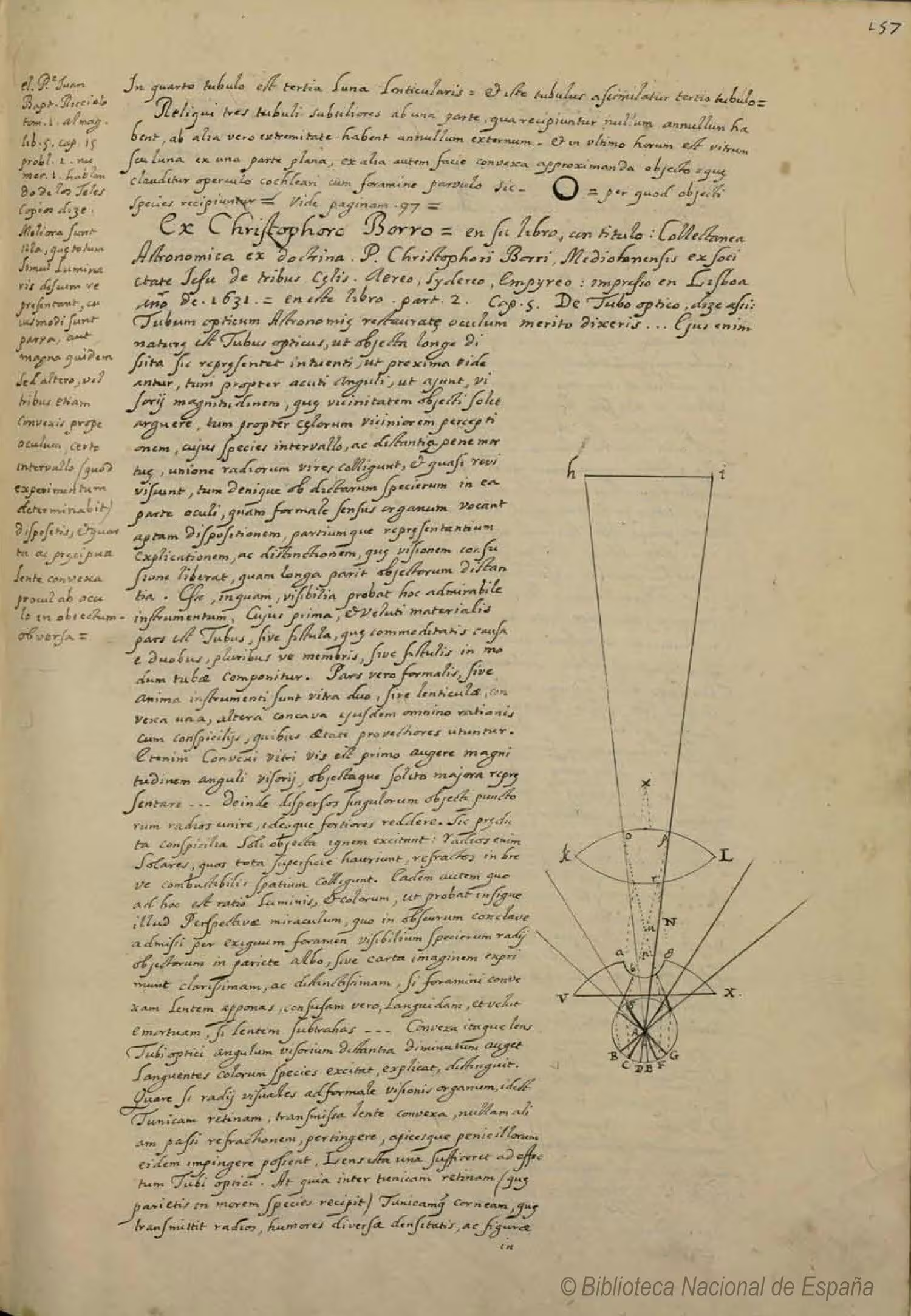
Ignacio Muñoz, Observationes Diversarum Artium (1666), taken from the collections of the Biblioteca Nacional de España.
The story also illuminates a broader truth: telescopes were prestige objects as well as tools. Gifting an instrument to royalty was both a scientific gesture and a strategic act, a way to buy favor and advance one’s reputation. If Galileo did present multiple telescopes to Philip IV, those objects would have carried diplomatic as well as technical value — and could easily have been recycled into the pockets of Europe’s powerful.
What happens next is classic archival detective work. Moreno Madrid hopes further documentary or material evidence will surface: inventories, letters, or an extant optical tube that can be measured and compared with Muñoz’s drawings. Until then, the manuscript stands as a tantalizing, if disputed, glimpse of seventeenth-century craftsmanship and a reminder that instruments often have stories we have yet to read.
If the attribution holds, the history of the telescope — and of Galileo’s practical ingenuity — will need to be rewritten. If it doesn’t, the manuscript still offers a rare, detailed window into how a contemporary assessed and recorded optical technology when the world was learning to look farther than ever before.

Leave a Comment
Comments
No comments yet. Be the first.