

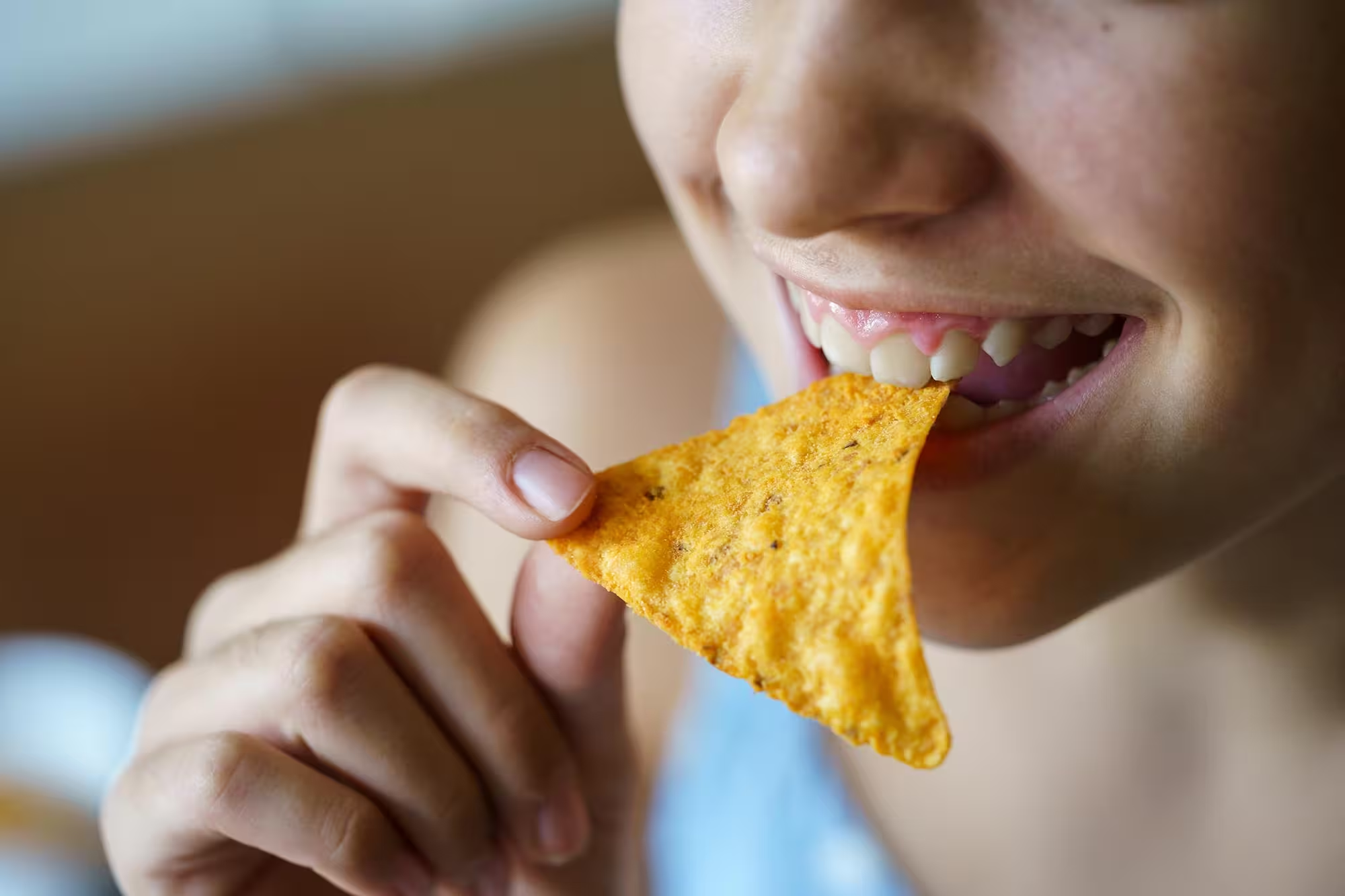
A single salty habit in adolescence may ripple into health problems years later. A large Scandinavian study now ties frequent consumption of salty snacks—think potato chips, corn chips and popcorn—to a 32% higher risk of developing inflammatory bowel disease (IBD) in young adulthood.
The investigation pooled data from 111,999 people enrolled in three population birth cohorts: Norway’s MoBa, Denmark’s DNBC, and Sweden’s ABIS. Researchers collected food-frequency information at two childhood stages (roughly ages 7 and again between 11–15 depending on the country), then tracked medical records through national registries up to 2024. Across 12–17 years of follow-up, 653 participants were diagnosed with IBD.
What stood out was the adolescence snapshot. Teenagers who reported high intake of salty snack foods faced a noticeably elevated IBD risk, and the signal was strongest for ulcerative colitis, which showed about a 51% increase. That link persisted even after accounting for socioeconomic factors, birth-related exposures, parental IBD and early-life influences such as maternal smoking.
Dietary patterns earlier in life also left their mark, but not always in the ways you might expect. High fruit intake during childhood correlated with a roughly 34% lower risk of Crohn’s disease, yet paradoxically with a higher risk of ulcerative colitis. By adolescence, higher fruit consumption was associated with a 64% lower risk of Crohn’s disease with no clear effect on ulcerative colitis. A childhood diet rich in fish was tied to about a 35% lower Crohn’s risk, perhaps reflecting the anti-inflammatory properties of long-chain omega-3 fats.
Researchers frame these associations through the lens of the gut microbiome and immune development. Fiber-rich fruit can boost microbial diversity and increase short-chain fatty acids—molecules that often act to calm intestinal inflammation. Conversely, diets high in processed, salty snacks may alter microbial balance or promote inflammatory pathways, though the precise mechanisms remain uncertain.
Important caveats apply. This is an observational study: it reveals associations, not cause and effect. The team lacked complete information on some lifestyle factors later in life, such as physical activity and antibiotic use beyond infancy, and could not fully separate the effects of single foods from overall dietary patterns and behaviors.
Still, the results add to a growing body of evidence suggesting that what we eat in childhood and adolescence shapes long-term gut health. If future studies replicate these findings, public health strategies that encourage whole foods, fruits and fish while discouraging regular consumption of heavily salted snack foods in youth could become part of IBD prevention discussions.
For now, parents and clinicians may want to consider adolescence as more than a passing phase of food fads—it's a window when eating habits might influence digestive health for years to come.


Leave a Comment
Comments
No comments yet. Be the first.