
3 Minutes
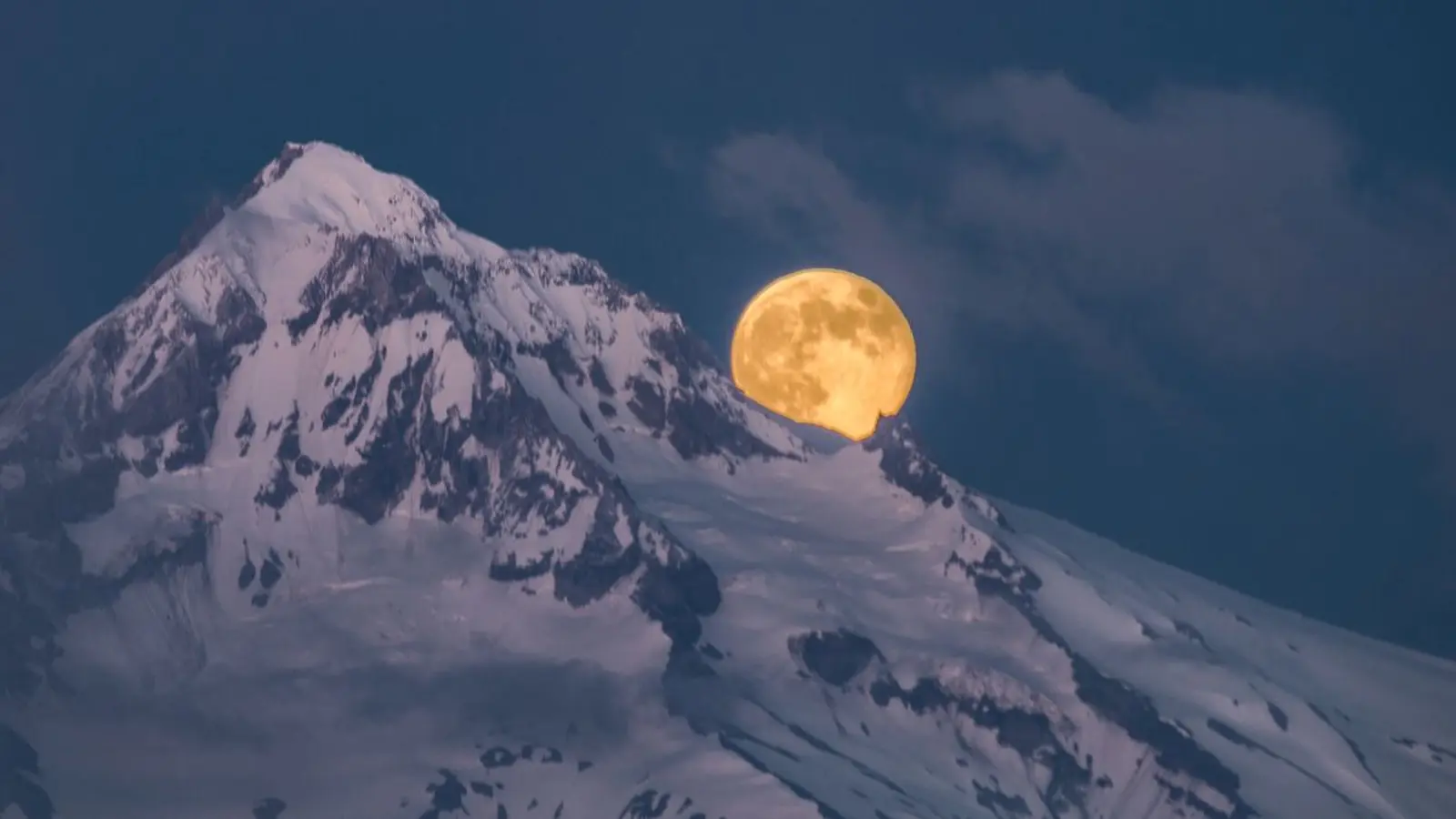
The last full Moon of 2025 will arrive with extra drama. On the evening of Thursday, December 4, a Cold Supermoon will climb above the eastern horizon at sunset — brighter and slightly larger than a typical full Moon, and offering one of the year’s best moonrise photo opportunities.
Why this supermoon stands out
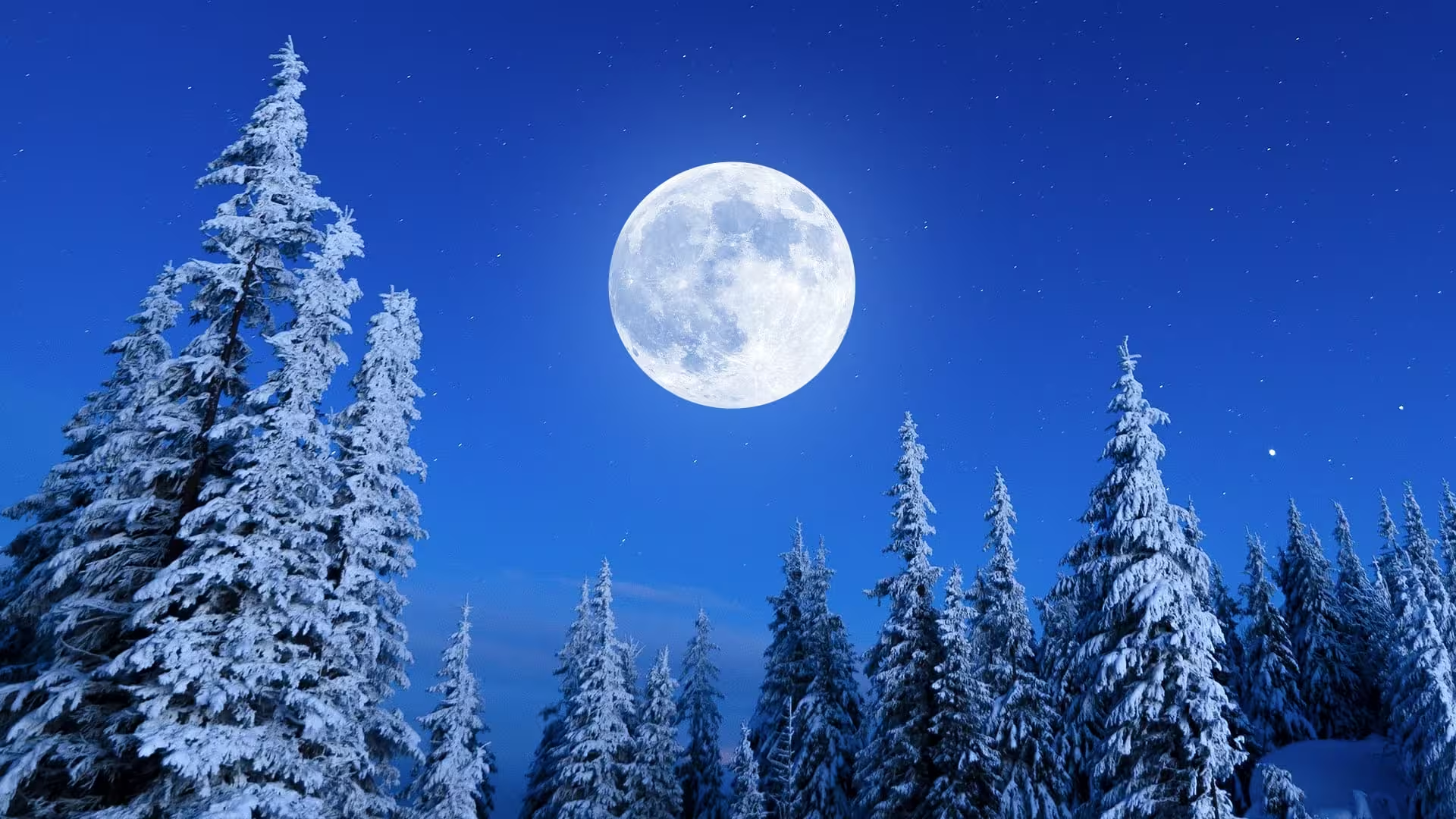
Supermoons happen when a full (or new) Moon coincides with perigee, the point in the Moon’s elliptical orbit when it is closest to Earth. The lunar orbit is not a perfect circle; it swings in and out, so some full moons appear noticeably bigger. On December 4, 2025, that perigee places the Moon about 357,219 kilometers (221,965 miles) from Earth—roughly 8% larger in apparent diameter and about 16% brighter than an average full Moon.
Because the Northern Hemisphere is entering winter at this time, cold air often contains less moisture and dust than warm air. The result: a clearer, more transparent sky that improves contrast and sharpness for moonrise photography. Compared with the Beaver supermoon in November 2025, December’s full Moon will be a touch farther away, but still closer than any supermoon since April 2020.
Science in plain language: perigee, syzygy and micromoons
The technical term sometimes used is syzygy—a straight-line alignment of three celestial bodies. In this case, the Sun, Earth and Moon line up so the Moon sits opposite the Sun from Earth, producing a full Moon at perigee. Not every perigee produces a supermoon visible as a full Moon; there are roughly 13 perigees a year, but the orbital precession means their timing shifts relative to the lunar phase cycle.
At the opposite extreme is a micromoon: a full Moon occurring near apogee, when the Moon is farthest from Earth. Micromoons look slightly smaller and dimmer and get less attention from skywatchers and photographers.
How to photograph the Cold Supermoon: practical tips
Want to capture this moonrise? Here are photographer-tested tips that work whether you’re an enthusiast or a newcomer to night photography.
Timing and composition
- Look east around local sunset. The full Moon will rise roughly opposite the Sun, so check your exact moonrise time for your location.
- Include foreground elements—trees, city skylines or landmarks add scale and interest and emphasize the Moon’s apparent size.
Equipment and settings
- Use a tripod and a telephoto lens (200mm or longer) for close-up Moon shots; for wide scenic compositions, a shorter focal length works well.
- Start with manual exposure: low ISO (100–200), aperture f/8–11 and shutter speed around 1/125–1/250s for a full Moon. Adjust for your gear and atmospheric conditions.
- Remote shutter or mirror lock reduces blur. Bracketing exposures helps when combining the bright Moon with darker foregrounds.
What to expect beyond photos
Scientifically, supermoons produce slightly higher tides but do not cause extreme events by themselves. For the public, they are a great prompt to go outside, learn basic astronomy, and practice observational skills. A clear, cold night can reveal impressive detail on the lunar surface even with modest telescopes or binoculars.
Whether you’re chasing the perfect moonrise frame or simply planning to step outside with a warm drink and a blanket, December’s Cold Supermoon is a reliable, low-effort celestial show. Check local moonrise times, dress for the weather, and enjoy the view.





Leave a Comment
Comments
No comments yet. Be the first.