
5 Minutes
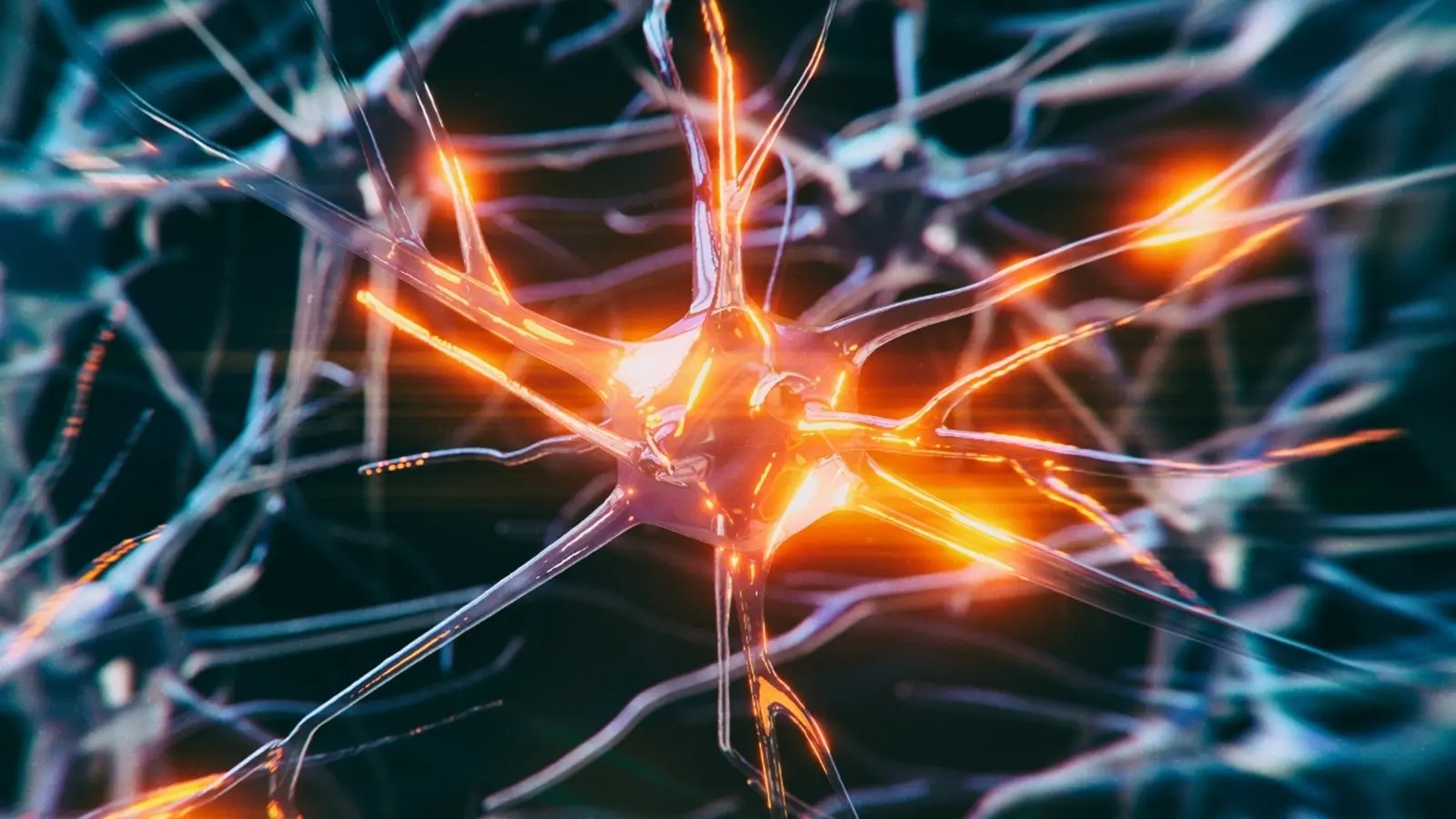
Not every neuron in an Alzheimer's brain surrenders. Some hold out. They survive the biochemical siege even as nearby cells collapse under the weight of misfolded proteins. That resistance has long been a curiosity; now, a CRISPR-powered hunt in human neurons has revealed a molecular team that actively tags and removes toxic tau before it can choke a cell.
Hidden defenders inside human neurons
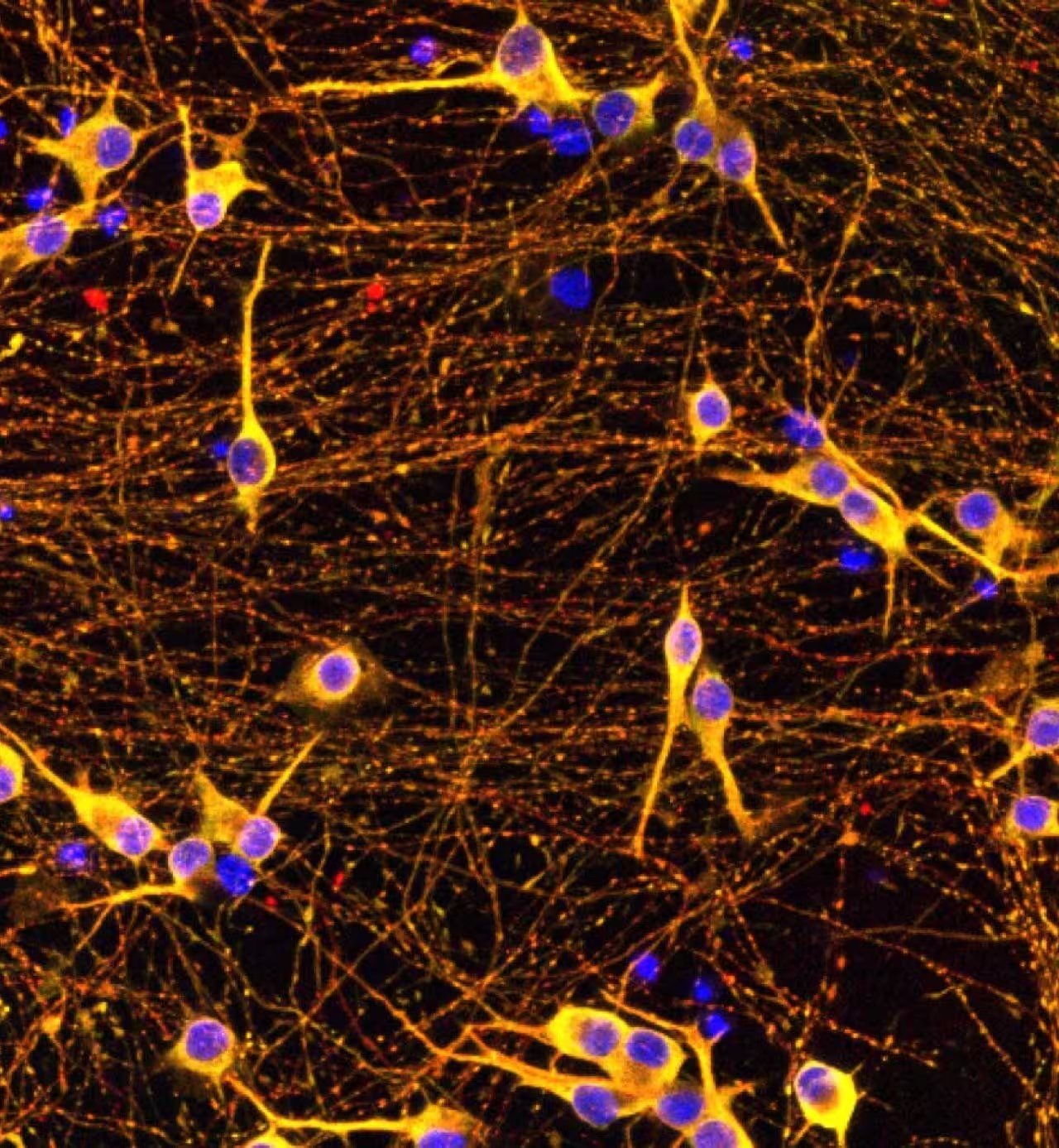
Tau proteins are double agents. In healthy cells they stabilize microtubules and help move nutrients and organelles along axons. But when their shape goes wrong, tau molecules stick together, forming aggregates that correspond to worsening neurodegeneration. The degree of tau clumping correlates with disease severity in Alzheimer's, frontotemporal dementia and related disorders.
To find out why some neurons resist tau’s toxic transformation, teams at UCLA Health and UCSF turned to an ambitious approach: a genome-wide CRISPR screen in neurons grown from human stem cells. These weren't generic lab neurons. They carried a real disease-causing mutation, MAPT V337M, known to encourage tau to adopt the harmful "Alzheimer fold." That matters. Cells with a genuine pathogenic background reveal mechanisms that are more likely to matter in people than results from artificial systems.
"We used human neurons carrying an actual disease-causing mutation," Avi Samelson, the study's first author and an assistant professor at UCLA Health, said. "These cells naturally have differences in tau processing, giving us confidence that the mechanisms we identified are relevant to human disease."
How the screen worked
In effect, the researchers disabled roughly 20,000 genes one at a time and watched which changes made tau more or less likely to aggregate. The scale was striking: more than a thousand genes influenced tau buildup, pointing to pathways that had been overlooked by genetic association studies alone. This is the power of functional screening—it's not just which genes are present, but what they do inside neurons.
Martin Kampmann, the study's senior author at UCSF, emphasized the novelty: "It's the first time we've been able to screen human neurons for genes that determine their resilience to tau." That functional lens revealed an unexpected star: a ubiquitin ligase complex referred to as CRL5SOCS4.
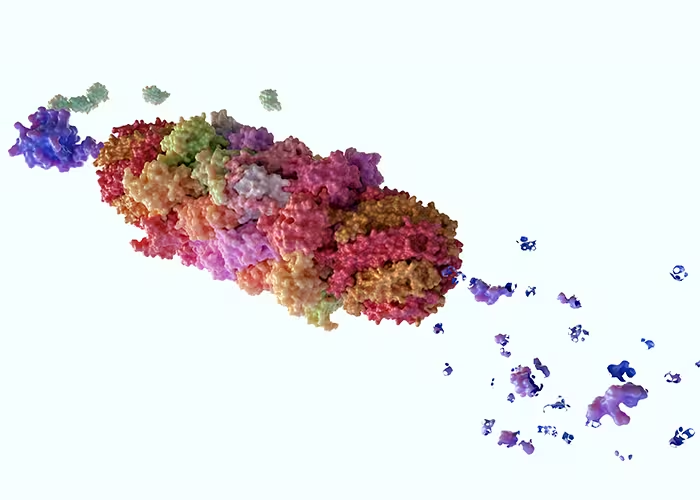
CRL5SOCS4 acts like a quality-control foreman. It attaches molecular tags—ubiquitin molecules—to aberrant tau, marking those proteins for destruction by the proteasome, the cell's protein recycling machine. Cells that expressed higher levels of CRL5SOCS4 in postmortem human brain tissue also showed greater survival in the Seattle Alzheimer's Disease Brain Atlas, linking the in vitro discovery back to human disease.
Connections to mitochondria, oxidative stress, and biomarkers

Not all tau problems come from tau genes themselves. The screen flagged mitochondrial genes too. When the researchers impaired mitochondrial function, neurons produced tau fragments — small pieces of the protein that resemble fragments measured in patient blood and cerebrospinal fluid as sensitive biomarkers of Alzheimer's. Why? Because faulty mitochondria increase oxidative stress during energy production, and oxidative damage appears to make tau more prone to breakage and clumping.
Think of proteasomes as a factory's shredder. If the shredder overheats or jams from oxidative stress, tagged proteins pile up. The study showed that proteasome dysfunction converts a manageable problem into a cascade: misprocessed tau fragments accumulate, seed aggregates, and accelerate neuronal damage.
Beyond confirming known pathways, the screen uncovered surprising regulators of tau levels — molecular routes that scientists will need to dissect to understand exactly how they modulate aggregation. The findings stitch together several threads: genetic susceptibility, protein quality control, energy metabolism and the cellular response to oxidative stress.
Therapeutic possibilities and practical hurdles
The immediate therapeutic idea is straightforward: bolster the brain’s own hazmat crew. One route is to enhance CRL5SOCS4 activity so tau is ubiquitinated and routed to the proteasome before it seeds toxic clumps. Another is to shield proteasomes from oxidative damage, keeping the cell’s disposal system running even under stress.
How would that work in practice? Small molecules that stabilize the interaction between CRL5SOCS4 and tau could increase tau clearance. Antioxidant strategies targeted to proteasomes or mitochondrial therapies that reduce reactive oxygen species might lower the production of aggregation-prone tau fragments. Both strategies carry challenges: specificity, delivery across the blood–brain barrier, and avoiding unintended effects on protein turnover.
The study underscores a broader lesson: human biology sometimes already encodes elegant defenses. Rather than inventing new machinery, perhaps therapy can amplify what evolution has left behind.
Expert Insight
"This paper marries a powerful functional screen with disease-relevant human cells," says Dr. Elena Ruiz, a neurobiologist at a major research hospital who was not involved in the study. "The translational step—going from gene hits to small molecules that enhance CRL5SOCS4 or protect proteasomes—will be hard, but it's a more focused path than trying to clear every aggregate once it forms."
There is urgency, of course. Population aging makes effective dementia interventions a public health priority. But discovery is a process of sifting: which molecular levers move the needle enough to be druggable without collateral damage? This screen points to several promising levers. Now the task is to turn those levers into safe, targeted interventions and to test whether enhancing natural resilience mechanisms can delay or prevent clinical decline.






Leave a Comment
Comments (2)
is it really that simple to tag tau and clear it? sounds promising but delivery to brain, side effects, off-targets... skeptical tbh
Wow, neurons fighting back? That gave me chills. Proteasome angle is cool, but can we actually boost CRL5SOCS4 safely though? so many hurdles.