
3 Minutes
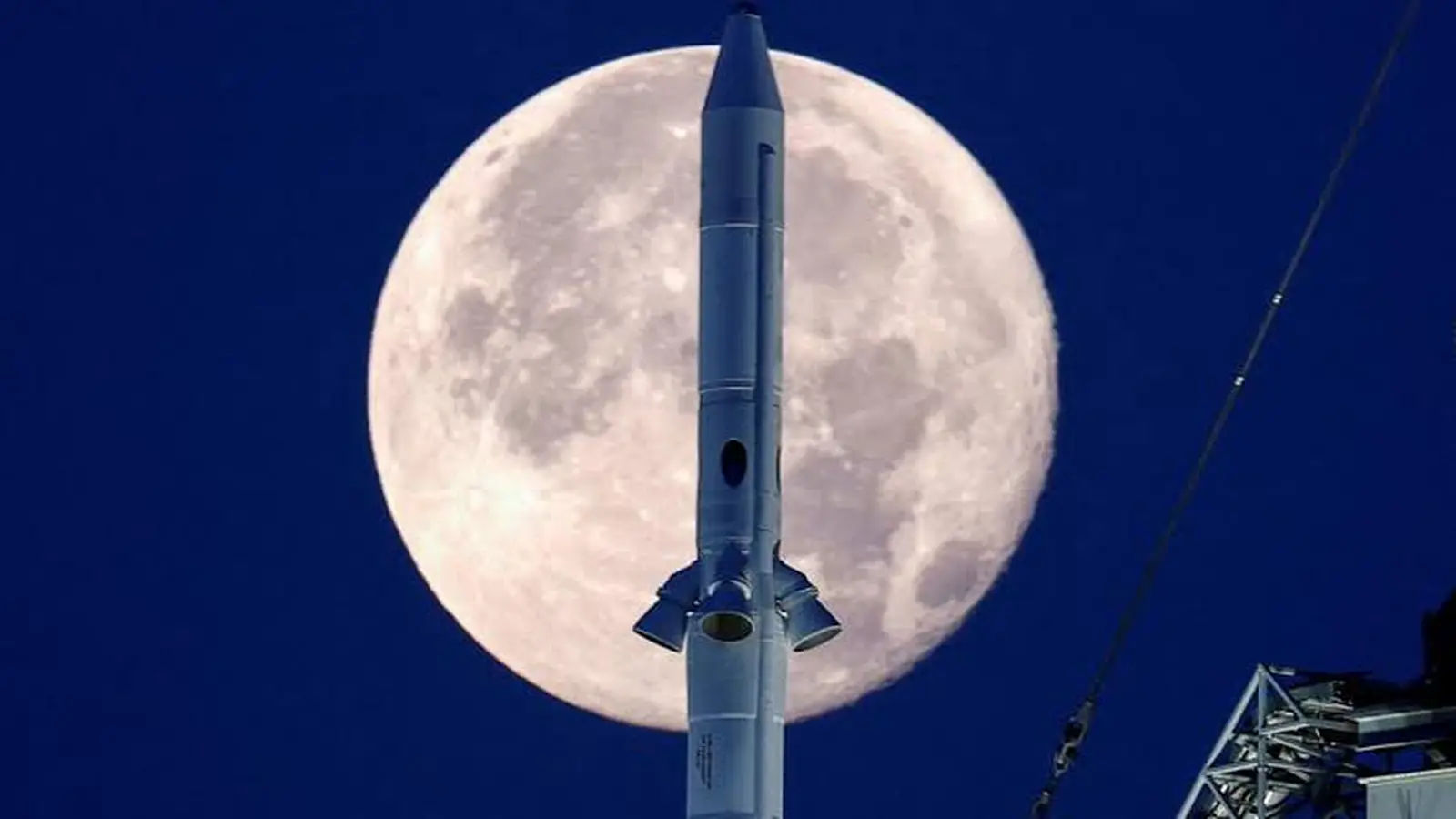
A full Moon hangs over the launch pad as technicians wheel back into place the procedures that could send humans past the Moon for the first time in more than half a century. The countdown at Kennedy Space Center has resumed, not for liftoff but for a wet dress rehearsal: a full fueling run meant to prove the Space Launch System and Orion capsule can be topped off safely and stay that way.
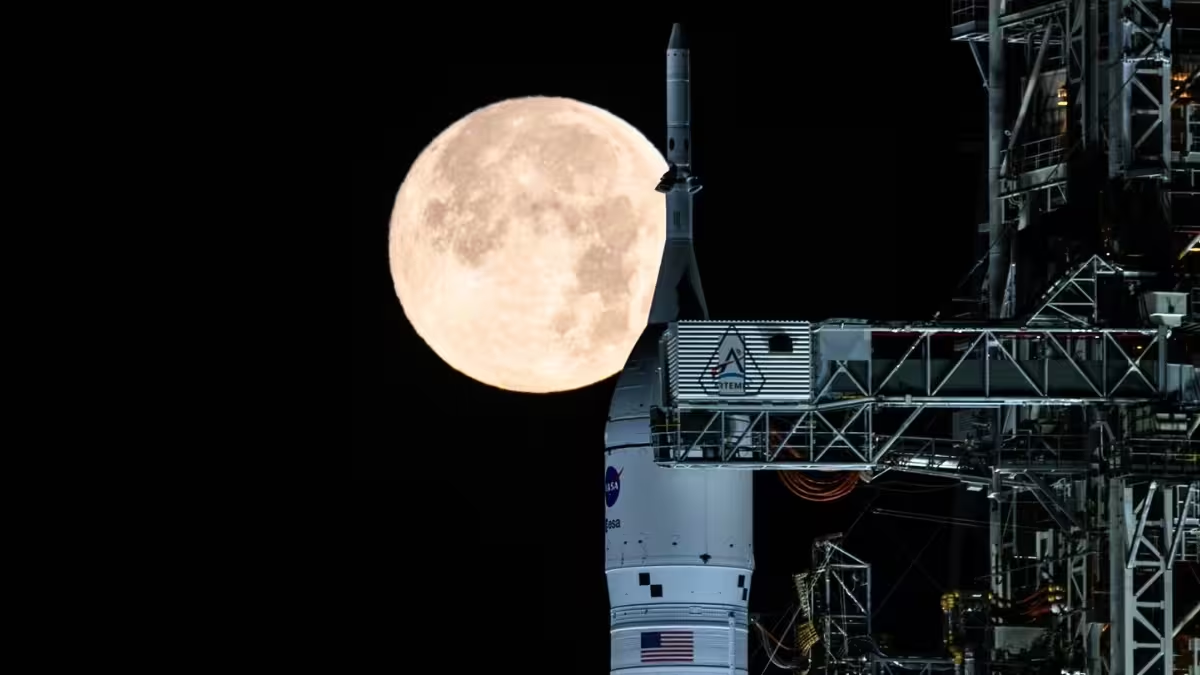
A full Moon is seen shining over NASA’s Space Launch System and Orion spacecraft.
Two weeks earlier, engineers stopped the first attempt when tiny leaks of liquid hydrogen showed up where the rocket mates to ground equipment. Those same cryogenic leaks stalled the Artemis program’s earlier uncrewed mission three years ago. Small problem. Big consequence. Fixing it matters.
Technicians replaced two seals and cleared a clogged filter at the pad before crews restarted the countdown clocks. The planned two-day sequence will end with tanking—pumping supercold liquid hydrogen and oxygen into the SLS core and upper stages—an operation NASA will stream live. The Artemis II crew will watch from a distance as controllers put the rocket through the motions that stand between rehearsal and a formal launch date.
The four astronauts—commander Reid Wiseman, pilot Victor Glover, and mission specialists Jeremy Hansen and Christina Koch—are tasked with testing life-support, communications and navigation systems on a roughly 10-day lunar flyby. The route will take them past the Moon, around its far side, and home again. No landing this time. The objective is systems validation under real deep-space conditions.
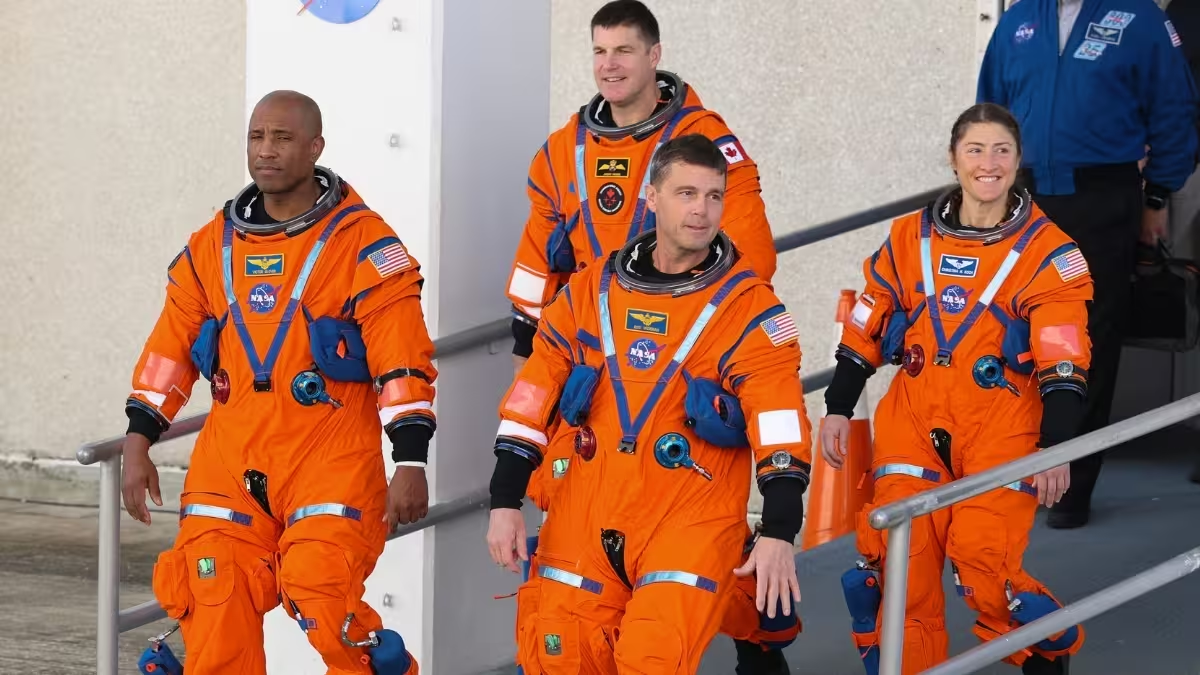
The Artemis II crew – (L-R) pilot Victor Glover, mission specialist Jeremy Hansen, commander Reid Wiseman, and mission specialist Christina Koch.
Why the fuel test is critical
Liquid hydrogen is a powerful but finicky propellant. It must be kept at cryogenic temperatures near absolute zero. A tiny leak becomes a large risk: it can form flammable mixtures, chill components unpredictably, or force aborts. That’s why a clean, leak-free wet dress rehearsal is not paperwork—it’s a safety gate. NASA has said it needs that green light before committing to a target launch window, currently as early as March 6, though teams are taking the time needed to analyze every datapoint.
Beyond immediate hardware repairs, this rehearsal is also about procedures and margins. How do seals behave? How do sensors report anomalies? How quickly can teams respond? “We’re proving repeatability,” said a NASA flight engineer familiar with the pad work. “It’s not glamorous, but it’s the backbone of crewed flight.”
The Artemis program is taking a different tack from Apollo. Rather than short sorties, NASA aims for sustained operations at the Moon’s south polar region—terrain rich in water-ice and scientific opportunity. Artemis II’s success will be measured less by drama and more by data: steady telemetry, stable tanks, and predictable systems performance.
The next few days will show whether months of redesign and on-pad troubleshooting have tightened the margins enough to carry four astronauts safely into deep space. Watch for the tanking sequence and the engineers’ readouts; they will decide whether the rocket moves from rehearsal to the next chapter of lunar exploration.











Leave a Comment
Comments
No comments yet. Be the first.