
6 Minutes
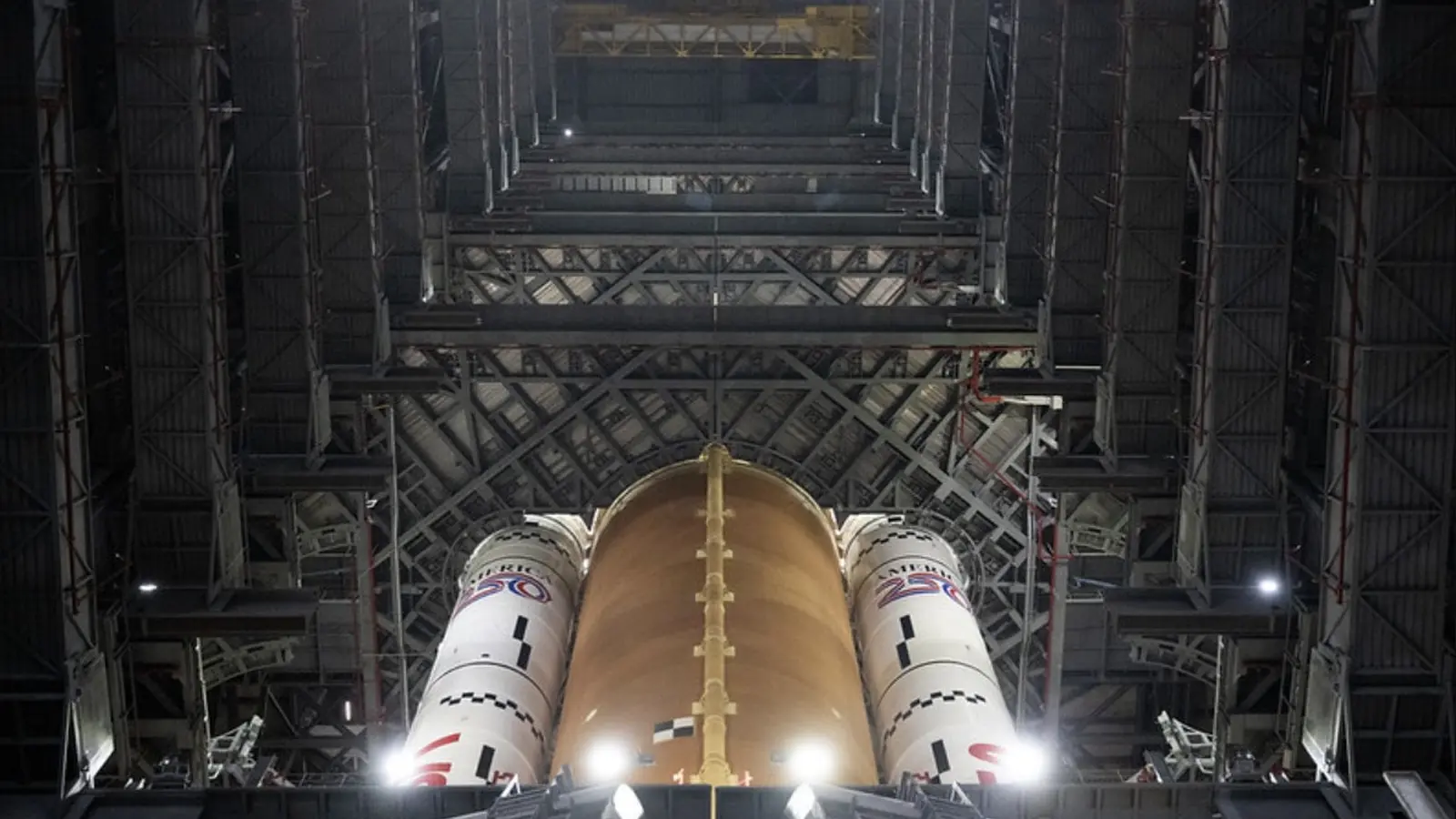
NASA wrapped up a full countdown dress rehearsal for Artemis II at Kennedy Space Center as 2025 closed — a near-complete simulation that stopped the clock at T-minus 30 seconds. With an April 2026 launch window on the calendar, engineers, flight controllers and the four-person crew ran through the end-to-end procedures that will govern the mission’s historic lunar flyby.
Why this rehearsal matters: validating the timeline and the team
Imagine the pressure of years of design, testing and integration condensed into a single, carefully timed sequence of events. That’s what a countdown demonstration test is for: to validate the launch timeline, to rehearse crew and ground procedures under realistic conditions, and to expose any gaps in communications, environmental control or life-support responses before the vehicle leaves the pad. For Artemis II — the first NASA mission to carry humans beyond low Earth orbit since Apollo — the stakes are high. The Space Launch System (SLS) rocket and Orion spacecraft must function together flawlessly to support a roughly 10-day mission that will send astronauts farther from Earth than any crewed mission in recent history.
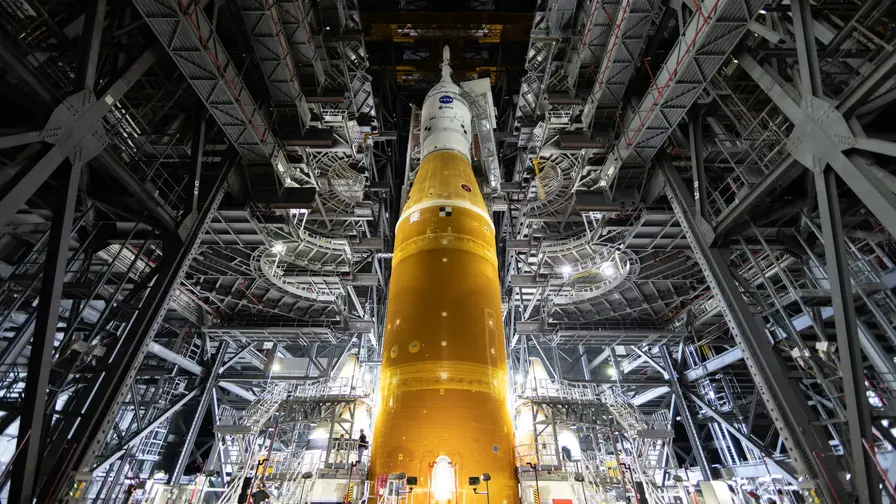
The demonstration took place inside High Bay 3 of Kennedy Space Center’s Vehicle Assembly Building (VAB), where the stacked SLS and Orion — nicknamed Integrity for this flight — are undergoing final checkouts. While the simulation didn’t happen on Launch Complex 39B itself, the exercise ran through nearly all elements of a real launch day. Flight controllers in the Launch Control Center executed the same procedures they will use on liftoff day, including communications checks with the crew, system status polls, and scripted anomaly scenarios intended to test troubleshooting and go/no-go decision points.
A walk-through of the crew operations: from suits to hatch close
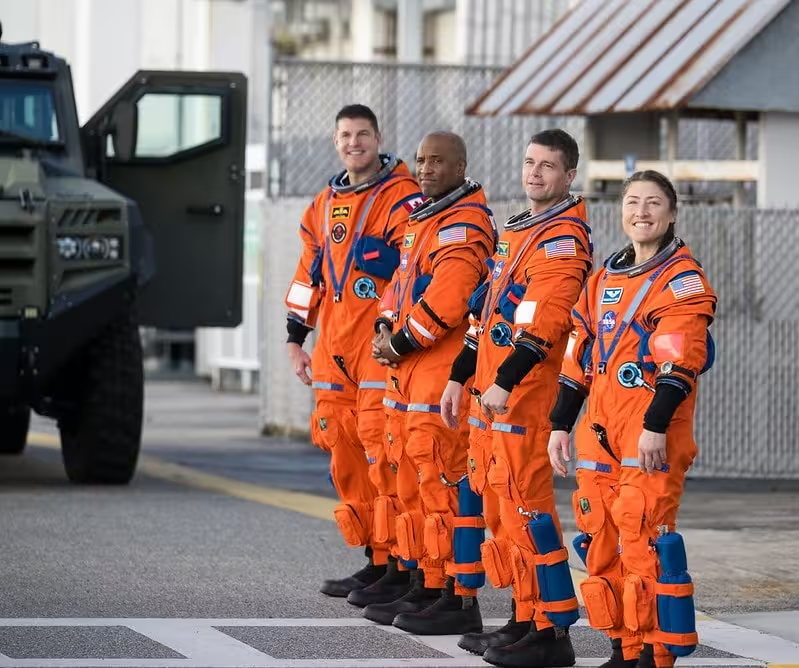
The Artemis II primary crew — Reid Wiseman, Victor Glover, Christina Koch, and Jeremy Hansen — along with backup crewmembers Andre Douglas and Jenni Gibbons, began in the Astronaut Crew Quarters inside Kennedy’s Neil A. Armstrong Operations and Checkout Building. There they donned their Orion Crew Survival System suits and followed the traditional exit through the building’s double doors, a ritual familiar to generations of astronauts.
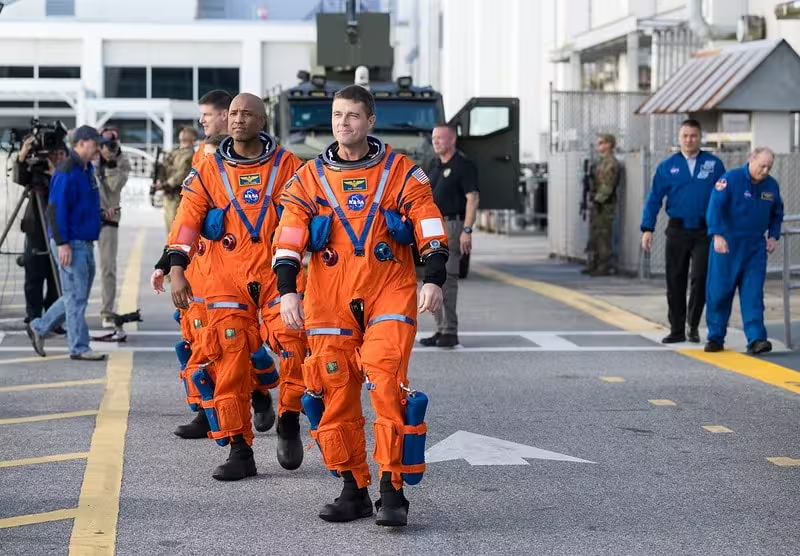
After boarding a motorcade-style van escorted by support vehicles, the crew traveled to the VAB where the mobile launcher elevator carried them up roughly 300 feet (about 91 meters) to the white room and the crew access arm. Inside Orion, the closeout team assisted the astronauts with ingress, harnessing, and hatch closure — precisely the human steps that must be performed reliably on launch day.
Systems checks and simulated contingencies
The rehearsal ran for nearly 5.5 hours and included realistic problem-solving scenarios. Controllers and crew practiced responses to potential issues with audio links, environmental control and life-support systems (ECLSS), and other mission-critical systems. NASA reported the test met its objectives: the timeline was validated, procedures were exercised, and the teams demonstrated coordinated responses to simulated faults.
Stopping the clock at T-minus 30 seconds is deliberate: that milestone allows engineers to test the run-up to liftoff while preserving safety margins and avoiding a powered test. From that point, the mission sequence — automated vehicle safing, crew egress procedures and final system checks — remain predictable, repeatable, and practiced.
Mission context: what Artemis II will do and why it’s important
Artemis II is a mission in the broader Artemis program designed to return humans to the Moon and prepare for sustained lunar exploration. Unlike Artemis III, which aims to land astronauts on the lunar surface, Artemis II will perform a crewed lunar flyby. The spacecraft will travel roughly 250,000 miles (about 400,000 kilometers) from Earth — the farthest humans will have ventured since the Apollo era — before returning after about 10 days in space.
This flight is primarily a systems- and crew-focused test. Orion’s life-support, navigation, and communications systems will be evaluated in deep space conditions, and the crew will validate spacecraft procedures that future lunar-landing missions will depend on. Data from Artemis II will influence mission planning, surface systems design and crew training for Artemis III and beyond.
Technology and teams behind the rehearsal

The launch vehicle for Artemis II, NASA’s Space Launch System, is the most powerful rocket the agency has built since the Saturn V. Paired with the Orion crew capsule, it provides a deep-space-capable architecture designed for human safety and mission resilience. The Vehicle Assembly Building, the mobile launcher, the crew access arm and the white room remain central hardware elements that support astronaut ingress, pre-launch servicing and final closeouts.
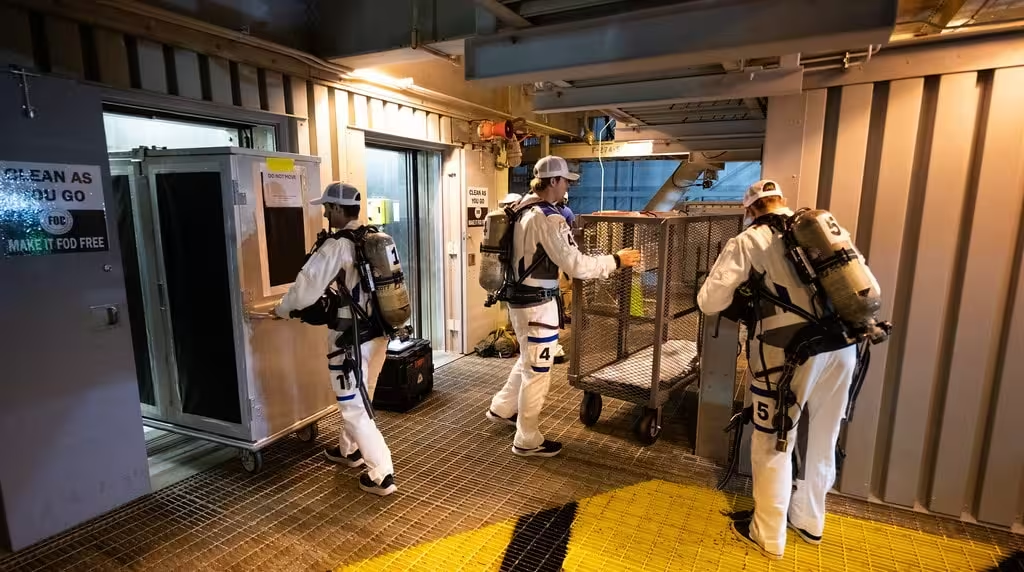
Beyond hardware, success depends on software, procedures and people. Launch control teams practiced integrated command sequences and telemetry assessments, while ground support personnel rehearsed propellant loading timelines and emergency response drills. NASA plans additional countdown tests — including exercises at the launch pad emphasizing emergency egress and contingency responses — as the launch window approaches.
Expert Insight
“Dress rehearsals are where theory meets reality,” says Dr. Sara Mendelson, a fictional senior flight systems engineer with decades of human spaceflight experience. “You can design redundancy and run simulations forever, but having astronauts and controllers execute the sequence together reveals subtle timing, human factors and communications issues you can’t see on a computer screen. Stopping at T-minus 30 seconds gives you maximal realism while keeping risk low.”
Her point underscores a fundamental truth about crewed missions: hardware performance matters, but seamless human interaction with systems — from donning suits to closing the hatch — is equally critical.
What’s next on the timeline
With the successful VAB dress rehearsal behind them, NASA and its partners are moving toward additional integrated tests, including pad-level countdowns that will focus intensively on emergency procedures and launch-pad operations. The agency has not released a specific schedule for those tests, but they are commonly staged in the months leading up to a launch window. As the clock counts down toward April 2026, teams will continue iterative checks on the SLS, Orion, and launch infrastructure while refining procedures and training scenarios.

For space enthusiasts, engineers and prospective lunar crews, Artemis II represents a critical milestone: the last major human-rated test before a new era of crewed deep-space exploration. This rehearsal confirms that NASA is methodically working through the complex choreography required to safely press humanity farther into space once again.










Leave a Comment
Comments (2)
Makes sense, but stopping at T-minus 30s seems cautious? won't that hide late-stage problems, or am I missing something
Wow, chills, seeing humans get that far again. The rehearsal sounds intense, hopeful, nervous lol. Can't wait!