
3 Minutes
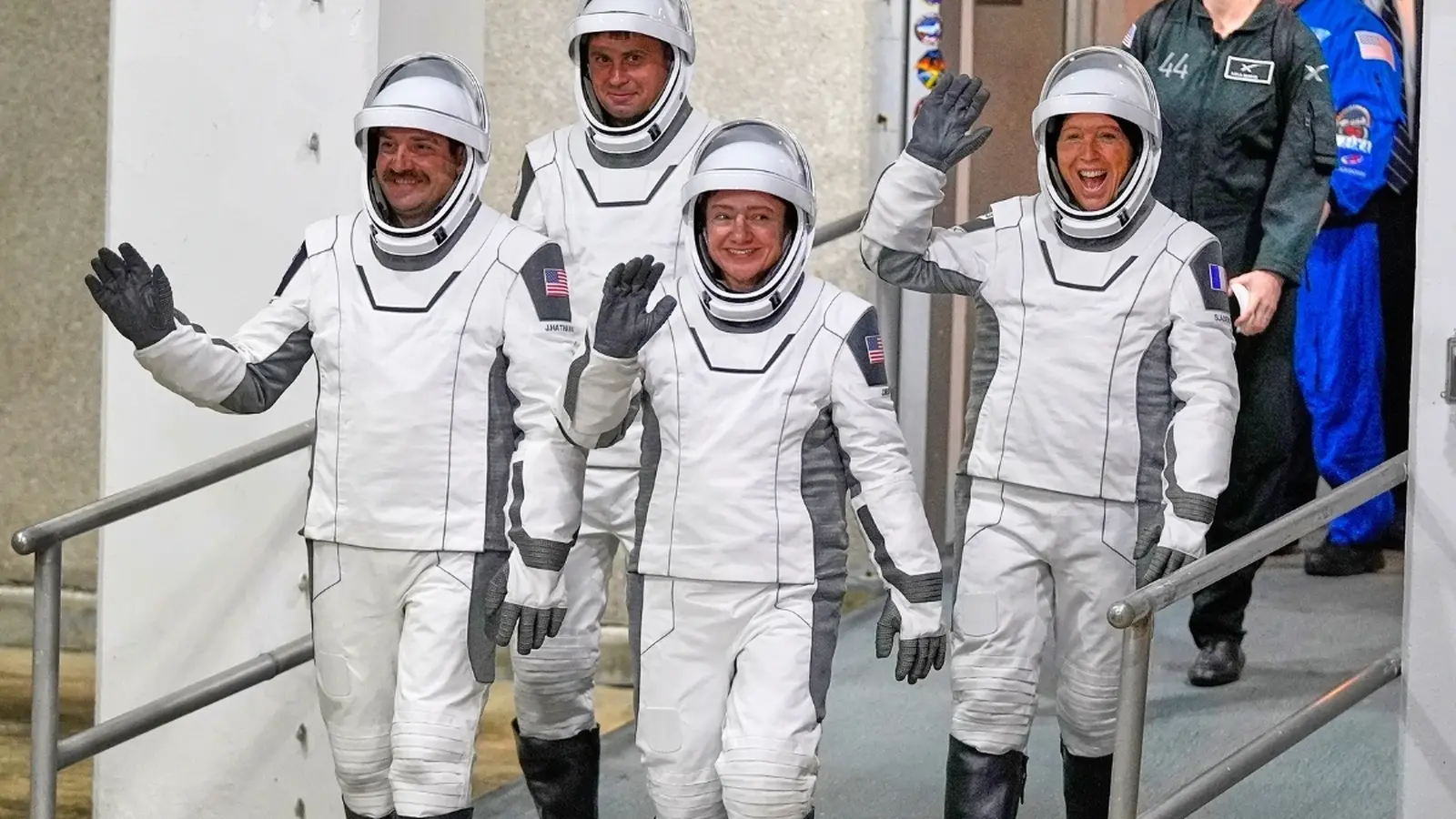
They floated in with laughter and handshakes, a moment that felt less like a crew exchange and more like the station taking a deep, necessary breath. SpaceX's Dragon capsule delivered four new crew members to the International Space Station on Feb. 14, restoring the orbiting laboratory to full strength after a rare medical evacuation earlier this year.
The arrivals — NASA's Jessica Meir and Jack Hathaway, France's Sophie Adenot, and Russia's Andrei Fedyaev — will spend roughly eight to nine months aboard the station. Meir and Fedyaev are returning veterans: Meir helped perform the first all-female spacewalk in 2019, and Fedyaev brings experience as a former military pilot. Adenot, a military helicopter pilot, becomes only the second French woman in space. Hathaway arrives as a U.S. Navy captain stepping into long-duration microgravity research and maintenance roles.
"Bonjour!" Adenot called when the spacecraft docked about 277 miles above Earth. Hours later, hatches opened. Seven crewmembers hugged and exchanged high-fives. "Let's get rolling," Meir said as the group moved quickly to reestablish operations.
Why the haste? In early January, NASA executed a medical evacuation — an unusual move that the agency described as its first evacuation in 65 years of human spaceflight. One astronaut launched last summer experienced a serious health issue and returned to Earth with three crewmates more than a month ahead of schedule. NASA has declined to identify the ill astronaut or disclose details, citing medical privacy. The four who landed that day spent their first night back on Earth in a hospital before returning home to Houston.
Mission context and research priorities
The temporary reduction in personnel forced NASA and its international partners to pause spacewalks and scale back some experiments while the station operated with just three crew members. Restoring crew complement is about more than housekeeping. The ISS supports dozens of experiments in biology, materials science, and Earth observation. Human-tended investigations often require hands-on work or timely sample returns; without enough crew, some research must wait.
SpaceX launched the replacement quartet from Cape Canaveral the day before they docked. NASA says it did not change its preflight medical screening for these replacements. With full staffing, teams can restart maintenance schedules, resume extravehicular activities when conditions allow, and clear the backlog of experiments that benefit from daily human oversight.
Operationally, the return to a seven-person crew smooths the cadence of cargo transfers, life-support checks, and science timelines. But it also raises quieter questions about readiness and risk management: how do agencies balance rapid responsiveness to medical issues with crewed mission continuity? And what lessons will inform medical monitoring for future lunar and Mars missions?
The new arrivals carry more than tools and tape; they bring continuity. The station, NASA officials note, is designed to flex through contingencies. Still, every unscheduled return is a reminder that human spaceflight remains delicate, dependent on health and split-second coordination hundreds of kilometers above the planet.
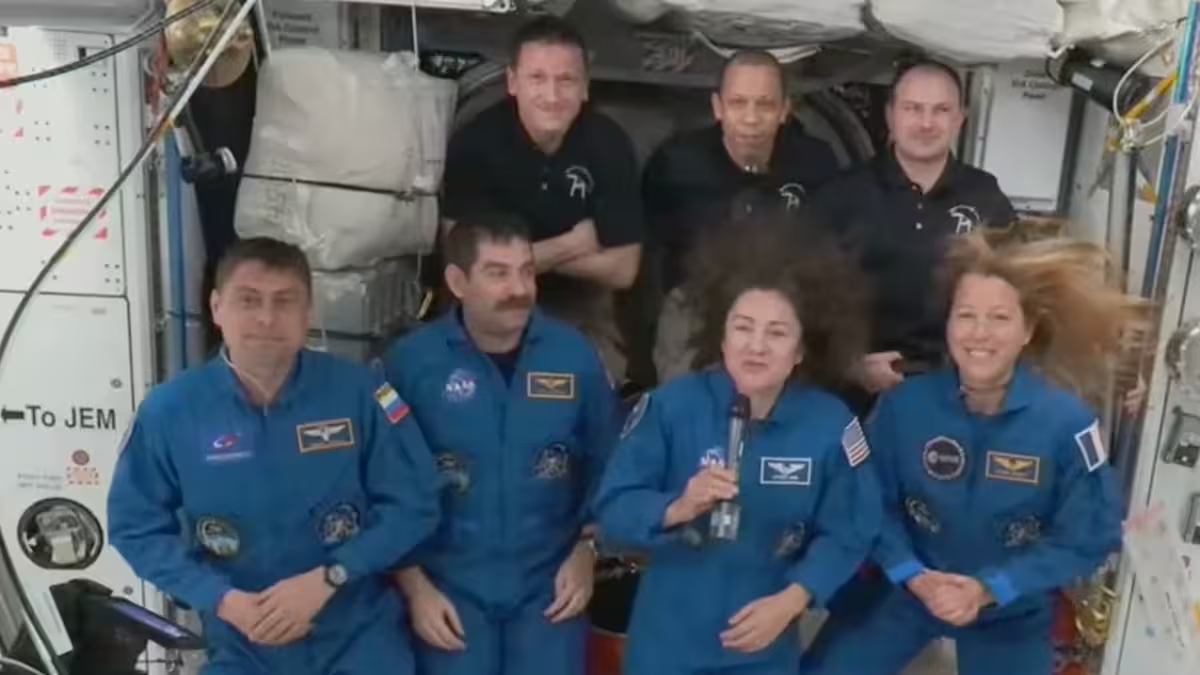
Foreground from left: Andrei Fedyaev, Jack Hathaway, Jessica Meir, and Sophie Adenot gather with background from left: Russian Sergey Kud-Sverchkov, American Christopher Williams, and Russian Sergei Mikayev, after a new crew entered the ISS on Saturday, Feb. 14, 2026. (NASA via AP)
For now, the laboratory hums again. Experiments waiting in the wings can breathe. The bigger missions — to the Moon and beyond — watch and learn.










Leave a Comment
Comments
No comments yet. Be the first.