
4 Minutes
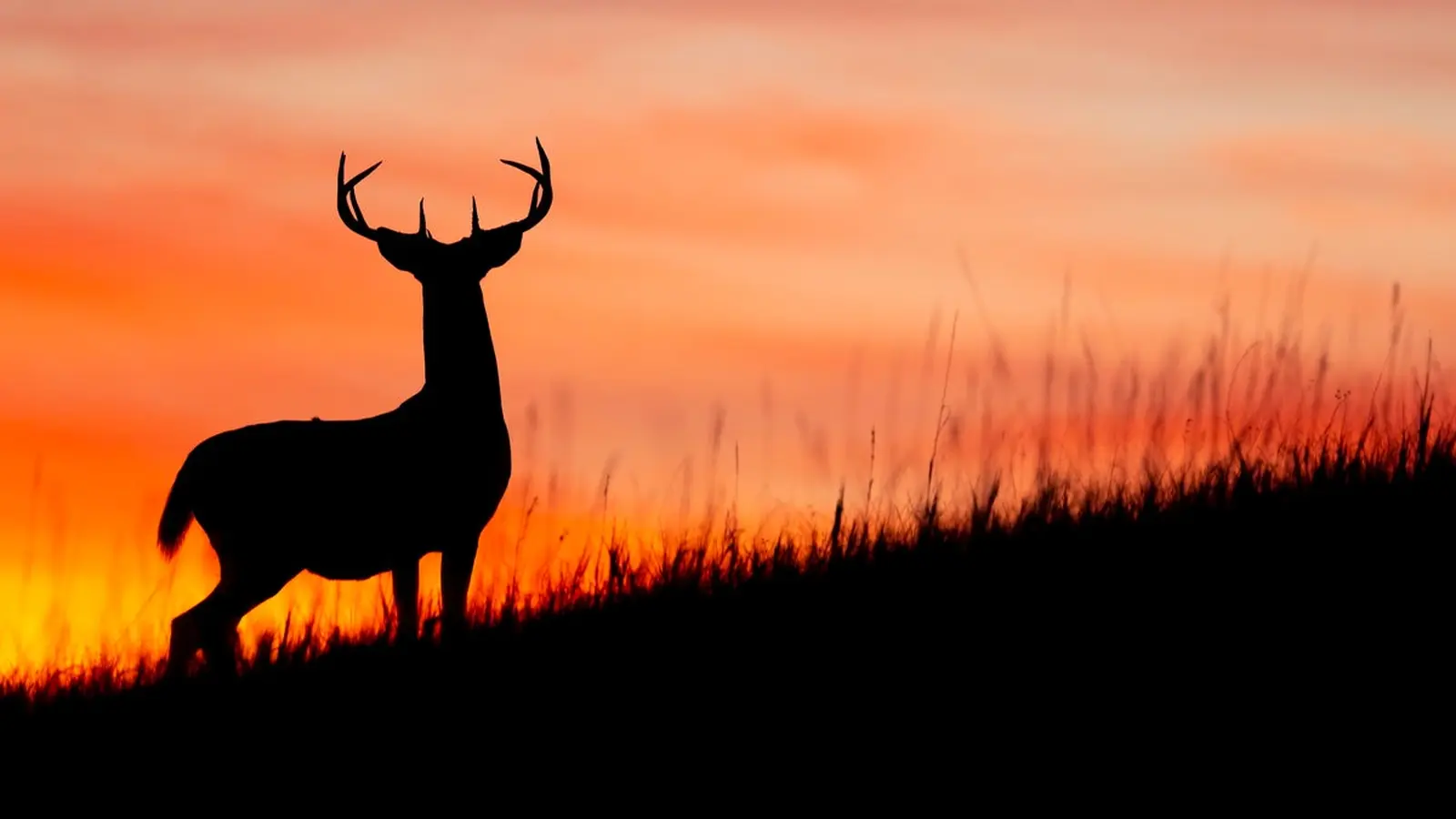
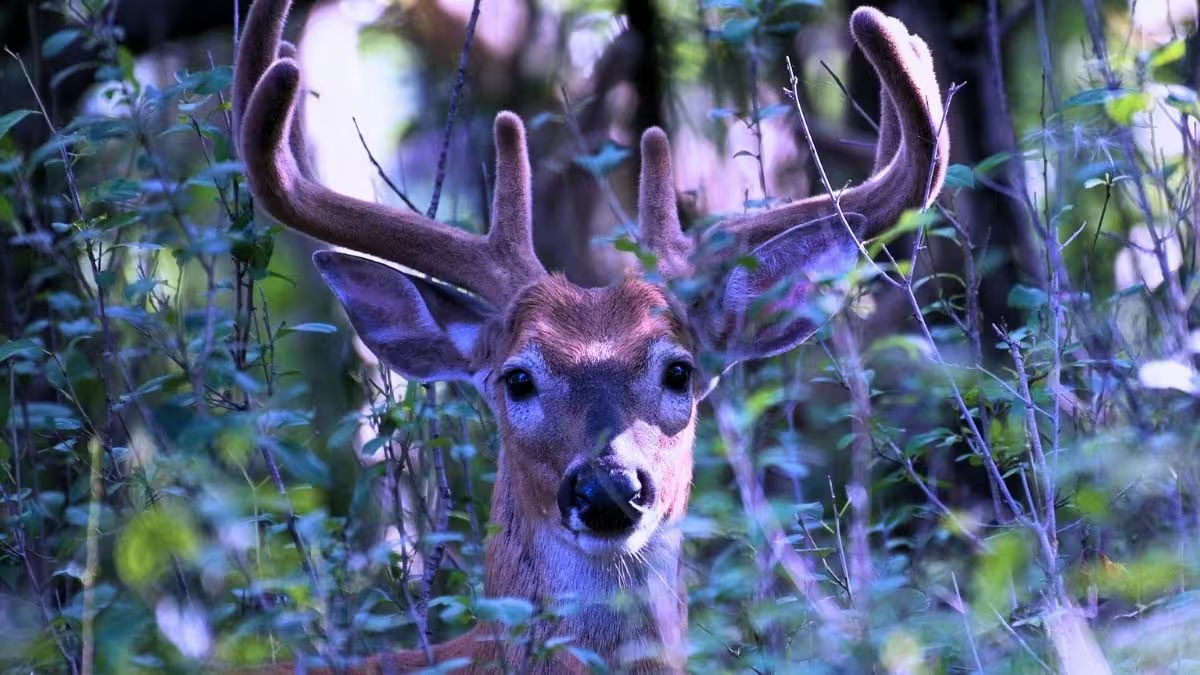
On a cool autumn evening, a forest can look ordinary to our eyes. But for deer, the understory might be littered with bright, secret signs. Researchers at the University of Georgia found that the marks male white-tailed deer make—antler rubs on trees and scent scrapes on the ground—emit a faint glow in ultraviolet wavelengths that deer can see. The discovery reframes familiar behavior as visual signaling as much as olfactory messaging.
Fieldwork that revealed a hidden language
The team surveyed a 337-hectare study area called Whitehall, a research forest where deer move freely, and documented 109 tree rubs and 37 ground scrapes during the 2024 rut. They returned at night with ultraviolet torches centered at 365 nm and 395 nm—wavelengths that are present at dawn and dusk, the crepuscular hours when white-tailed deer are most active. Using irradiance meters, the scientists measured the light reflected or emitted from each mark and compared those values to the surrounding vegetation.
Rubs and urine-exposed scrapes consistently returned higher irradiance in those UV bands. In other words: under UV light, those signposts stood out from the background. That contrast matters because deer retinae include cones tuned to short- and middle-wave visible light; earlier work has shown they detect near-UV, so a signal that fluoresces at 365–395 nm should be visible to them when twilight paints the landscape.
What actually makes these marks glow?
Several candidates could explain the glow. Deer urine contains porphyrins and certain amino acids that fluoresce when exposed to longer-UV wavelengths. Males also smear glandular secretions rich in phenols and terpenes. And when antlers strike tree bark or vegetation, they expose lignin and other plant compounds that are themselves photoluminescent. The study did not pin the glow on a single chemical; instead the evidence suggests a combination of animal-derived fluids and altered plant tissue creates the visual contrast.
That interaction—animal behavior altering plant chemistry and thereby changing the visual scene—raises intriguing ecological questions. Is the glow an intentional signal that evolved because deer can see it? Or is it a useful byproduct of marking behavior that deer have learned to exploit? The researchers collected spectral data showing rubs become brighter at the same time male hormone levels—and marking activity—peak in the breeding season, but behavioral tests remain necessary to establish cause and effect.
Biological and ecological implications

If photoluminescent signposts influence deer behavior, this alters how we think of mammal communication. Mammals are not commonly viewed as using light the way some insects or fish do. Yet here is evidence that deer create noticeboards visible only under wavelengths humans rarely consider. Hunters, wildlife managers, and ecologists rely on rub counts as indices of population and activity; now those marks might carry visual information that affects social interactions, territory establishment, or mate choice.
There are practical consequences too. Understanding which compounds produce the brightest UV signals could inform conservationists about habitat conditions or stressors. It could also sharpen the methods used in field studies—flashlight wavelength, timing of surveys, and spectral measurement techniques all matter when invisible cues are at play.
Expert Insight
"This study opens a new window on how animals use the electromagnetic spectrum," says Dr. Elena Marquez, an ecologist not affiliated with the work. "We often overlook wavelengths that fall outside human perception, yet for many species those bands are part of everyday life. The next step is to test whether deer actually change behavior in response to the photoluminescent signals."
Daniel DeRose-Broeckert and colleagues, who led the UGA study, note their measurements satisfy several criteria for a signal having biological relevance: the glow occurs at behaviorally relevant times, it increases contrast against the background, and the emissions fall into wavelengths deer can detect. But they are careful: they did not run behavioral experiments that would prove the glow is used intentionally as communication.
Published in Ecology and Evolution, the study represents the first robust documentation of a mammalian photoluminescent marking system in the field. It builds on more than a century of lab observations of UV-induced fluorescence in mammal tissues, but translates that chemistry into a plausible ecological role where light, scent, and physical abrasion combine to make a message readable—if you have the right eyes.
There are more questions than answers. How long do rubs remain photoluminescent? Do females respond to the glow differently from males? Could predators or competitors exploit the same visual cues? Each question points to experiments that pair controlled behavioral assays with the spectral tools used in this study.
What we can say now is this: forests hold more than scent and sound—there is a layer of visual information tuned to the narrow bands of twilight that humans usually miss.












Leave a Comment
Comments (2)
Wait is this for real? UV fluorescence from urine and bark sounds plausible but spectra alone dont prove communication. behavioral experiments needed, pronto.
Wow, deer literally leaving glowing billboards at dusk? mind blown. If true, rubs are visual signals too. Someone needs to test behavior, predators? females? so many q's...