
5 Minutes
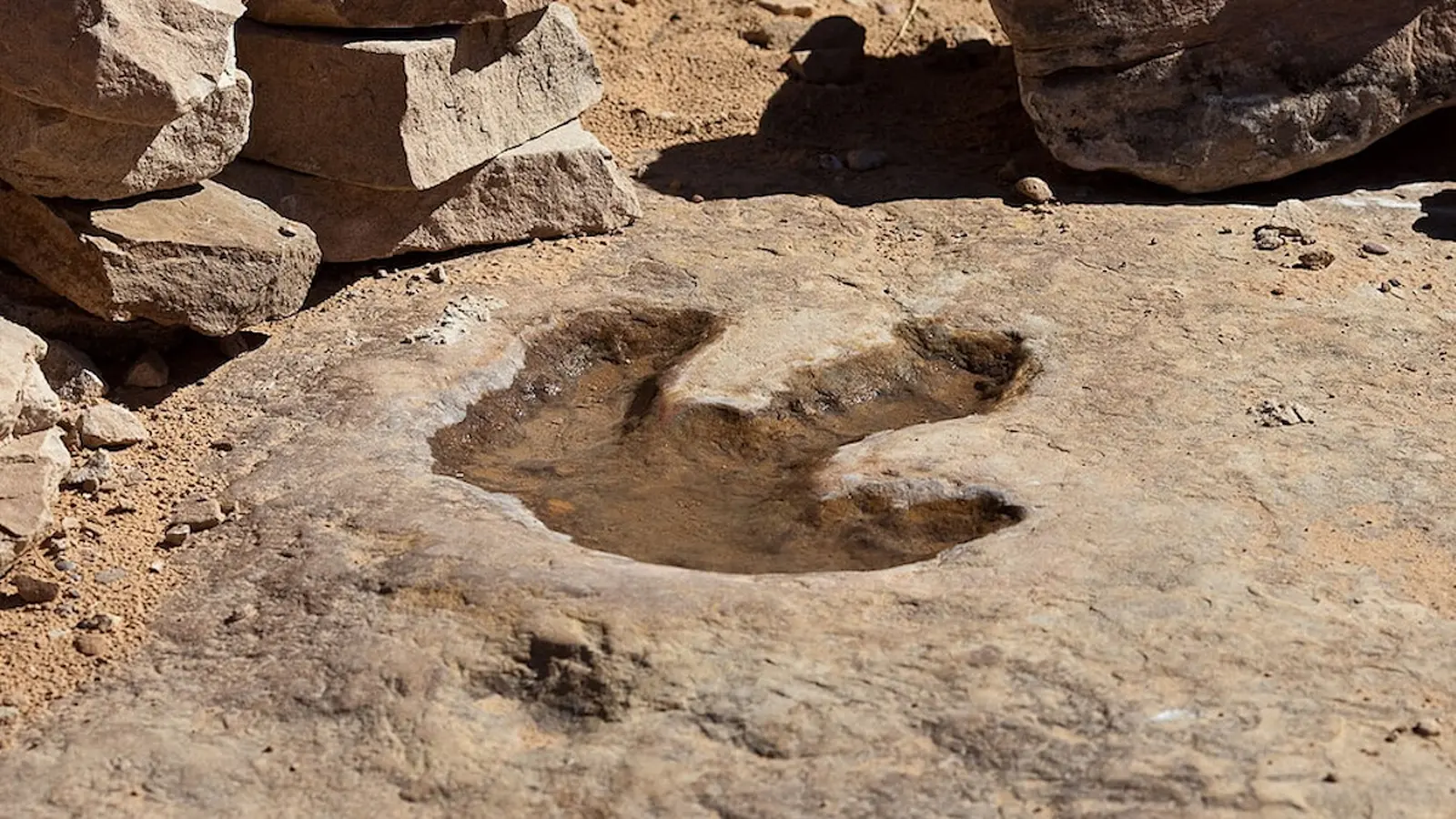
High on the eastern slopes of the Andes, scientists have uncovered an extraordinary fossil record: nearly 18,000 dinosaur tracks preserved in the ancient shoreline of a vanished lake. The Carreras Pampa site, inside Torotoro National Park, offers a rare, behavior-rich snapshot of late Cretaceous life — from walking and running to swimming traces — all preserved in carbonate-rich mud dating to about 70 million years ago.
Counting the footprints: scale and significance
Paleontologists catalogued almost 18,000 individual impressions at Carreras Pampa, making it the largest dinosaur tracksite yet recorded. The tally includes a record-breaking 16,600 three-toed prints arranged into 1,321 trackways and 289 isolated prints. In addition, researchers identified 1,378 swim traces distributed across 280 trackways — tracks left where dinosaurs propelled themselves through shallow water.
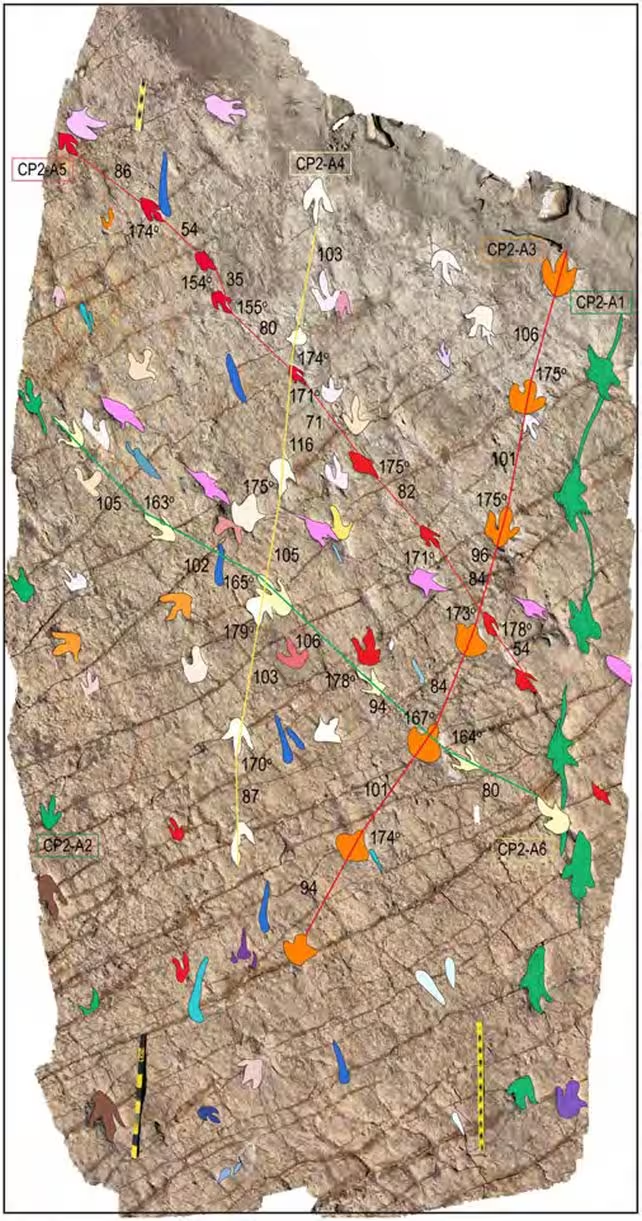
A small sample of some of the tracks at the site
All tracks are attributed to theropods, the group that includes the familiar carnivorous dinosaurs and their avian descendants. Most footprints are modest in size — between 10 and 30 centimeters — consistent with small- to medium-sized theropods, animals that at most stood roughly the height of a tall human. The directional alignment of many trackways, often oriented back and forth along the former shoreline, suggests this lake margin was an important feeding or watering area.
Why these tracks lasted 70 million years
Not every muddy footprint survives the geological record. Carreras Pampa is exceptional because of a rare combination of substrate, environment, and burial processes that preserved delicate impressions. The layer that captured the tracks is rich in oval calcium carbonate grains — primarily nested ostracod shells and ooids — with about 35 percent fine-grained silicates. That mix produced a surface that, when wet but not deeply submerged, was soft enough to accept deep impressions yet cohesive enough to hold them long enough for burial and lithification.
When the lake level fluctuated, animals walked, ran, or swam across the shallow margins and left traces that were rapidly covered by thin sediment layers. Crucially, subsequent trampling did not obliterate earlier impressions across much of the site, allowing multiple generations of behavior to be preserved in remarkable detail.
Ostracods, ooids and fossilization in plain terms
Ostracods are tiny crustaceans whose shells can accumulate in sediment, while ooids are small, spherical carbonate grains that form in shallow, agitated water. Together they create a granular carbonate mud that is both cohesive and moldable — an ideal medium for making and holding tracks until they could be buried and fossilized.
Behavior encoded in stone: what the tracks reveal
Beyond simple footprints, the site preserves a variety of trace types. Researchers documented claw marks, tail traces, and shallow scratch marks where feet dragged along the lakebed as an animal swam. Track sizes vary from less than 10 centimeters to over 30 centimeters, and some trackways show sharp directional changes and varying step depths — evidence of animals accelerating, turning, or reacting to soft substrate.
Notably, abundant tail-drag traces accompanying many trackways indicate that some theropods contacted their tails with the ground as they struggled through soft sediment. These features provide rare direct evidence of locomotive responses to sinking or slipping in waterlogged substrate — behavior that bones alone rarely preserve.
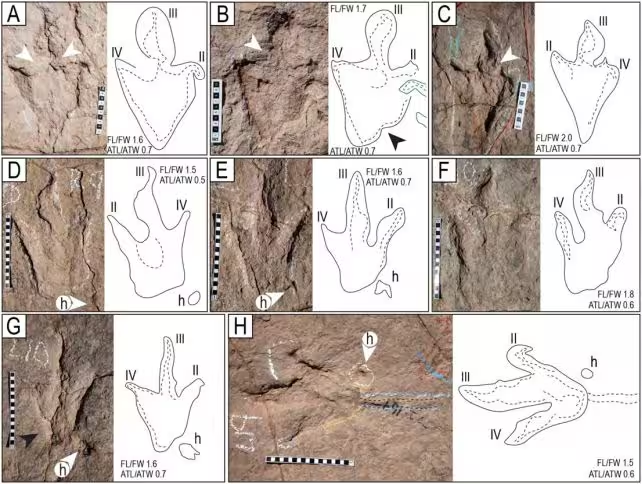
Some of the theropod tracks at the site
Why scientists call Carreras Pampa a Lagerstätte
In paleontology, a Lagerstätte is a deposit with exceptional preservation that reveals soft tissues, behaviors, or complete ecosystems. The combination of an enormous number of tracks, variety of trace types (walking, running, swimming, tail traces), and the clarity of preservation places Carreras Pampa among the world’s premier ichnological Lagerstätten. The research team, led by Raúl Esperante of the Geoscience Research Institute, argues that this site should be classified as an ichnologic concentration and conservation Lagerstätte for its extraordinary behavioral record.
Scientific context and future research
The Carreras Pampa discovery adds important context to late Cretaceous environments in South America and the behaviors of theropod communities near freshwater resources. By combining detailed mapping, track morphometrics, and sediment analysis, researchers can better reconstruct population densities, movement patterns, and predator–prey dynamics at the lakeshore. The study, published in PLOS One, also highlights the value of high-altitude field sites like Torotoro National Park for preserving unusual geological and paleobiological archives.
Expert Insight
“Sites like Carreras Pampa give us behavioral data that bones alone cannot provide,” says Dr. Ana Morales, a paleobiologist at Universidad Mayor de San Andrés (fictional for commentary). “Swim traces, tail drags, and the sheer density of tracks let us reconstruct how these animals interacted with their environment — how they moved, where they foraged, and how a single freshwater lake could shape an entire local ecosystem.”
Ongoing work will include detailed photogrammetry, sedimentary mapping, and conservation planning to protect the site from erosion and human impact. As researchers continue to digitize these traces, Carreras Pampa will offer a dynamic, accessible archive for scientists and the public alike, revealing the last chapters of dinosaur-dominated ecosystems in a way museum skeletons never can.











Leave a Comment
Comments (2)
Cool find but all theropods? seems like a stretch, some prints look small enough for other dinos. Also how long till erosion wrecks it... protect the site!
wow, 18,000 tracks?? mind blown. swim traces and tail drags, that image of dinos slipping thru ooid mud gives me chills. need pics!!