

4 Minutes
A recently identified tick-borne bacterium found in dogs has raised fresh concern among veterinarians and public-health researchers. Cultured and genome-sequenced by scientists at North Carolina State University, the organism belongs to the spotted fever group of Rickettsia and has been named Rickettsia finnyi after the first affected dog, Finny. Early evidence suggests the microbe causes serious illness in canines and could pose risks to humans if it crosses species barriers.
What researchers discovered and why it matters
Researchers at NC State successfully cultured the bacterium from a sick dog whose symptoms resembled Rocky Mountain spotted fever (RMSF), a severe disease caused by Rickettsia rickettsii. Genome sequencing revealed Rickettsia finnyi is a novel species within the spotted fever group. The initial report dates to a 2020 case series involving three dogs, and subsequent testing identified an additional 16 infected animals, mainly from the U.S. Southeast and Midwest.
The clinical picture in 17 confirmed canine cases included moderate to severe fever, lethargy, and thrombocytopenia (low platelet counts). While most dogs recovered after prompt antibiotic treatment, several had poor outcomes: one died before diagnosis, another was euthanized, and one relapsed after therapy and later succumbed to nephrotic syndrome.
"We first reported the novel species of Rickettsia in a 2020 case series involving three dogs," said veterinary researcher Barbara Qurollo from NC State. "Since then, we received samples from an additional 16 dogs – primarily from the Southeast and Midwest – that were infected with the same pathogen." The work was published in Emerging Infectious Diseases (2025).
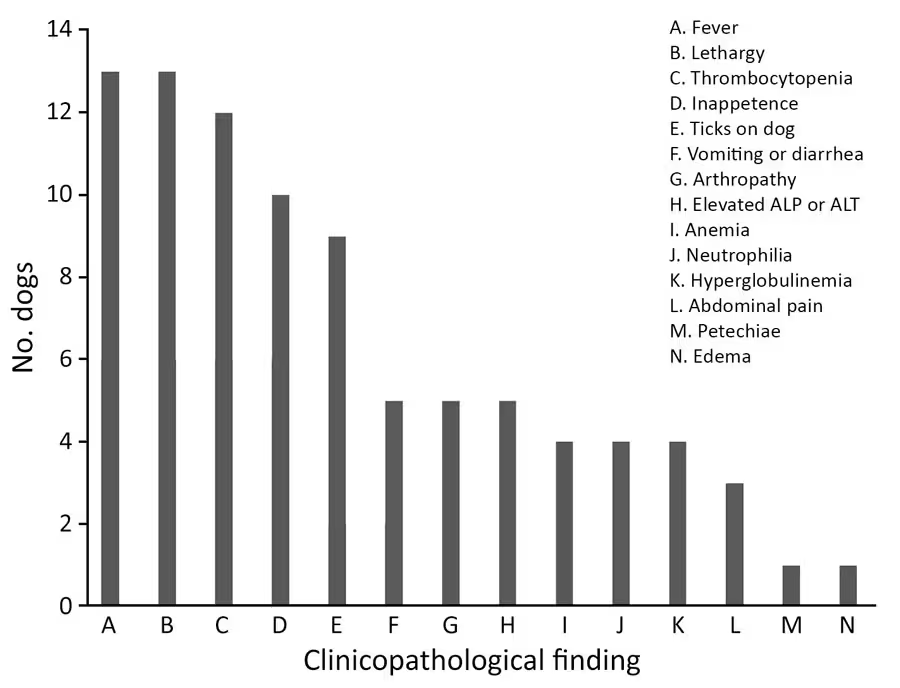
Common clinical pathology in 17 dogs naturally infected with Rickettsia finnyi.
How Rickettsia species behave and spread
Rickettsia bacteria are intracellular pathogens, meaning they survive and multiply inside host cells. That trait makes them difficult to culture in the lab but essential to confirm a species by isolating it and sequencing its genome. Many spotted fever rickettsiae have only been recognized in recent decades thanks to advances in molecular diagnostics and genomic tools.

Dogs and humans are not required hosts for these bacteria—ticks are the natural reservoirs and vectors. However, both people and pets can act as incidental hosts or carriers. In past cases, species such as Rickettsia parkeri were later implicated in human disease decades after they were first detected in animals. R. parkeri’s first confirmed human infection was identified in 2004, suggesting that misdiagnoses or overlooked infections can occur without more specific testing.
Tick suspects and geographic overlap
Scientists have not yet definitively linked R. finnyi to a specific tick species, but evidence points to the lone star tick (Amblyomma americanum). A research group in Oklahoma detected R. finnyi DNA in that tick, and the geographic range of the lone star tick overlaps with where many of the infected dogs lived. In laboratory experiments, the bacterium grew in canine immune cells for more than 104 days, implying dogs could provide a reservoir for prolonged infection.
Public-health implications and recommended actions
Because many Rickettsia species can infect humans, health experts advise close surveillance. The genus "should always be considered potentially pathogenic" to people, researchers warn. Identifying which tick species transmit R. finnyi and mapping its true range are urgent priorities to prevent spillover into human populations.
For pet owners, practical precautions reduce risk: use veterinarian-recommended tick preventives, check dogs frequently after outdoor activity, remove attached ticks promptly and safely, and seek veterinary care if a pet develops fever or lethargy. Public-health agencies should expand tick surveillance and encourage clinicians to include a broader panel of rickettsial tests when patients present with febrile illnesses following tick exposure.
Expert Insight
"The discovery of Rickettsia finnyi underscores why genomic surveillance matters," says Dr. Elena Martinez, an infectious-disease epidemiologist unaffiliated with the study. "New species can lurk under familiar symptoms. Early detection, combined with coordinated veterinary and public-health responses, is the best way to reduce the risk of zoonotic spread."
The NC State findings add to a growing picture of diverse, sometimes overlooked spotted fever agents circulating in North America. Ongoing research aims to confirm tick vectors, establish how common R. finnyi infections are in both dogs and ticks, and determine whether human infections have already occurred but gone undiagnosed. Until then, vigilance, prevention, and rapid treatment remain the best defenses against this emerging tick-borne threat.














Leave a Comment
Comments (2)
Is this even true? DNA in ticks doesn't always mean transmisson, right... 17 dog cases only, maybe misdiagnosed RMSF? if that's real then we need wider testing, pronto
Wow this is kinda scary, dogs as reservoirs? If lone star ticks are involved humans could be at risk. Vet check asap, but we really need more data, feels urgent.